
2026. 6. 30. 11:25ㆍ회원작품 | Projects/House
Rhythm(音)
마을의 첫인상
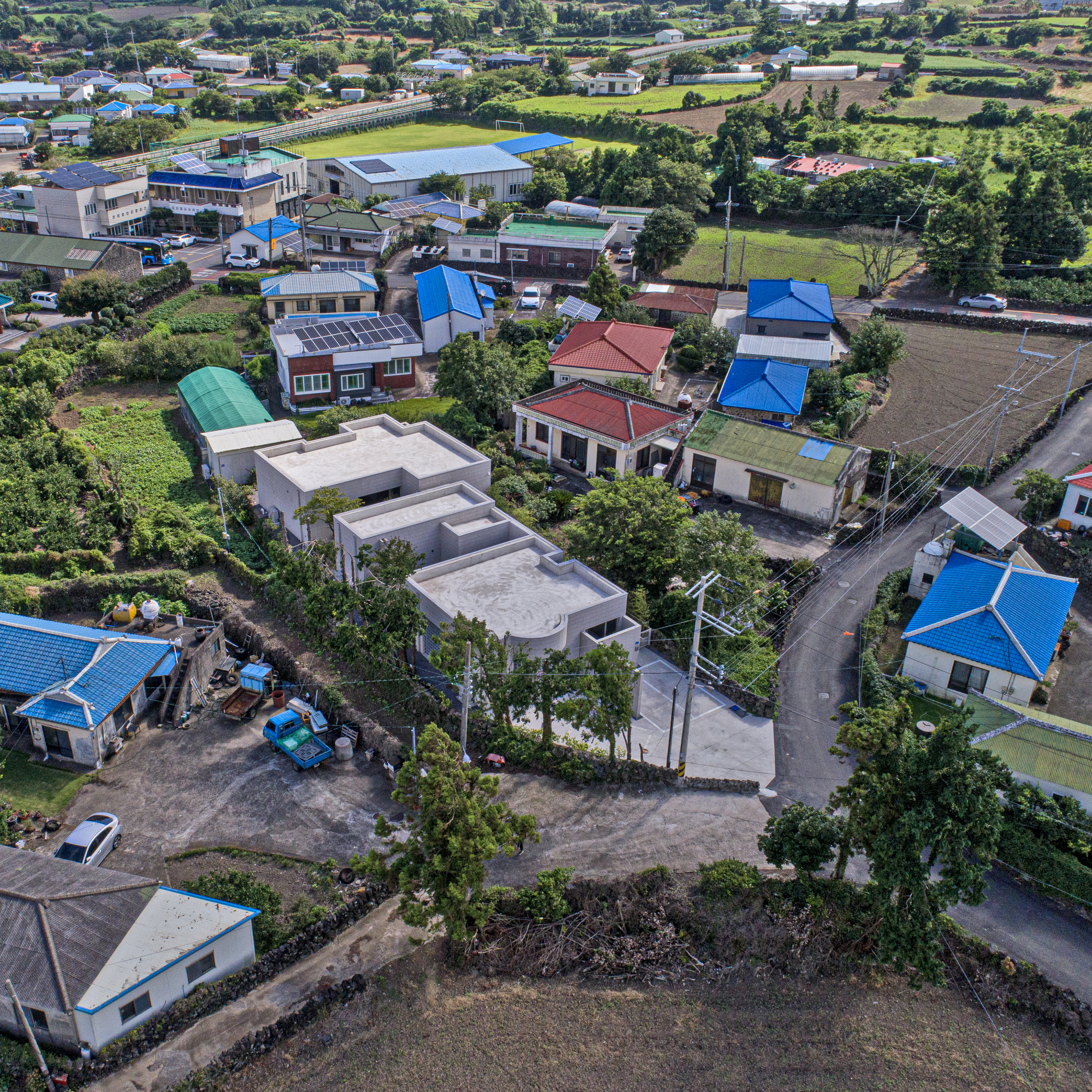
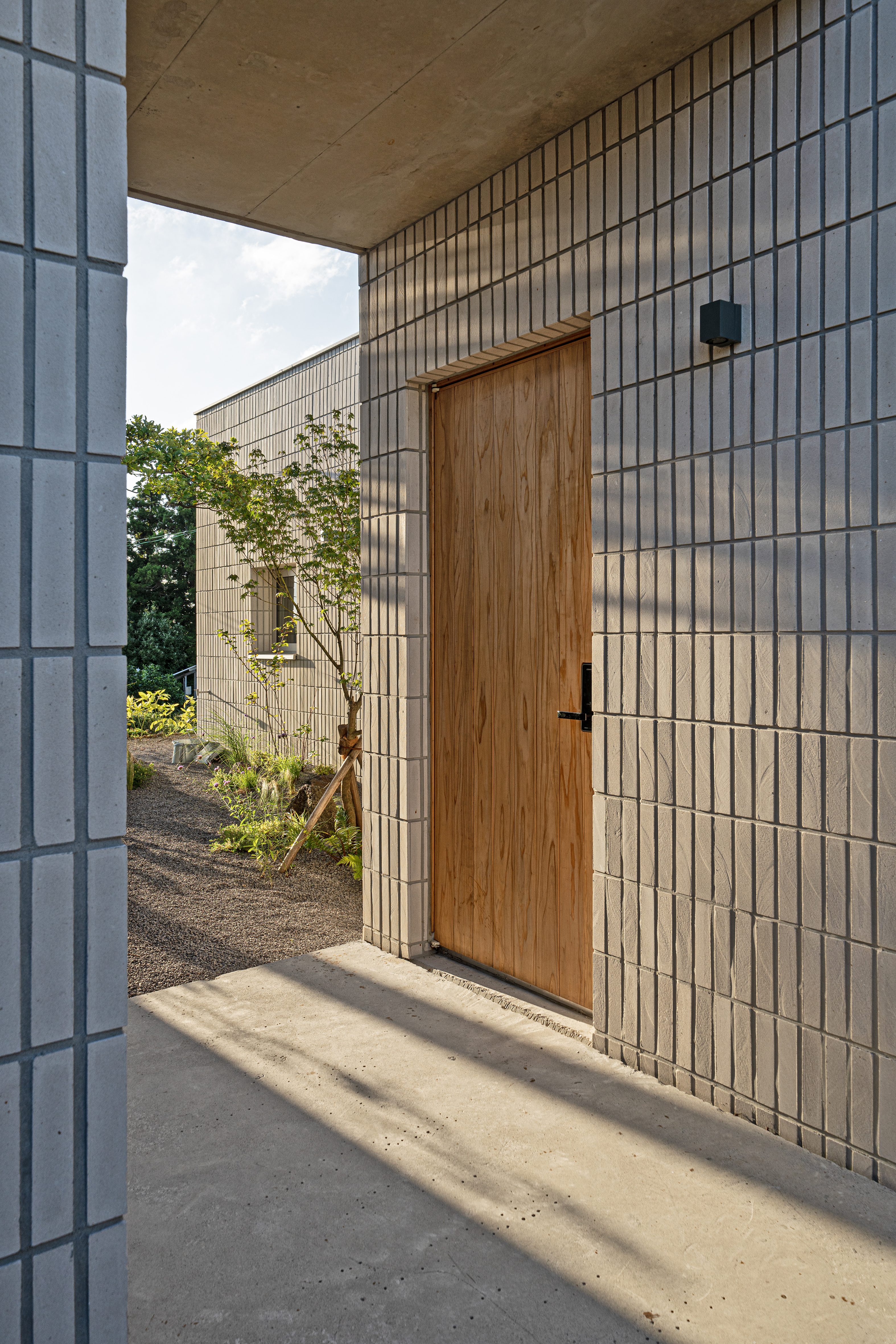
제주 어음마을(於音里) 외곽에 위치한 대지는 드문드문 집들이 자리한 중산간 마을에 놓여 있다. 인구밀도가 낮고, 작게 나뉜 땅들이 하나의 구역을 이루며, 겹담이 아닌 홑담으로 구획된 올레길은 마을의 건조하고 절제된 분위기를 만든다. 이러한 맥락에서 건축이 마을에 진입하는 방법은 최대한 몸을 낮추고 조용하게 스며드는 것이다. 건축은 낮고 길게 뻗은 형태를 취하며, 정면성을 강조하기보다 주변 건축물과의 배치 관계에 순응한다. 그러면서도 마을의 풍경 속에서 비교적 밝고 경쾌한 분위기로 자리할 수 있도록, 둥근 선과 밝고 경쾌한 색감의 파사드를 제안하였다. 이는 마을의 한 얼굴로서 긍정적 변화를 만들고자 하였다. 이곳의 리듬은 형태 자체에서 발생하는 것이 아니라, 동과 동 사이의 간격과 이동, 서로를 바라보는 관계 속에서 형성된다.
느슨한 경계가 풍경으로 작용되는 과정
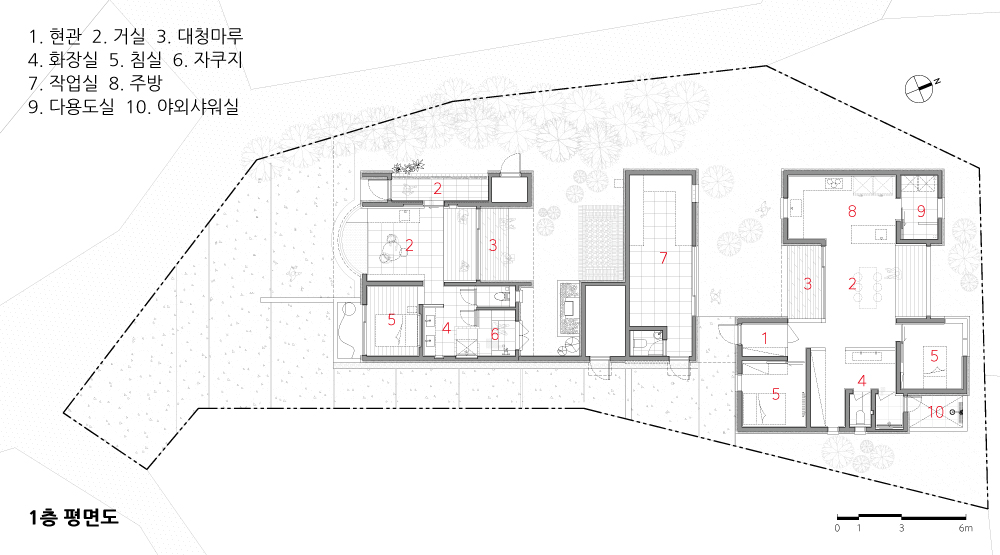
어음마을에서 ‘음’은 소리 음을 뜻한다. 때문에 건축은 고요하게 조율된 간격 속에서 리듬을 형성하는 것을 출발로 삼았다. 리듬(音)은 세 개의 동으로 구성된다. 앞동은 방문객을 위한 스테이, 중간동은 거주자의 작업실, 마지막 동은 주거 공간이다. 각각의 건축물이 다른 기능을 갖지만, 공간의 위계가 드러나지 않으면서 서 있는 위치에 따라 각 경계가 하나의 장면으로 읽히도록 하였다. 앞동의 파사드는 마을의 배경이 되고, 작업동의 골격은 스테이에서 바라보는 외부공간의 풍경으로 함입된다. 작업동에서 바라보는 주거의 풍경은 적절한 거리감을 형성하며, 동시에 주거 공간의 경계를 이룬다. 건축의 외면이 곧 서로의 배경이자 경계로 작용하며 서로의 풍경을 품는다. 이때 변하는 것은 공간의 위계가 아니라 바라보는 시점이다.
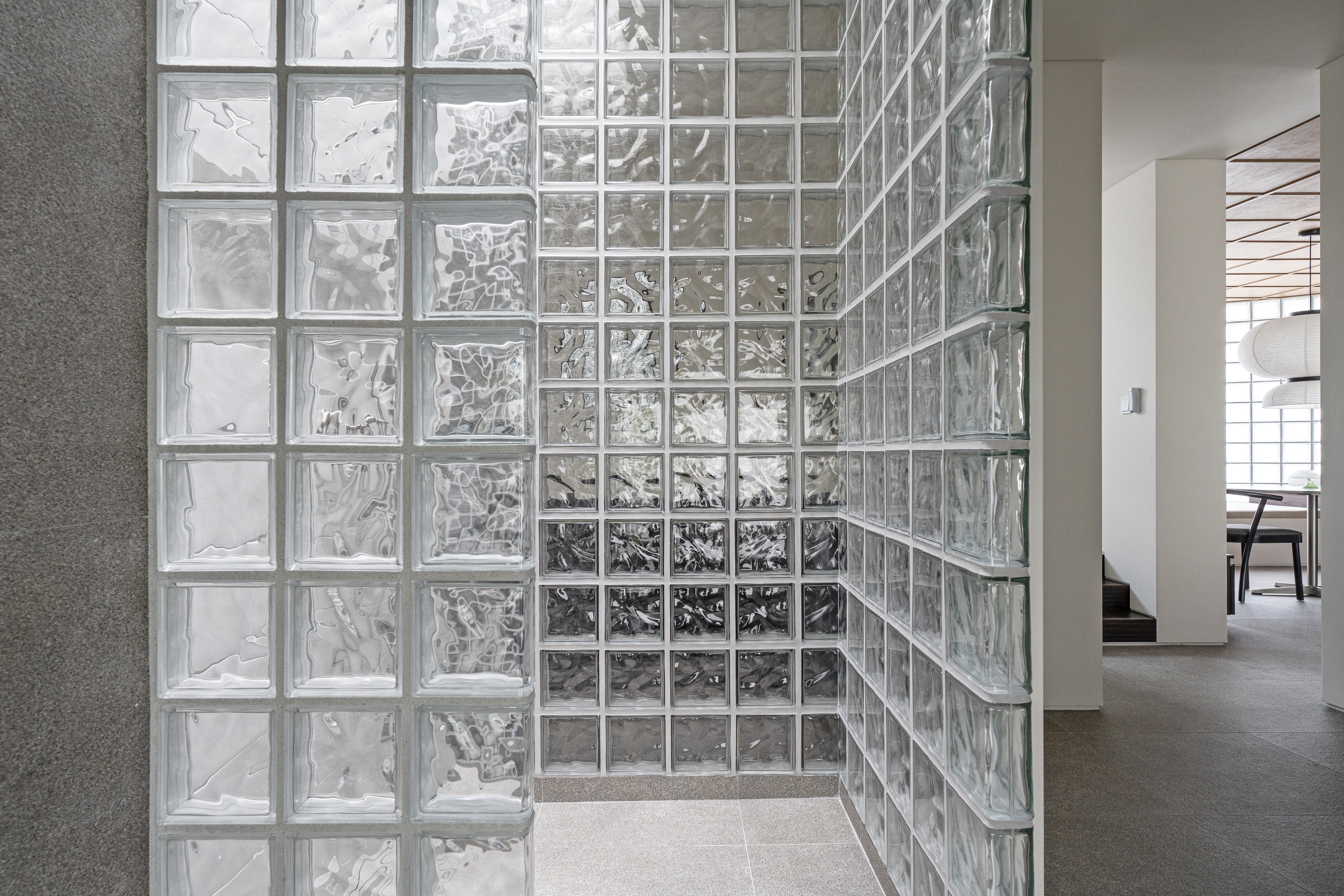
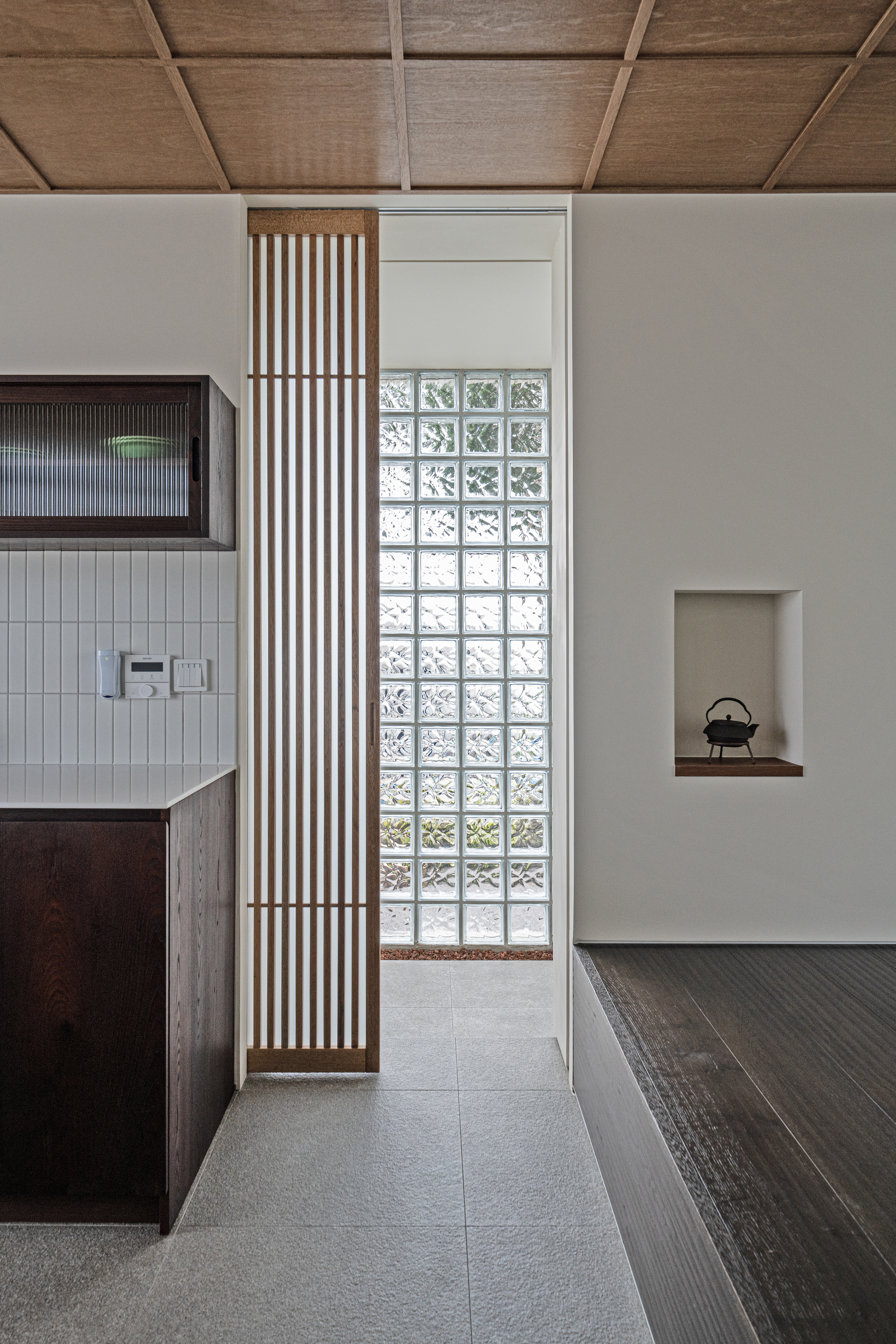
정면의 밝은 타일과 부드러운 곡선은 마을 속에서 과도하게 드러나기보다 주변 풍경의 일부로 자리한다. 유리블록은 빛을 부드럽게 산란시키면서도 내부를 직접 드러내지 않고, 안과 밖 사이에 놓인 반투명한 경계면을 만든다.
단(thresholds)에 의한 두 가지 시놉시스
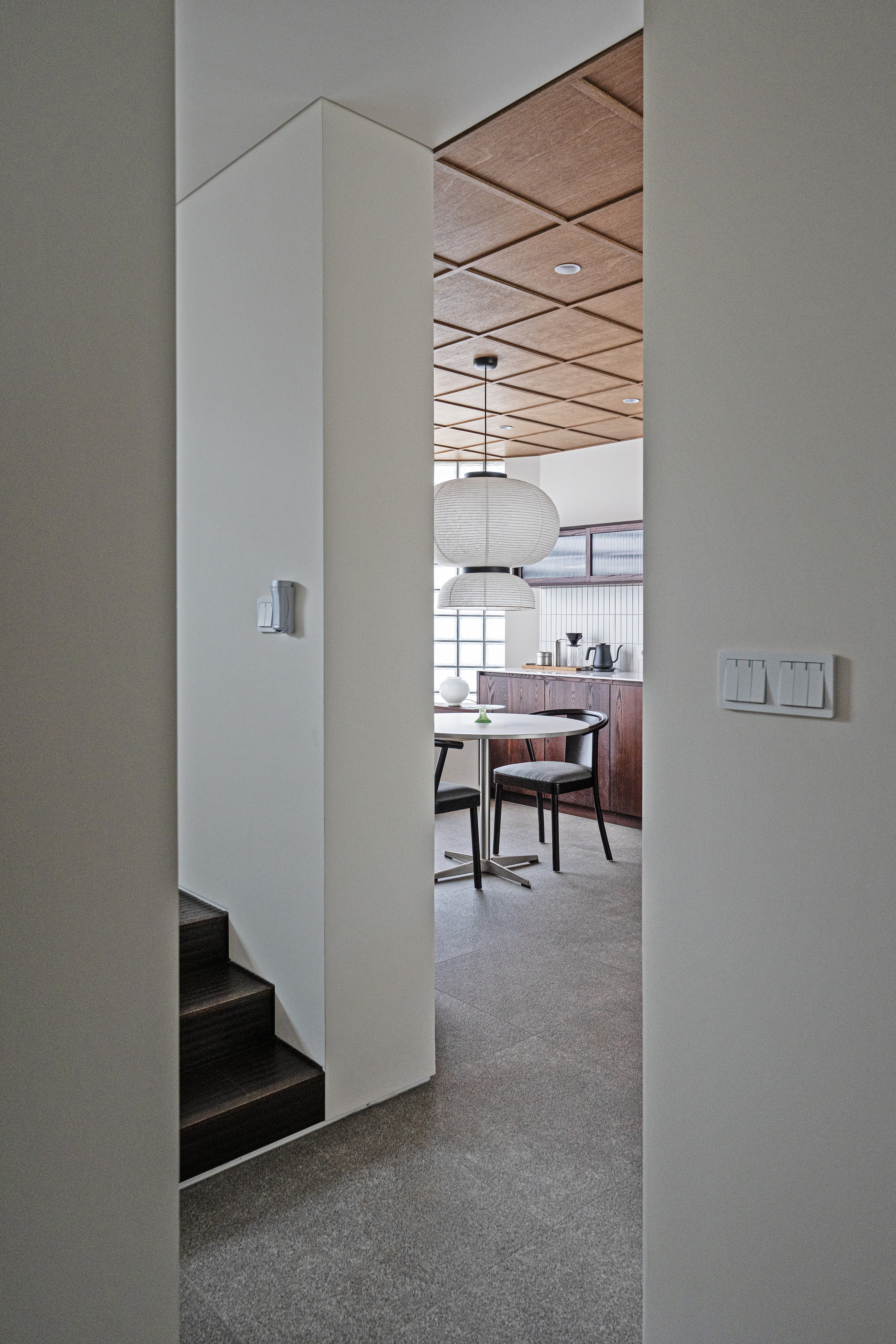
리듬(音)의 동선은 두 가지 시나리오로 구성된다. 리듬(音)의 첫 번째 과정은 거주자를 위한 동선이다. 긴 진입로를 따라 걷는 동안 여러 단을 오르는 과정은 하나의 경계 안으로 들어서는 감각을 형성한다. 여러 단의 높이차를 통해 몸은 근육감각적으로 공간의 경계를 지각한다. 현관의 문턱을 넘고, 좁은 복도를 통과하며 중심 공간을 지나 자기만의 방에 이르는 과정. 이 단순한 행위는 겹겹의 안을 구성하며 점진적 위요감을 만든다. 그 덕분에 내밀의 영역에서는 외부를 향해 열려있음에도, ‘안에 있음’의 감각을 유지한다.
두 번째 과정은 외부 방문객을 위한 동선이다. 작은 공간이지만 인상적인 체험을 형성하기 위해 각각의 장면들을 잘게 나누어 설정하였다. 각 공간으로 침투하는 모든 과정마다, 각기 다른 단이 압축된 동작을 일으킨다.
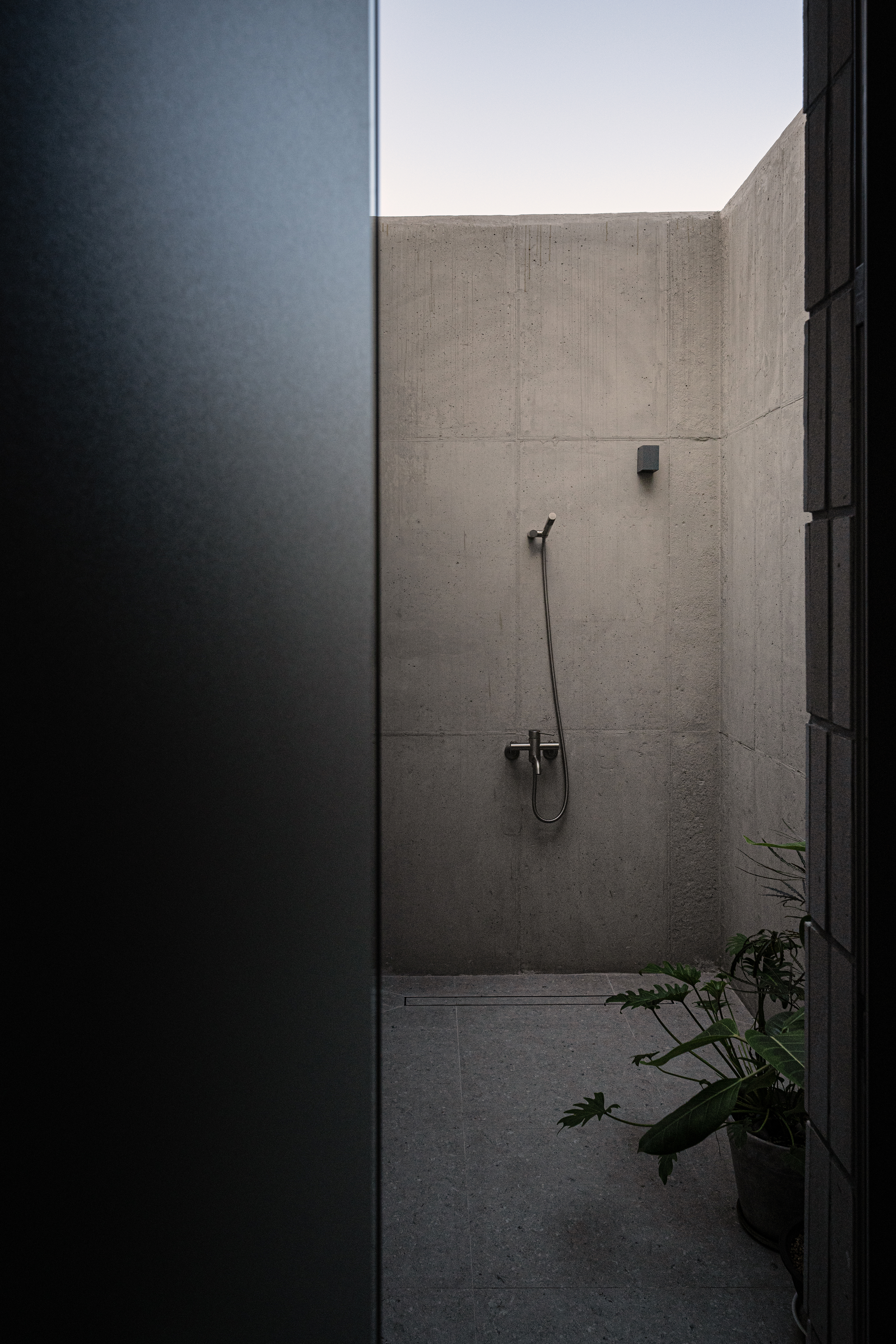
늦은 오후 현관에 들어서면 방풍림 사이 붉은 서향빛이 들어오고, 그 빛은 유리블록을 거쳐 내부에 산란된다. 몸을 돌려 문을 열 때 공간은 양옆으로 펼쳐진다. 다락을 올라가듯 몇 계단을 걸쳐 진입하는 침실, 대청마루에 올라 깊은 처마 아래 놓이는 순간, 각각의 문턱은 몸의 습관은 빌려 작은 단임에도 불구하고 공간이 확장되는 듯한 체험을 형성한다. 특히 유리블록이 천창처럼 빛을 투과하는 곳은 물과 만나는 순간, 몸과 건축의 가장 내밀한 접촉을 이룬다. 몇 계단 아래, 물소리만 들리는 자리는 가장 낯선 곳이자 가장 편안한 장소로 전환된다. 각 문턱을 넘을 때마다 마주하는 장면들은 리듬으로 체화되고, 작게 나뉜 공간은 응집된 하나의 경험으로 각인된다.
남는 것
리듬(音)은 세 개의 건축물이 하나의 형태로 합쳐지는 방식이 아니라, 각기 다른 기능과 거리를 가진 공간들이 하나의 경험으로 연결되는 방식에 대한 작업이다. 공간들은 분리되어 있지만, 그 사이를 이동하는 몸의 감각 안에서 하나의 리듬으로 이어진다.
프로젝트는 마을의 낮은 밀도에 따라 프로그램을 땅 위에 분산시키고, 약간의 단과 깊은 처마, 유리블록, 대청마루 등을 통해 경계를 부드럽게 조율한다. 어음리의 이름에 담긴 음(音)은 이곳에서 단일한 은유로만 남지 않는다. 세 개의 동은 각자의 속도를 갖고, 그 사이를 통과하는 몸의 움직임 속에서 하나의 거주 리듬으로 완성된다.

The First Impression of the Village
The site is located on the outskirts of Eoeum-ri, Jeju, in a mid-mountain village where houses are scattered sparsely across the landscape. With its low population density, small subdivided plots, and olle paths defined by single stone walls rather than double walls, the village has a dry and restrained atmosphere.
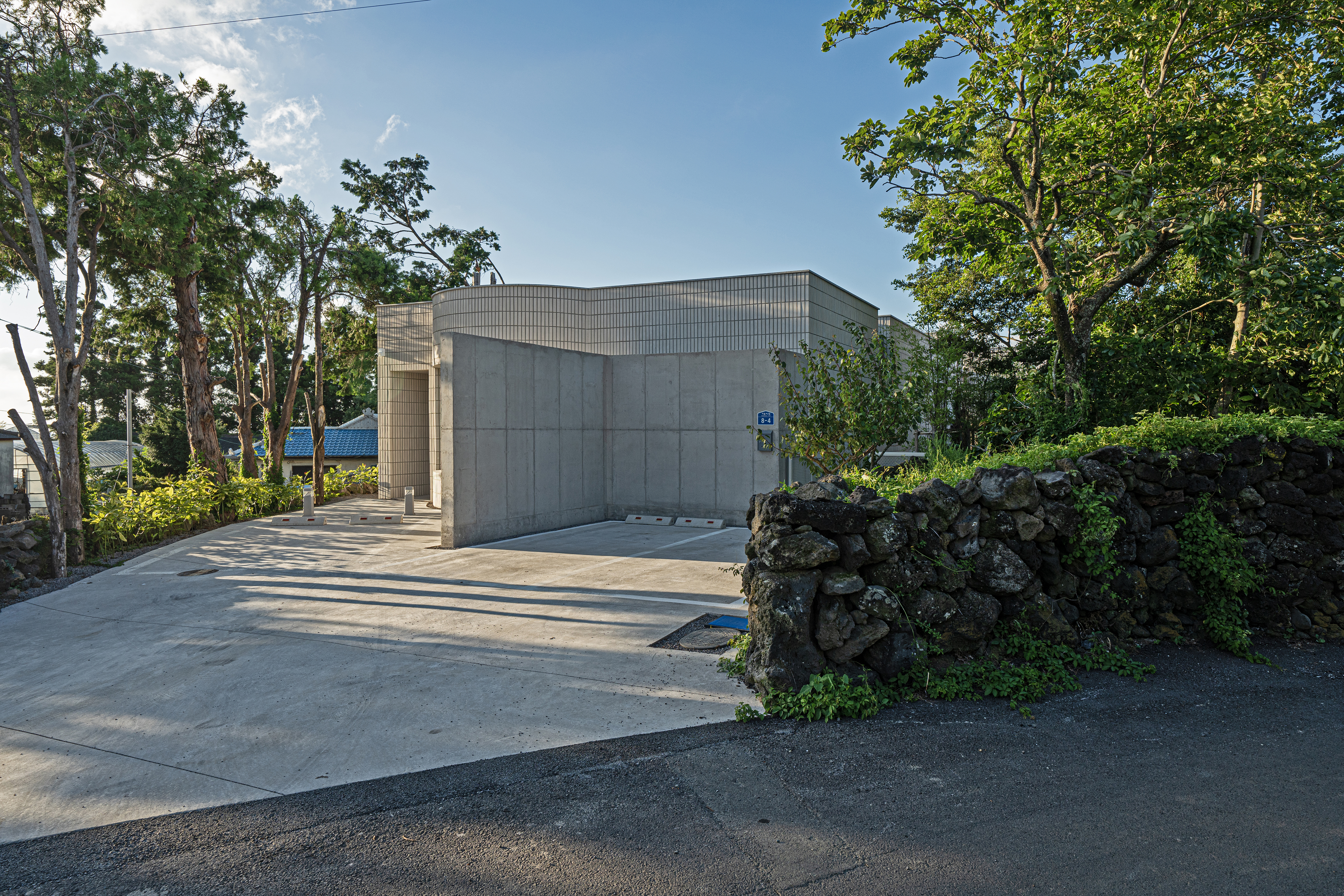
In this context, the way architecture enters the village is to lower itself as much as possible and quietly blend in. The building takes on a low and elongated form, following the placement of surrounding buildings rather than emphasizing a strong frontality. At the same time, afaçade with rounded lines and a bright, light color palette was proposed so that the architecture could settle into the village landscape with a relatively cheerful presence. As one face of the village, it seeks to bring about a positive change.
The rhythm of this place does not arise from the form itself, but from the intervals between the buildings, the movement through them, and the relationships formed as they look toward one another.
When Loose Boundaries Become Landscape
In the name Eoeum, the syllable “eum” means sound. The architecture of this place begins with the idea of forming rhythm within quietly tuned intervals.
Rhythm(音) is composed of three buildings. The front building is a stay for visitors, the middle building is the resident’s studio, and the last building is the living space. Each building clearly has a different function, but the hierarchy between them is not strongly exposed. Instead, depending on where one stands, each boundary is read as a scene.
The façade of the front building becomes a background to the village, while the frame of the studio is drawn into the outdoor scenery seen from the stay. The view of the residence from the studio creates an appropriate sense of distance, while also forming the boundary of the living space. The exterior face of each building becomes both a background and a boundary for the others, holding one another’s landscapes. What changes here is not the hierarchy of space, but the point of view.
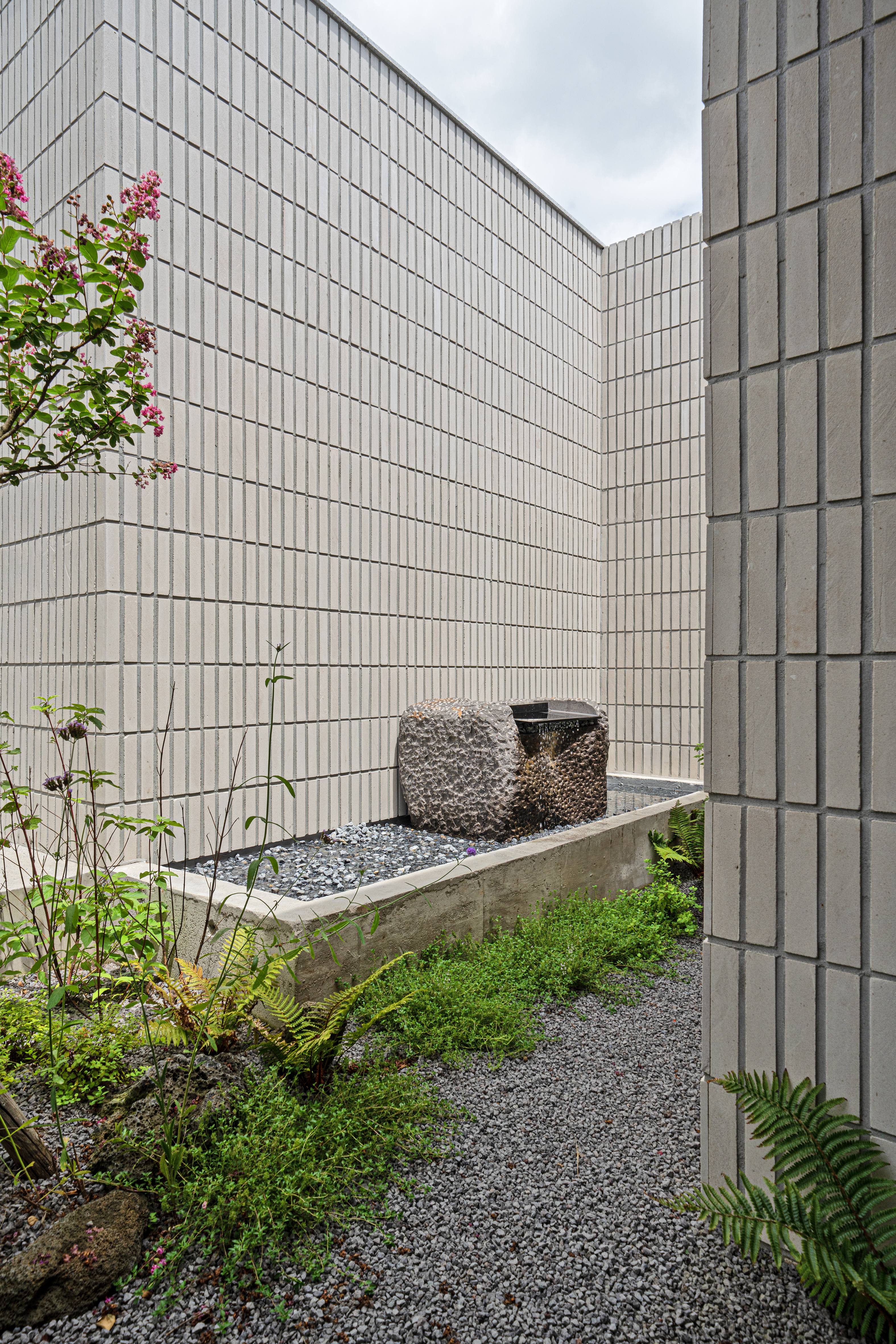
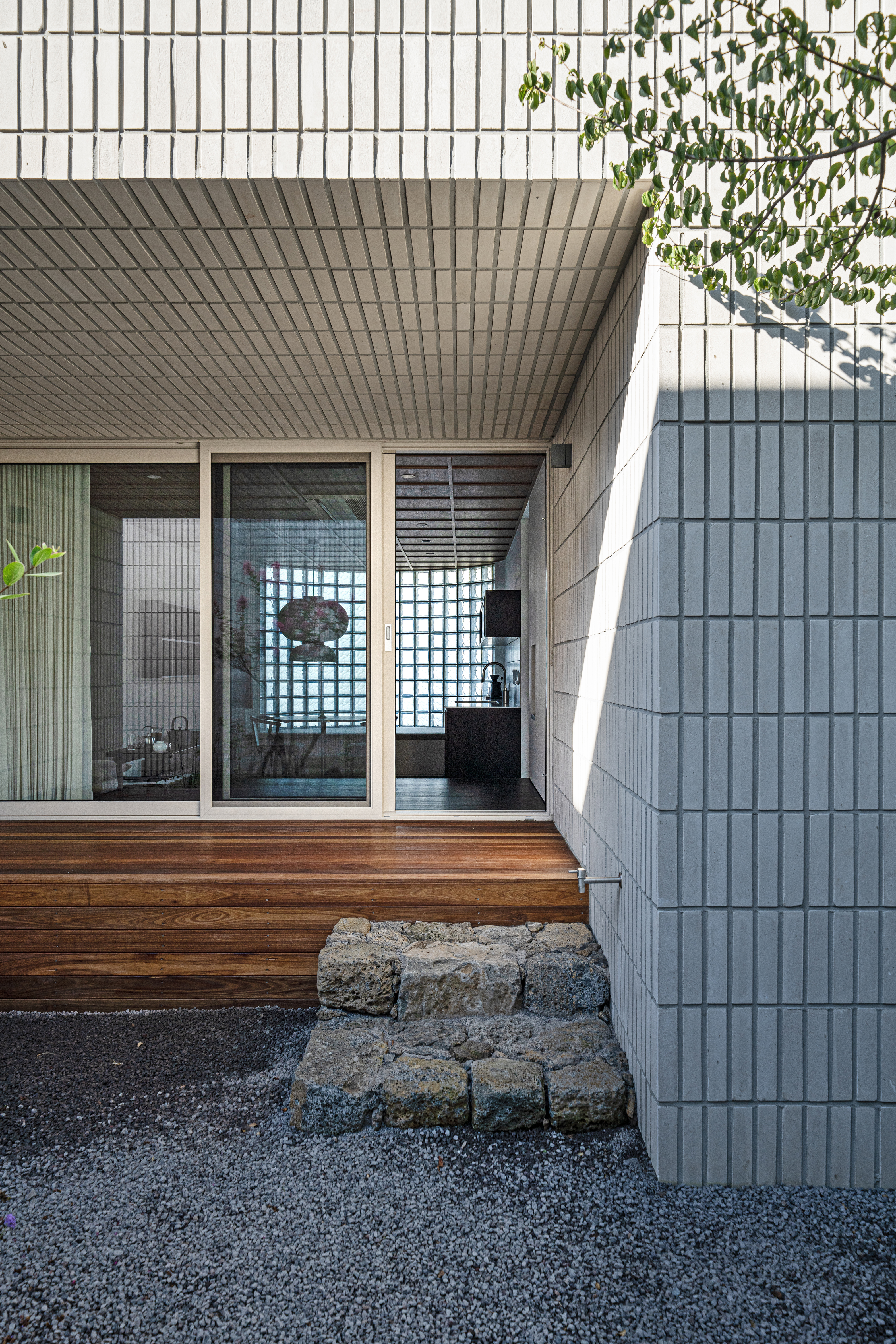
The bright tiles and soft curves on the front do not stand out excessively within the village. Rather, they settle as part of the surrounding scenery. Glass blocks softly scatter the light while preventing the interior from being directly exposed, creating a translucent boundary between inside and outside.
Two Scenarios Created by Thresholds
The circulation of Rhythm(音) is composed of two scenarios.
The first is the route for the residents. Walking along the long entrance path and stepping up through several levels creates the feeling of entering into a defined boundary. Through these subtle changes in level, the body senses the boundaries of space physically and instinctively.
Crossing the threshold of the entrance, passing through a narrow corridor, moving through the central space, and finally arriving at one’s own room — this simple sequence creates layers of interiority and a gradual sense of enclosure. Because of this, even in the most private area, where the space opens outward, the feeling of “being inside” is maintained.
The second scenario is the route for outside visitors. Although the space is small, each scene was carefully divided in order to create a memorable experience. In every process of entering each space, different thresholds produce compressed movements.
When one enters in the late afternoon, reddish western light passes through the windbreak forest and scatters into the interior through the glass blocks. As the body turns and opens the door, the space unfolds to both sides. A bedroom entered by climbing a few steps, like going up to an attic; a moment of stepping onto the daecheong maru and coming under the deep eaves — each threshold works with the body’s familiar movements and creates the experience of an expanding space, despite its small scale.
In particular, where the glass blocks transmit light like a skylight, the moment of meeting water becomes the most intimate contact between the body and architecture. A few steps below, where only the sound of water can be heard, the space transforms into a place that is at once unfamiliar and deeply comfortable.
The scenes encountered at each threshold become embodied as rhythm, and the small divided spaces are remembered as one condensed experience.
What Remains
Rhythm(音) is not a project in which three buildings merge into a single form. Rather, it is an exploration of how spaces with different functions and distances can be connected into one experience. The spaces are separate, but through the bodily sensation of moving between them, they are linked as a single rhythm.
Following the low density of the village, the project disperses its programs across the land. Through subtle level changes, deep eaves, glass blocks, and the daecheong maru, it gently tunes the boundaries between spaces.
The sound, 音, contained in the name Eoeum-ri, does not remain here as a single metaphor. The three buildings each have their own pace, and through the movement of the body passing between them, they are completed as one rhythm of dwelling.


| 리듬(音) 설계자 | 김지희 건축사_(주)김오 건축사사무소 건축주 | 비공개 시공사 | (주)하백종합건설 대지위치 | 제주특별자치도 제주시 애월읍 어음리 주요용도 | 단독주택 / 스테이 대지면적 | 587.00㎡ 건축면적 | 208.63㎡ 연면적 | 188.12㎡ 건폐율 | 35.54% 용적률 | 32.05% 규모 | 1F 구조 | 철근콘크리트구조 외부마감재 | 외부용타일, 노출콘크리트 내부마감재 | 수성페인트, 합판 위 오일스테인 마감, 강마루 설계기간 | 2022. 08 - 2023. 05 공사기간 | 2023. 06 - 2024. 04 사진 | 황효철 |
Rhythm(音) Client | Private Construction | Habaek Construction Co., Ltd. Location | Eoeum-ri, Aewol-eup, Jeju-si, Jeju-do Program | Single-family house / Stay Site area | 587.00㎡ Building area | 208.63㎡ Gross floor area | 188.12㎡ Building to land ratio | 35.54% Floor area ratio | 32.05% Building scope | 1F Structure | RC Exterior finishing | Exterior tile, exposed concrete Interior finishing | Water-based paint, Oil-stained plywood, Engineered wood flooring Design period | Aug. 2022 – May 2023 Construction period | Jun. 2023 – Apr. 2024 Photograph | Hwang Hyochul |
'회원작품 | Projects > House' 카테고리의 다른 글
| 강사유(江思留) 2026.6 (0) | 2026.06.30 |
|---|---|
| 일곡 하얀집 2026.6 (0) | 2026.06.30 |
| 호운 2026.5 (0) | 2026.05.31 |
| 제주 나의 집 2026.5 (0) | 2026.05.31 |
| 숲숨집 2026.4 (0) | 2026.04.30 |