
2026. 4. 30. 11:20ㆍ회원작품 | Projects/House
Forest Breathing House
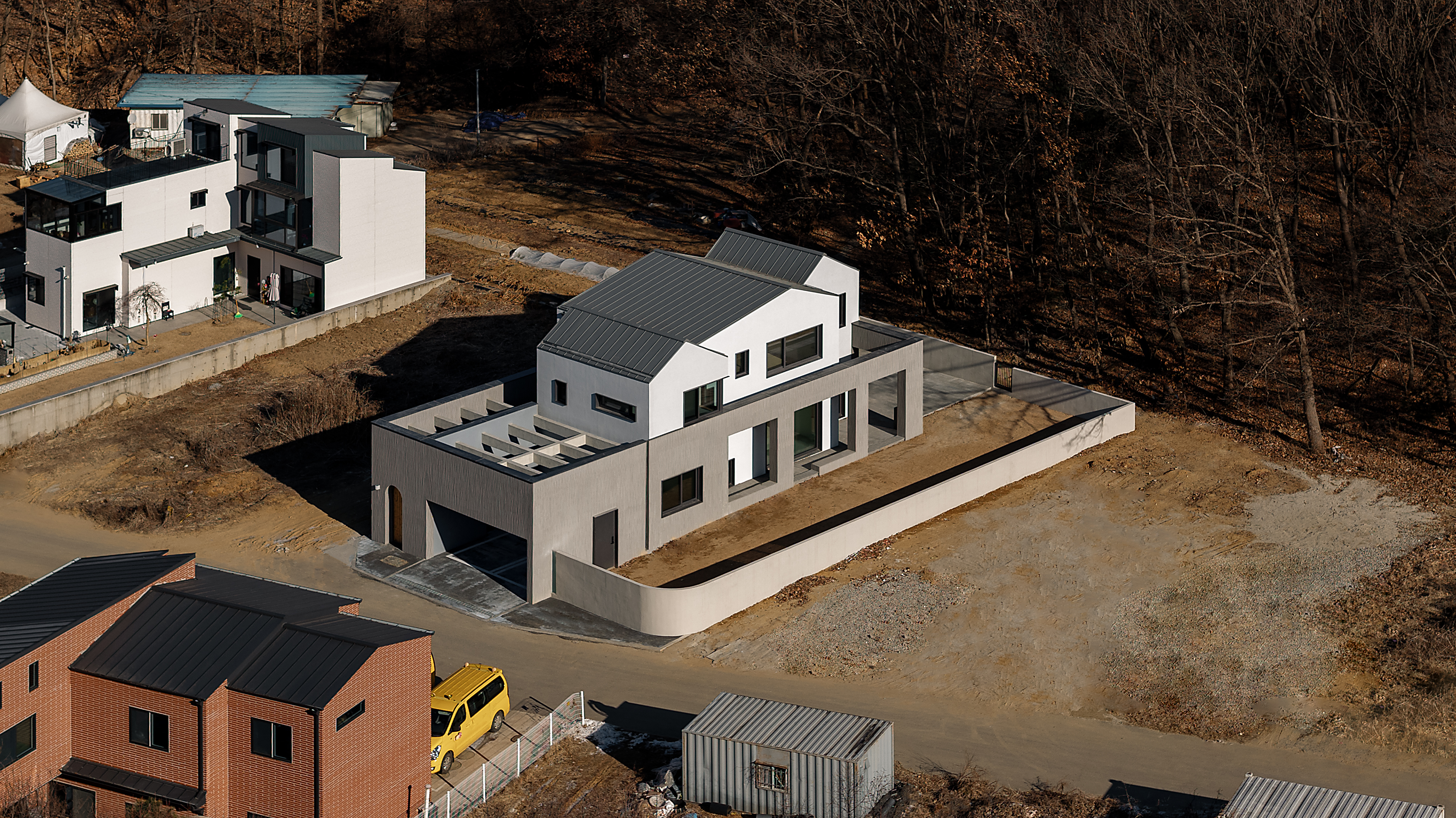
2022년 4월, 설렘 가득한 가족과 만났고 설계를 시작했다. 가족들은 각각 뚜렷한 로망을 갖고 있었고, 고양이 깨비도 가족의 중요한 일원이었다. 설계가 완료되고 시공사를 만나고 있던 코로나 시절의 막바지, 급변한 대출정책으로 착공이 무산되었다. 그러나 1년여 만에 가족은 다시 우리를 찾았고 프로젝트를 재개했다. 변화한 상황에 맞게 설계 변경을 하고, 2024년 늦여름 드디어 공사가 시작되었다.
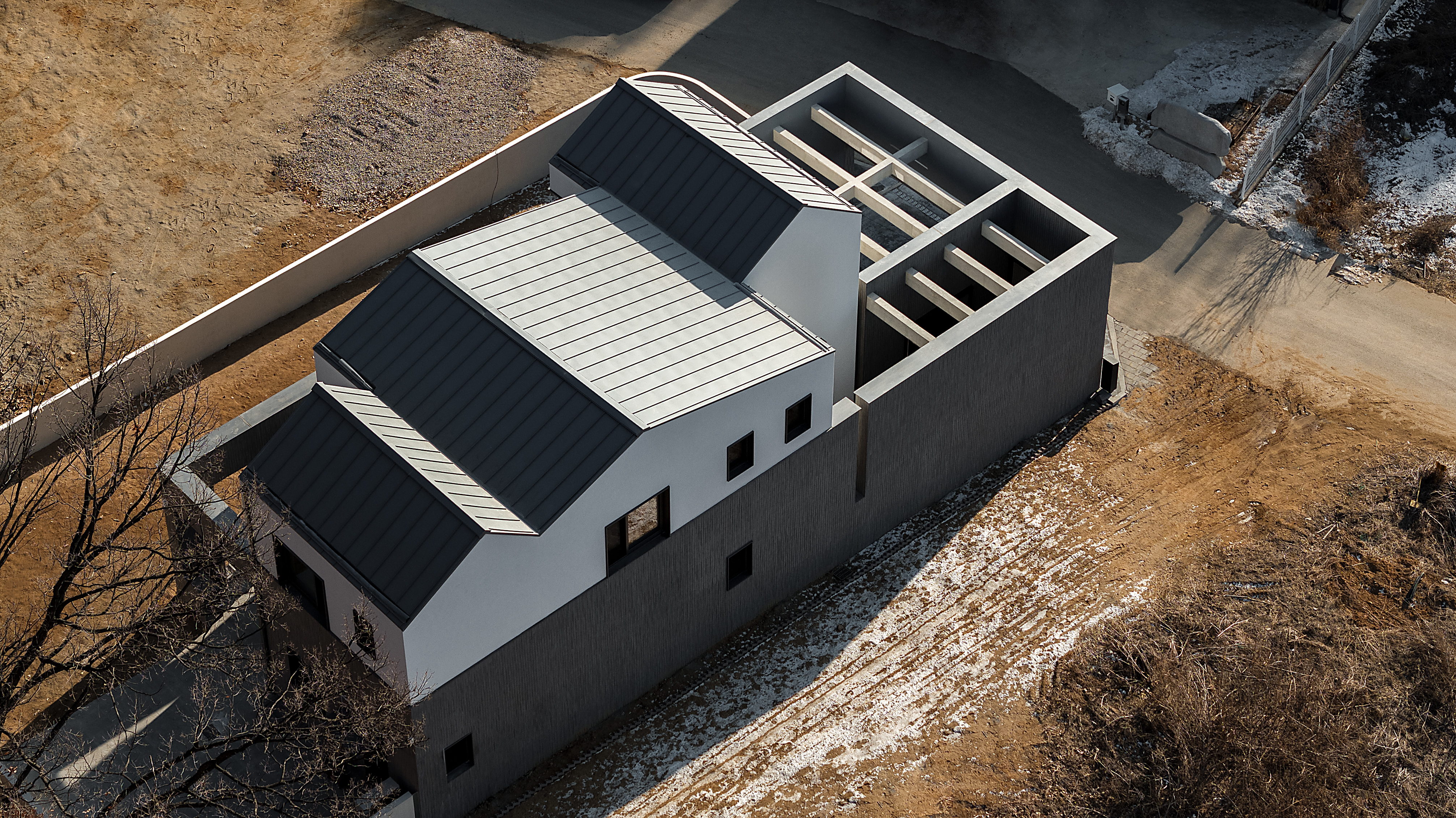
설계기간 동안 이 집의 별명은 ‘커 보이는 집’이었다. 최대 건폐율 20%로 제한된 대지에 가능한 건축면적은 99.2㎡(약 30평)로 제한되어 있었다. 건축면적을 최대한 확보하고 1층과 2층의 공간 크기를 달리할 수 없는 상황에서 내부 공간들은 가족들 각각의 라이프스타일과 필요를 고려해 최대한 다양하고 리듬감 있게 구성했다. 필요하지만 유연하게 사용할 수 있는 공간들은 집과 바깥 사이에 벽을 두어 만들었다. 흐름과 머무름을 고민하며 만들어진 이 사이공간들은 공간의 필요도 해결하고, 단독주택은 처음인 가족들의 불안감도 해결했다.
숲으로, 숲처럼 숨 쉬는 집
신도시 아파트 단지 사이의 작고 꼬불거리지만 잘 포장된 산길을 잠시 오르면 거대한 숲으로 둘러싸인 마을이 나타난다. 땅을 처음 만났을 때의 스펙터클과 따스한 분위기는 꽤 인상적이었고, 이 집에 들고 나는 모든 이들이 숲과 함께 머문다 느낄 수 있기를 바랐다.
숲으로 숨 쉬는 집이자, 가족들과 깨비의 포근한 숨숨집이 되기를 바라며, ‘숲숨집’이라 이름 붙였다.
흰 덩어리들과 회색벽
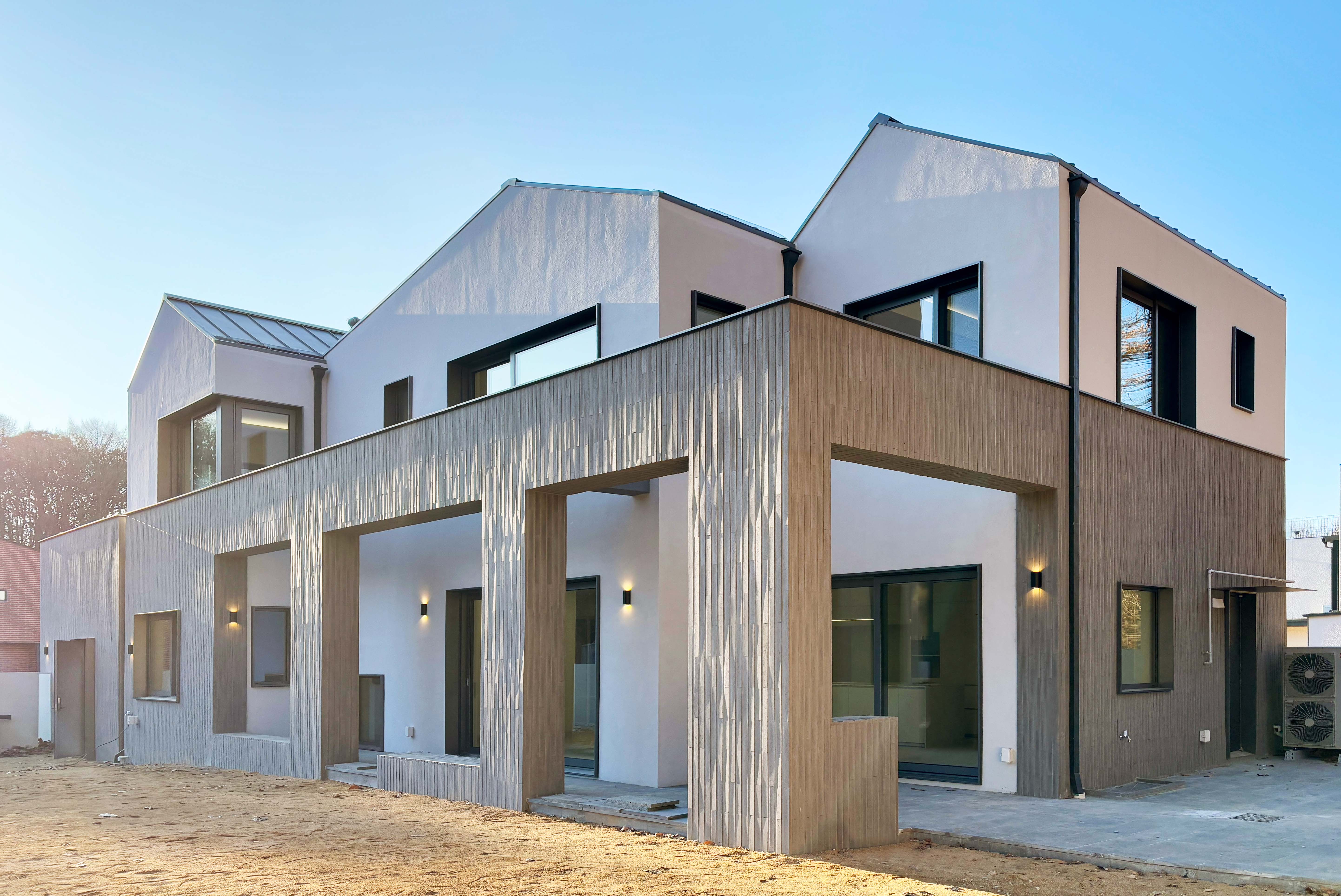
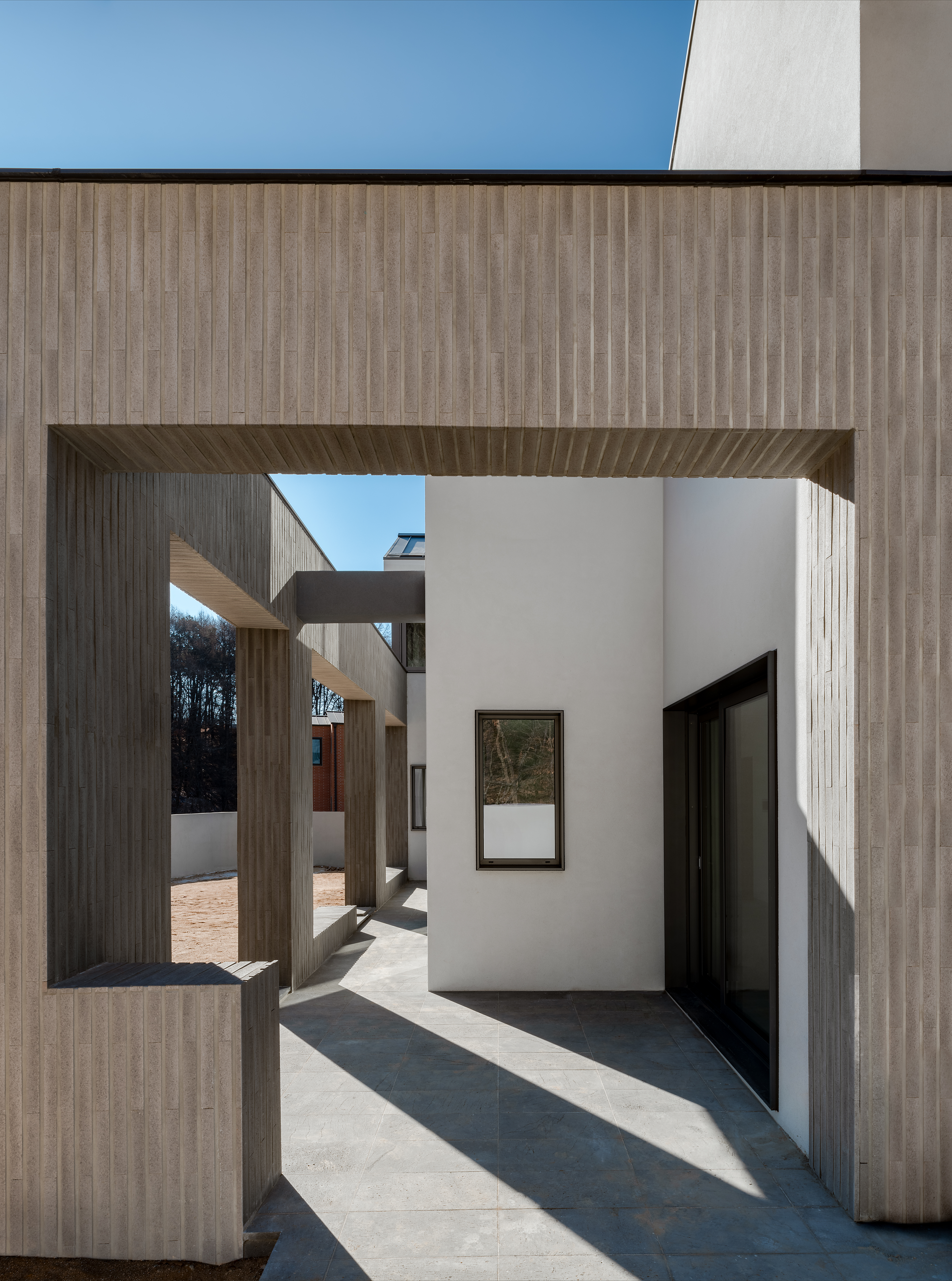
가족들이 머무는 실내공간은 보드라운 흰색 벽으로 감싸져 있고, 그 바깥으로 회색 벽돌 벽이 듬직하게 집을 한 겹 더 감싸고 있다. 이 회색 벽은 바깥의 시선을 걸러주고, 빛을 조정하고, 가족들이 들고 나는 공간들을 조성한다.
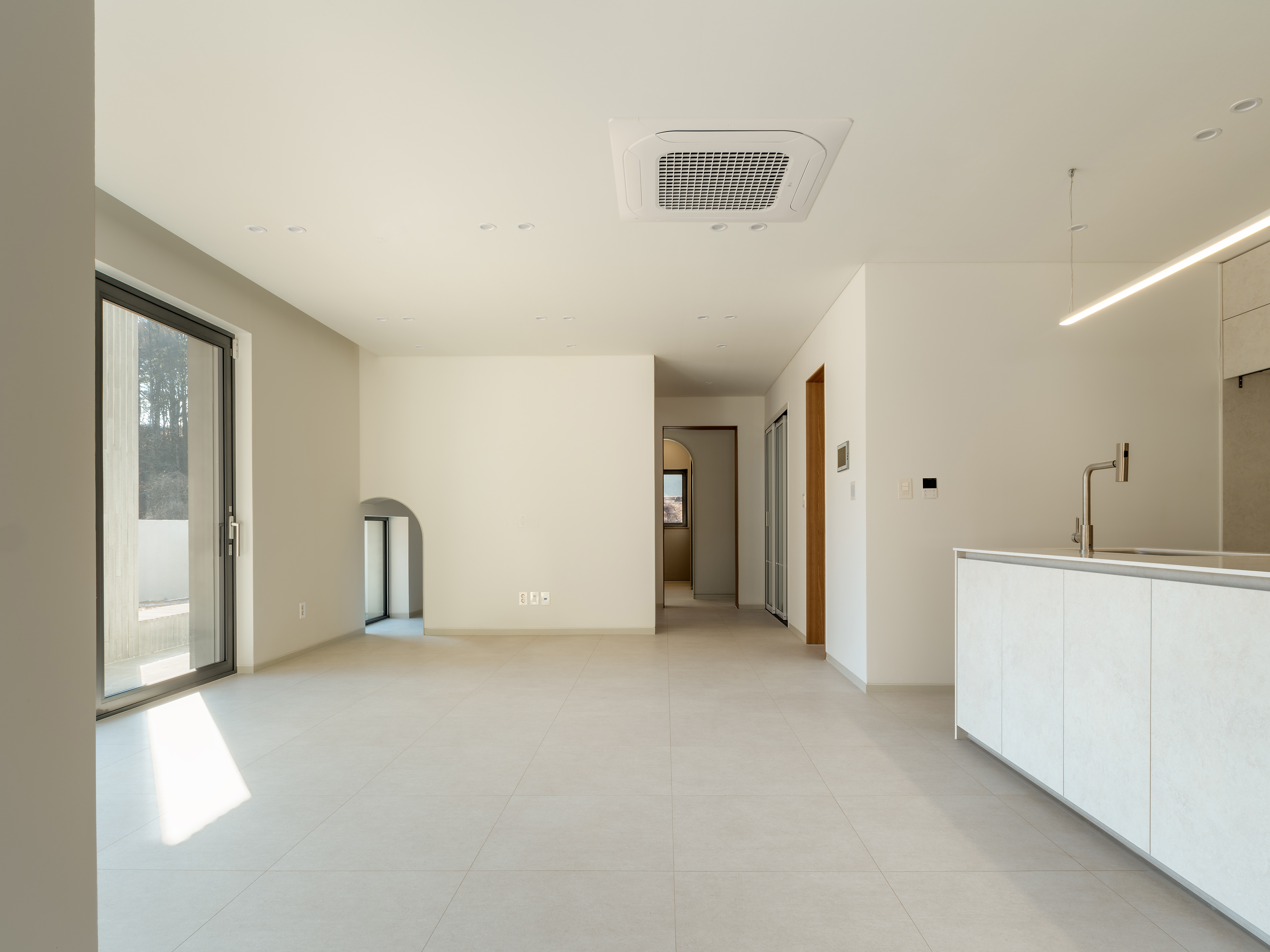
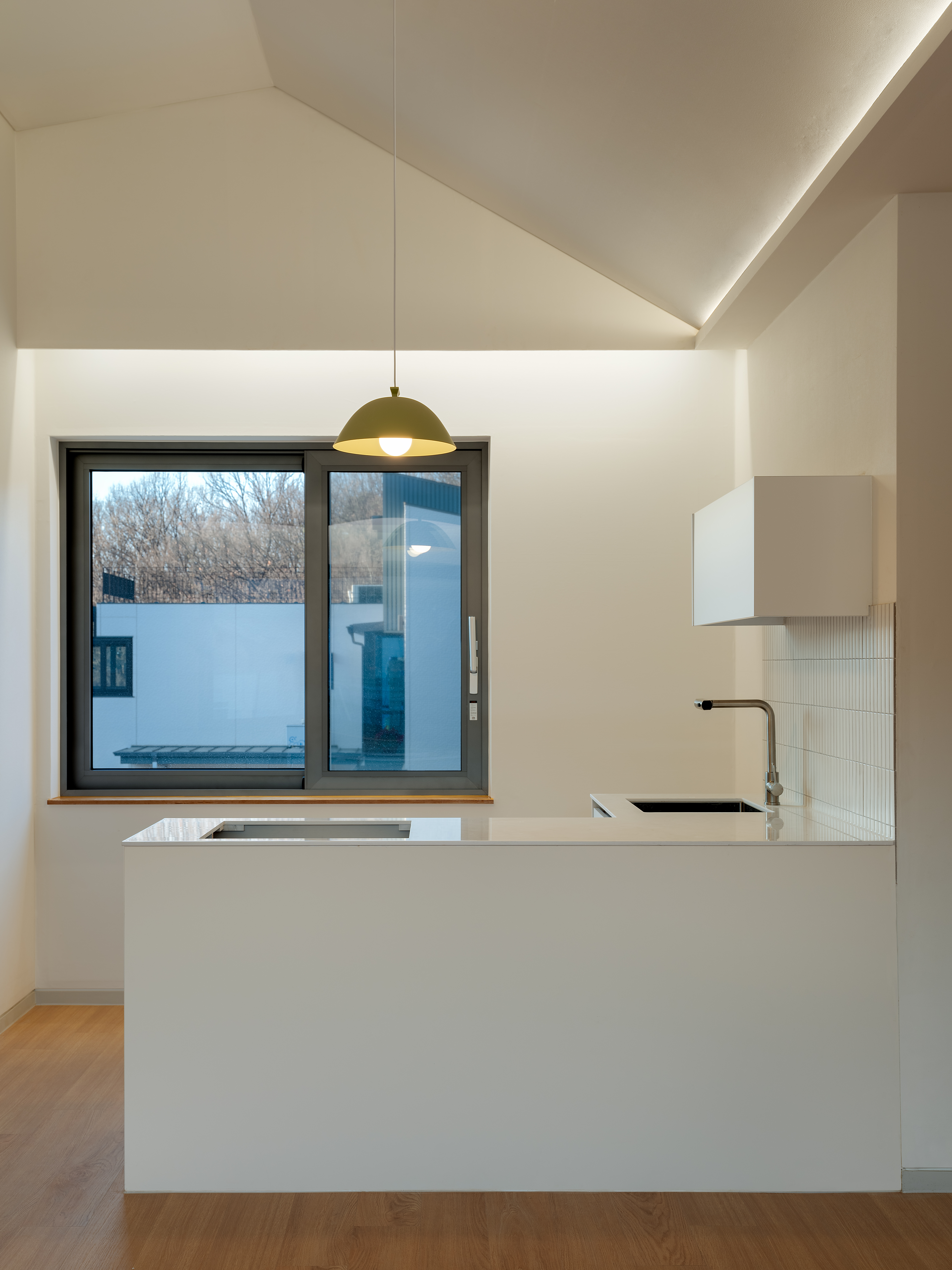
반면 공간 구성에 제약이 있던 내부공간들은 깔끔하고 실용적으로 계획되었다. 1층 내부공간은 회색벽과 어떻게 만나느냐에 따라 다른 감흥과 분위기가 만들어진다.
환대의 공간 (대문과 현관문 사이의 공간)
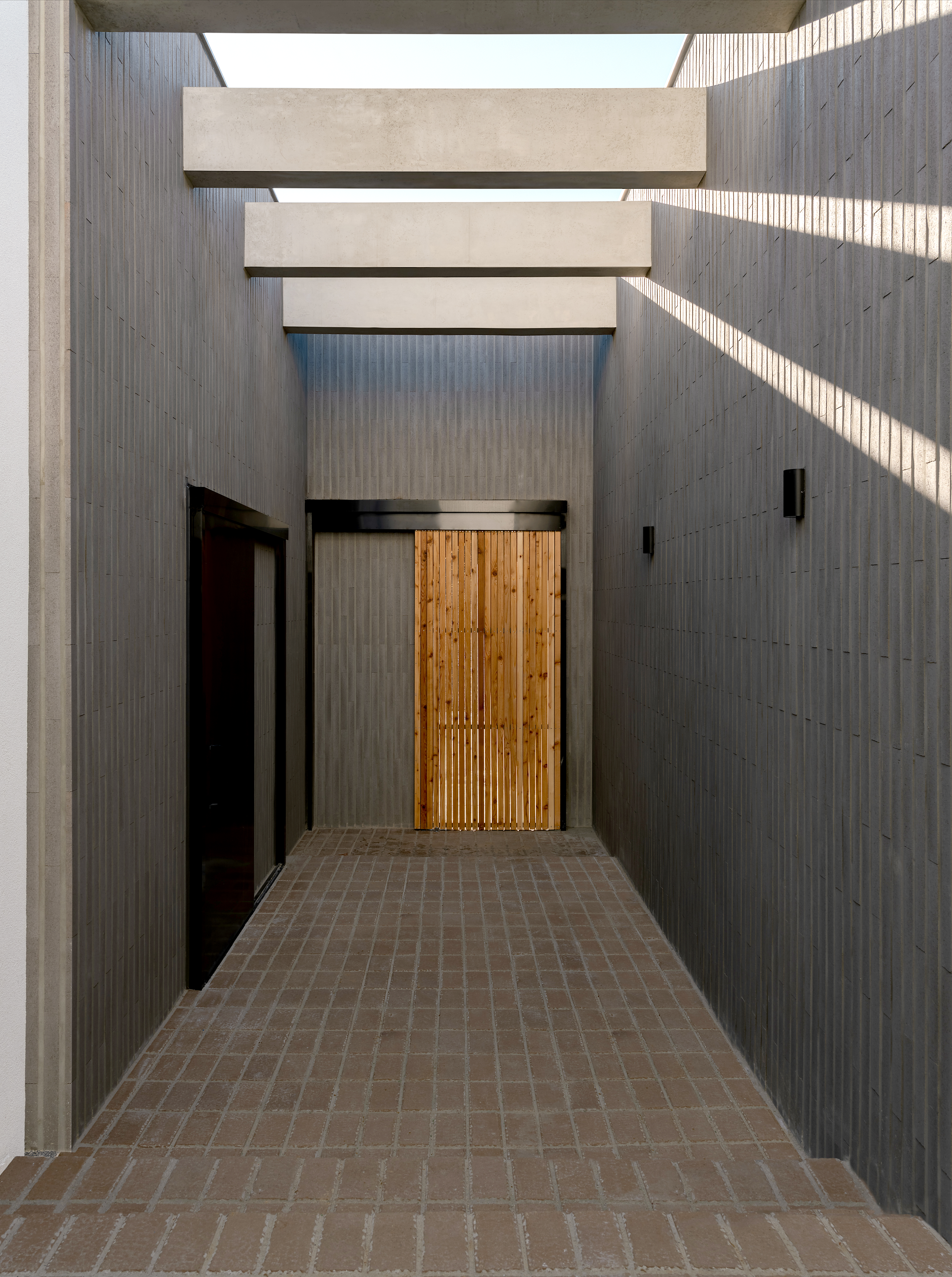
집을 나서는 이들을 북돋우고, 돌아오는 이들을 맞이하는 환대의 공간을 조금 더 그럴듯하게, 길게, 즐겁고 은밀하게 만들었다. 예전 단독주택들과 우리 주택들에서 종종 볼 수 있었던 환대와 응원의 공간, 대문을 들어선 후 신발을 벗는 곳까지의 시간과 공간이 사라진 건 여유와 공간의 부재이지 필요의 부재 때문이 아니리라. 대문을 들어서서 현관까지 걸어가는, 이 집에 들고나는 이들만을 위한 이 길이 늘 가족들을 응원하고 환대하며 맞아주기를 바랐다. 이 공간은 차고와도 연결되어 있다.
시선과 창
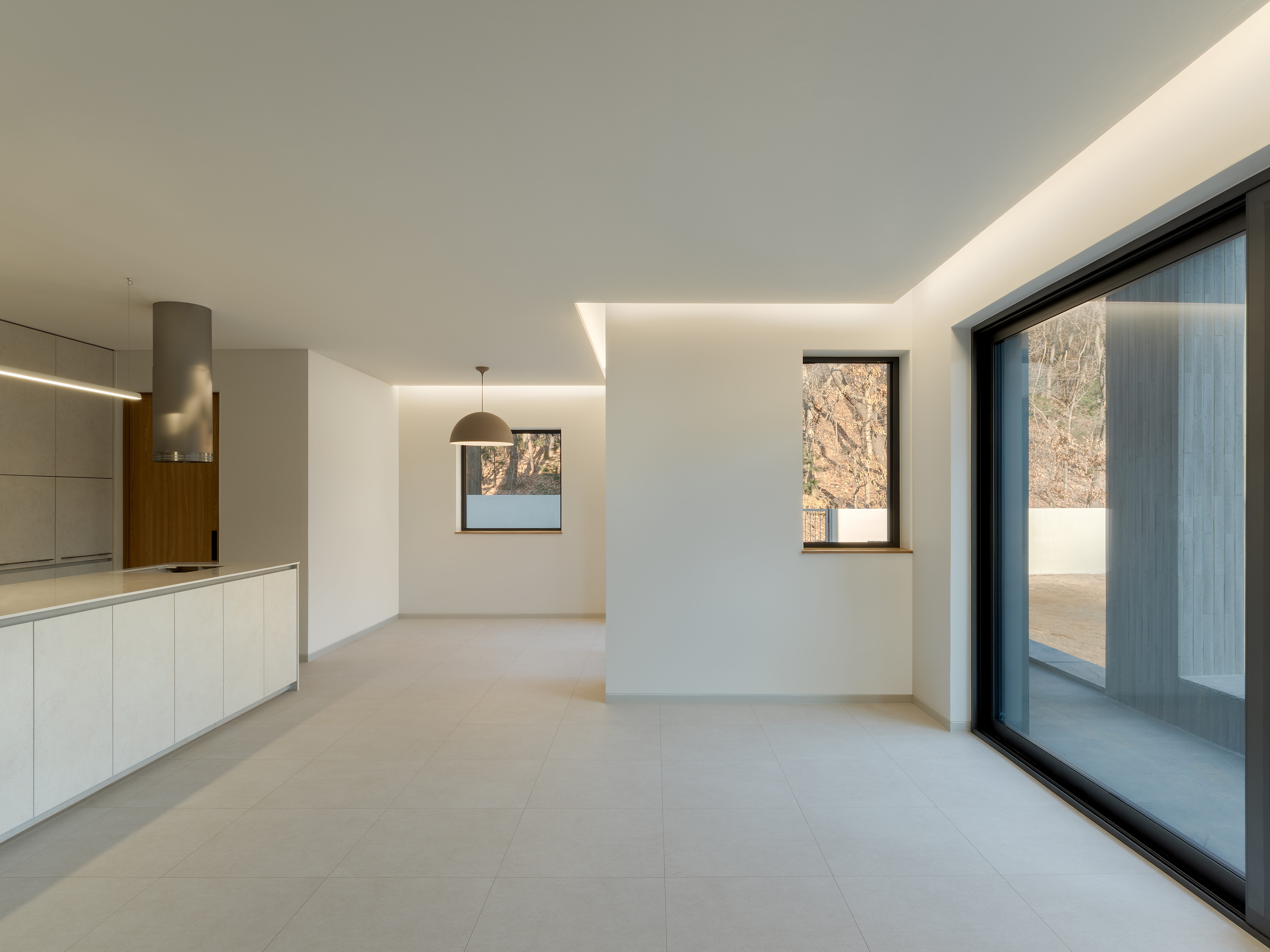
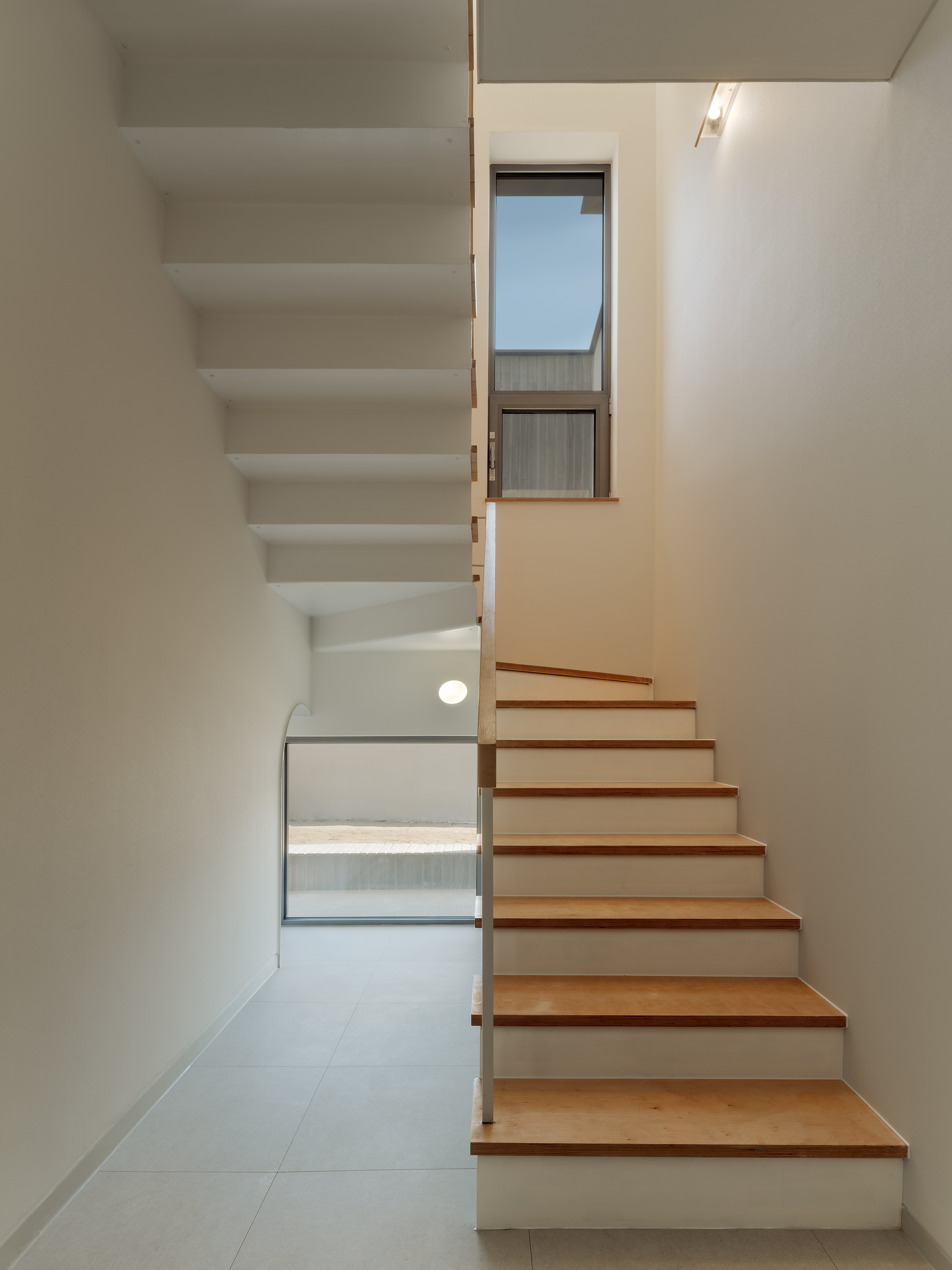
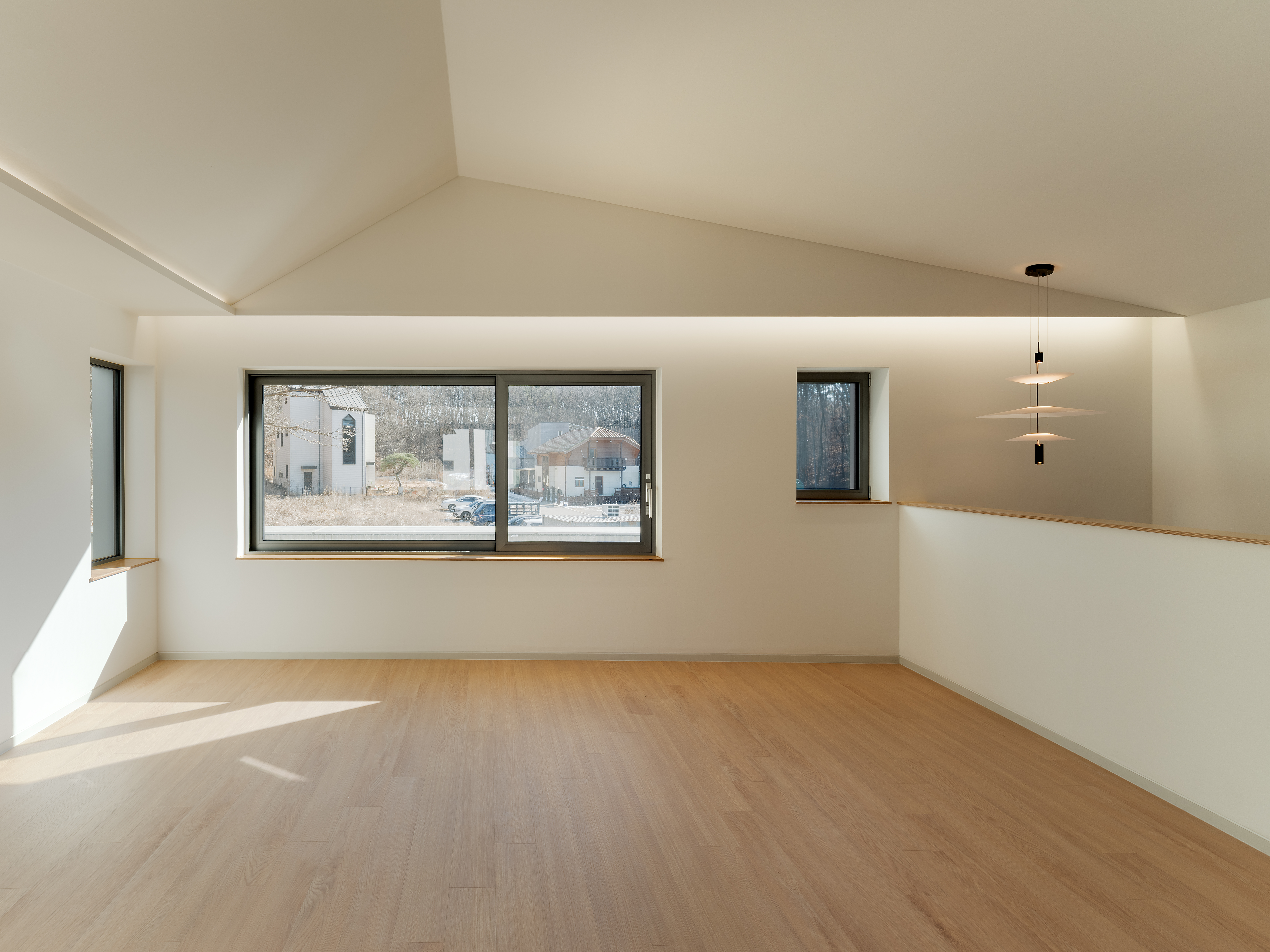
효율적이고 깨끗한 미감으로 만들어진 내부공간이지만, 시선이 닿는 다양한 방향의 정확한 위치에 창을 두어 일상에서의 시적감흥이 불러일으켜지기를 바랐고, 그 경험은 가족들 모두와 고양이 깨비에게도 가 닿기를 바랐다. 계단 아래 깨비의 공간은 가족들의 거실로 이어져 안정감이 있고, 깨비의 창은 가족들의 창과 마찬가지로 계절마다 각기 다른 풀과 나비, 새들로 깨비의 시간을 다채롭게 만들어줄 것이다.
소회
사무실을 운영해 온 지난 십 수 년 동안 수없이 많은 클라이언트들을 만났다. 설계와 건축의 과정이 즐겁기만 할 리 없다. 지난하고 때로 짜증스럽고 포기하느라 괴롭기도 하고 여러 사람이 하는 일이라 부딪히고 인상을 찌푸리게 되기도 하며, 그 결과 의기투합했던 이들이 다시는 보지 않는 원수지간이 되기도 한다. 하지만 이 집을 지으면서는 때로 힘든 순간이 있었을지 몰라도 단 한순간도 화를 내거나 서로를 탓하거나 짜증스러웠던 적이 없었다. 따뜻하고 배려 가득하며 평온한 마음의 가족들 덕이었을 거라 생각한다. 가족들의 사랑을 듬뿍 받고 가족들에게 다시 사랑을 줄 수 있는 집으로 오래오래 잘 작동하길 바란다.
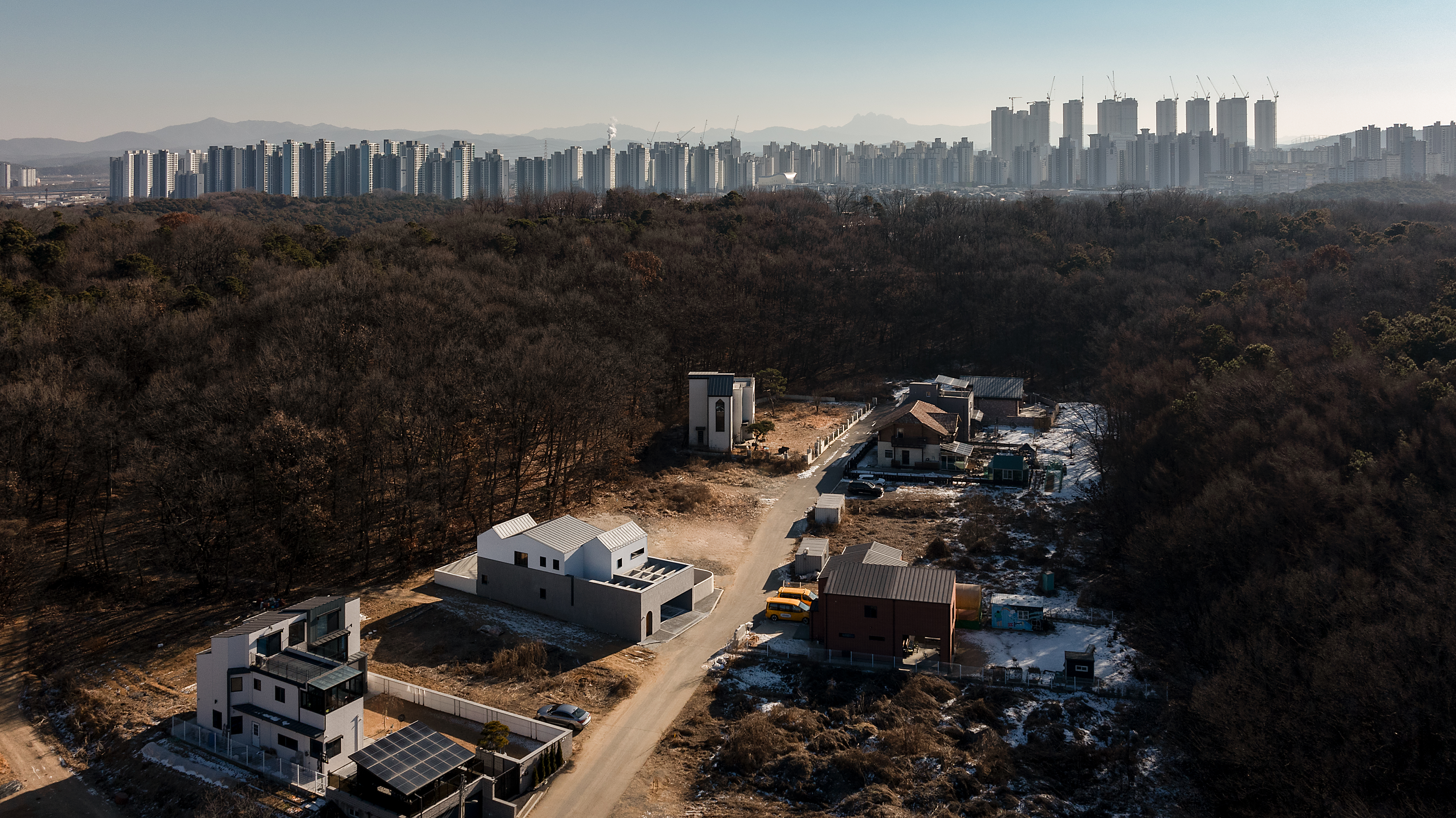
In April 2022, we first met this lovely family and began the design. Each family member had a clear dream for the house, and even their cat, Kkaebi, was an important part of the family. The design was completed, and we were in the final stage of meeting contractors when the project was suddenly halted due to sharply changed loan policies near the end of the COVID period. Still, about a year later, the family came back to us, and the project resumed. The design was revised to respond to the changed circumstances, and in late summer of 2024, construction finally began.
During the design process, this house was nicknamed “the house that looks bigger.” On a site with a maximum building coverage ratio of 20 percent, the allowable building area was limited to 99.2 square meters, or about 30 pyeong. Since we had to maximize the footprint and could not vary the size of the first and second floors, the interior spaces were planned to be as diverse and rhythmic as possible, reflecting the lifestyle and needs of each family member. Spaces that were necessary but could remain flexible were created by placing walls between the house and the outdoors. These in-between spaces, shaped through careful thought about movement and pause, not only met spatial needs but also eased the family’s concerns, as this was their first experience living in a detached house.
Toward the Forest, Breathing Like the Forest
A short climb up a small, winding but well-paved mountain road between new-town apartment complexes leads to a village embraced by a vast forest. The sense of spectacle and warmth we felt when we first encountered the site was deeply impressive, and we hoped that everyone coming into and out of this house would feel that they were dwelling together with the forest.
We named it Soopsumjip—meaning a house that breathes toward the forest, and at the same time a cozy hiding place for the family and for Kkaebi.
White Volumes and Gray Walls
The interior spaces where the family lives are wrapped in soft white walls, while outside them a layer of gray brick walls firmly embraces the house once more. These gray walls filter outside views, control light, and create spaces through which the family enters and leaves the house.
By contrast, the interior spaces, which had certain limitations in layout, were planned in a clean and practical way. On the first floor, different moods and impressions emerge depending on how each interior space meets the gray wall.
A Space of Welcome
(The space between the gate and the front door)
We wanted to make the space that sends people off and welcomes them back feel more meaningful—longer, richer, more pleasant, and more intimate. In older detached houses, and in many houses we remember, there used to be a space of welcome and encouragement: the time and place between entering the gate and taking off one’s shoes at the door. Its disappearance is not because it is no longer needed, but because generosity and space have become scarce. We hoped that this path, from the gate to the entrance, reserved only for those who come and go from this house, would always encourage, welcome, and receive the family. This space is also connected to the garage.
Gaze and Windows
Although the interior spaces were designed with efficiency and a clean aesthetic in mind, we carefully placed windows at precise points in many directions so that everyday life could be touched by moments of quiet poetry. We hoped that this experience would reach every member of the family, and also Kkaebi. Kkaebi’s place beneath the stairs is connected to the family living room, giving it a sense of comfort and security. And Kkaebi’s window, like the family’s windows, will fill Kkaebi’s days with grasses, butterflies, and birds that change with the seasons.
Reflection
Over the many years of running our office, we have met countless clients. The process of design and construction cannot always be joyful. It can be long and tiring, frustrating at times, painful when compromise becomes necessary, and difficult simply because so many people are involved. Sometimes people who once worked together with great enthusiasm end up never wanting to see one another again.
But while building this house, there may have been difficult moments, yet not once did anyone become angry, blame one another, or respond with irritation. I believe that was because this family was so warm, considerate, and peaceful at heart. I hope this house will continue to work well for a long time—as a home deeply loved by the family, and as a place that gives that love back to them in return.
| 숲숨집 설계자 | 장서윤 건축사_ 디자인랩소소 건축사사무소 건축주 | 비공개 감리자 | 장서윤 시공사 | 하우스컬처 대지위치 | 경기도 파주시 다율동 주요용도 | 단독주택 대지면적 | 496.00㎡ 건축면적 | 99.12㎡ 연면적 | 192.43㎡ 건폐율 | 19.98% 용적률 | 38.80% 규모 | 2F 구조 | 철근콘크리트구조 외부마감재 | 스터코 플렉스, 두라스택타일(퓨어그레이, 500x50x20T) 내부마감재 | 강마루(구정마루 마뷸러스 젠, 그랜드 본 오크), 벽지, 천정지, 포세린 타일 설계기간 | 2022. 04 – 2024. 06 공사기간 | 2024. 06 – 2025. 01 사진 | 홍석규 |
Forest Breathing House Architect | Jang Seo Yun_Design Lab soS.O Client | Private Supervisor | Jang Seo Yun Construction | Haus Culture Location | Dayul-dong, Paju-si, Gyeonggi-do Program | Detached house Site area | 496.00㎡ Building area | 99.12㎡ Gross floor area | 192.43㎡ Building to land ratio | 19.98% Floor area ratio | 38.80% Building scope | 2F Structure | RC Exterior finishing | Stucco flex, Durastack tile Interior finishing | Wood floor, Wallpaper, Ceiling paper, Porcelain tile Design period | Apr. 2022 – Jun. 2024 Construction period | Jun. 2024 – Jan. 2025 Photograph | Hong Seok-gyu |
'회원작품 | Projects > House' 카테고리의 다른 글
| 호운 2026.5 (0) | 2026.05.31 |
|---|---|
| 제주 나의 집 2026.5 (0) | 2026.05.31 |
| C104-9 반월집 2026.4 (0) | 2026.04.30 |
| 수능리 단독주택 ‘한 장 한 장’ 2026.4 (0) | 2026.04.30 |
| 자자헌(自自軒) 2026.4 (0) | 2026.04.30 |