
2026. 4. 30. 11:05ㆍ회원작품 | Projects/House
The River Pavilion

몇 해 전 퇴직을 앞둔 부부로부터 주말주택 설계를 의뢰받았다. 아내는 퇴직을 앞둔 선생님이었고, 남편은 퇴직 기자이자 칼럼니스트였다. 부부는 충청남도 부여군 규암마을에 상가주택을 지을 토지를 매입한 상태였다. 토지는 나대지였지만, 양쪽 집이 대지를 침범한 상태였다. 게다가 설계를 의뢰받을 당시의 조례는 한식 기와지붕을 요구했다. 다행히 대지를 침범한 양쪽 집은 몇 차례 소통 끝, 침범한 부분을 철거했고, 조례도 개정되어 기와지붕 조항도 사라졌다. 건축주가 원한 건 크게 두 가지였다. 첫째, 마을에 어울리는 적정규모의, ‘삐까뻔쩍’ 하지 않은 집이면 좋겠다. 둘째, 마을 재생에 도움이 되는 집이면 좋겠다. 이에 대한 설계자의 제안은 이러했다. 규모는 사용상 딱 필요한 만큼, 그러면서 마을 가로에 어울리는 3층으로 하고, 마감은 오래된 마을풍경과 함께 시간을 머금을 자연 기반 재료(콘크리트, 금속재, 목재)를 사용하자. 건축주는 흔쾌히 바라던 바라며 화답했다.
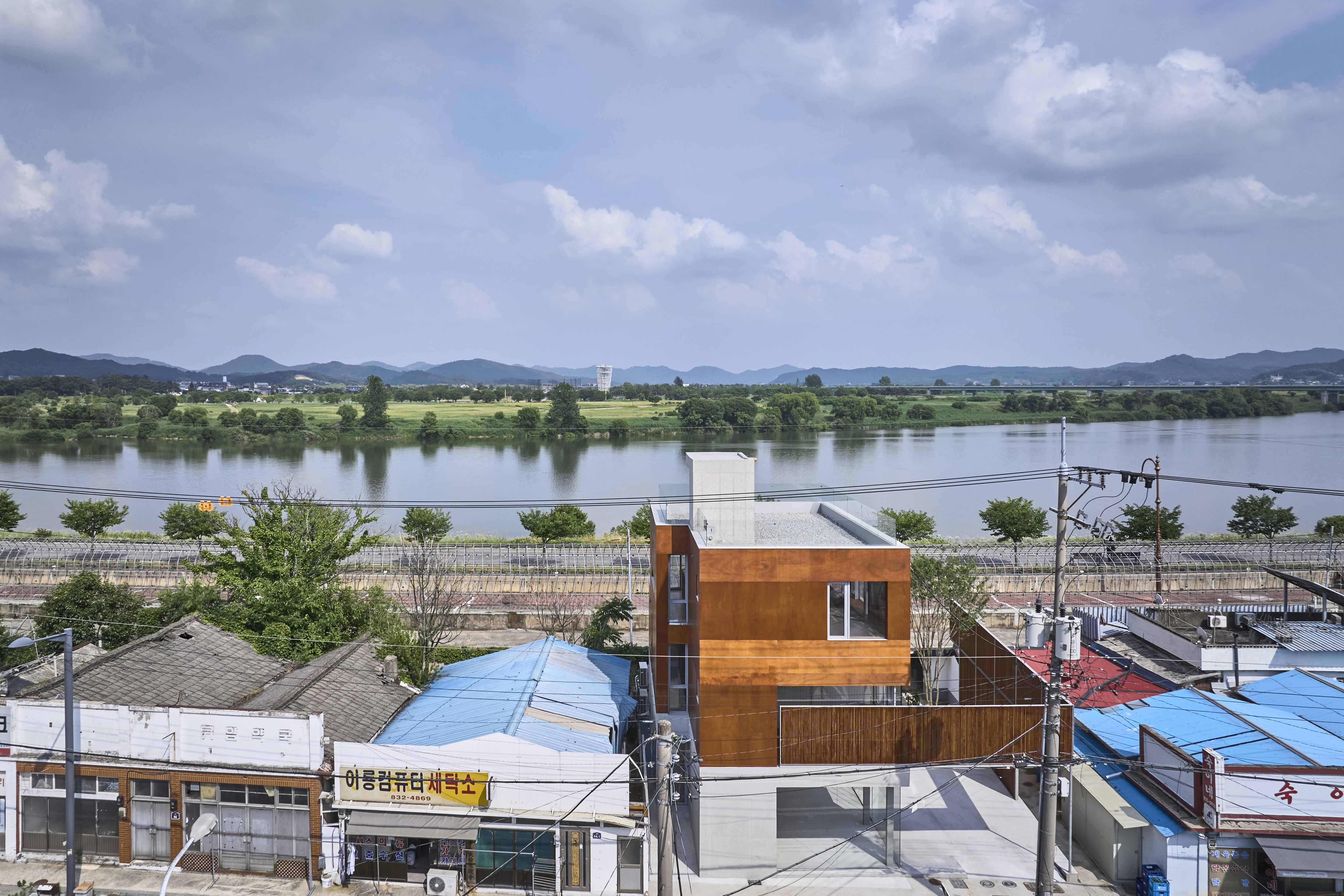
한때 번성했던 규암마을은 재생을 꿈꾸는 마을이다. 건축주가 매입한 토지는 마을의 주요 가로에 해당하는 백마강변에 위치한다. 그렇다면 주요 가로의 신축이 마을에 활기를 더할 수 있지 않을까? 건축주와 함께 고민하고, 제안한 바는 이랬다. 법적 건폐율이 40%밖에 안 되니, 대지의 남쪽을 비우자. 그래서 백마강 산책길(둑길)과 마을을 계단으로 연결하는, 볕이 잘 드는 마당을 내주자. 그러면 주민(관광객)도 아름다운 백마강 풍경에 쉽게 접근할 수 있고, 근린생활시설(1층)의 상업적 가치도 올라갈 것이다. 건축주는 또 한 번 흔쾌히 공감했고, 이것이 건물 배치의 방향이 되었다.
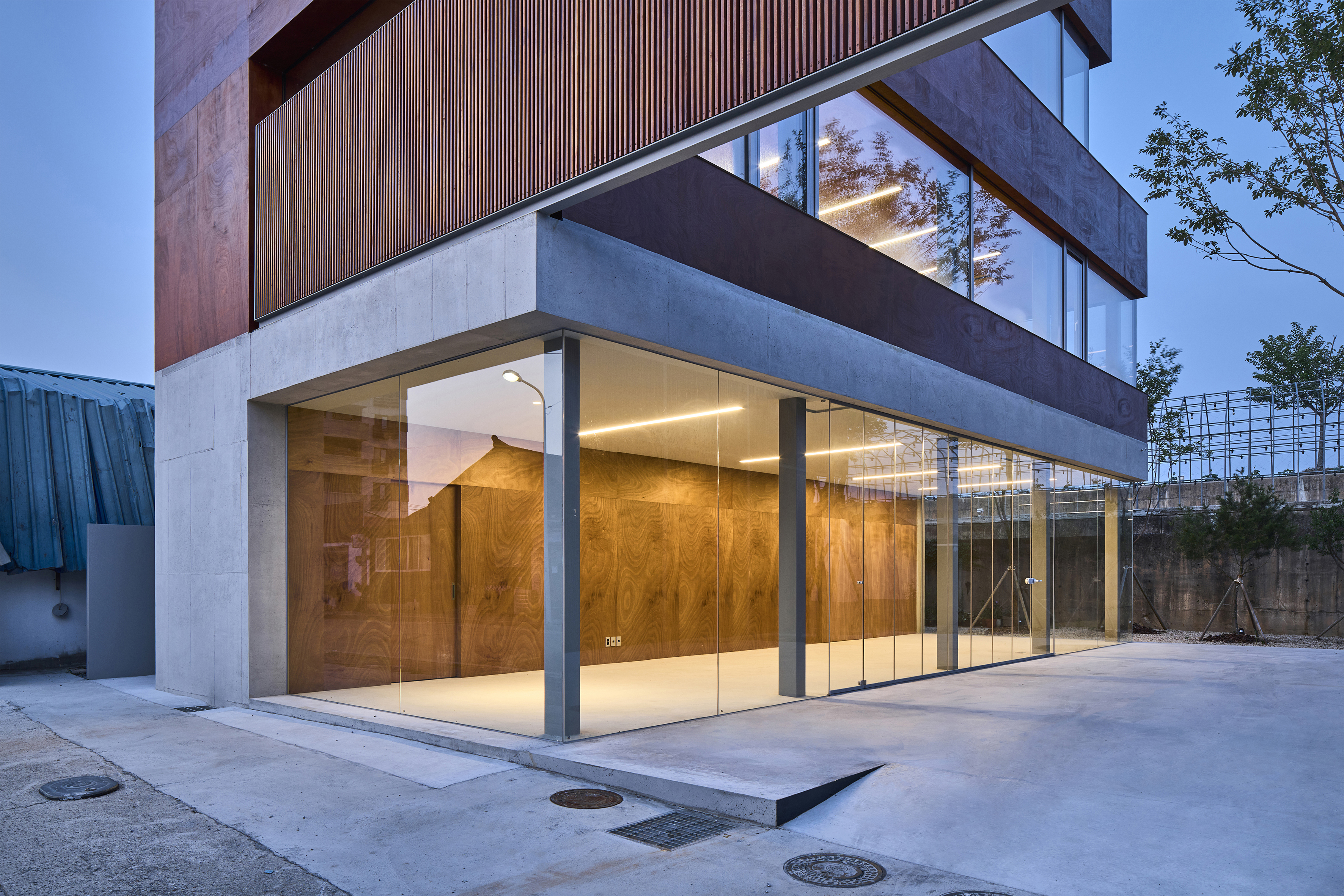
1층 근린생활시설은 열린 공간이다. 근생은 투명유리로 시각적 소통을 도모하고, 실내에서 마당으로 바닥을 연장한다. 또, 마당에 면한 유리면의 중앙 6미터 폭은 프레임 없이 개방된다. 이 모든 것은, 근생의 활용(상업) 가치를 높이기 위한 전략이다.
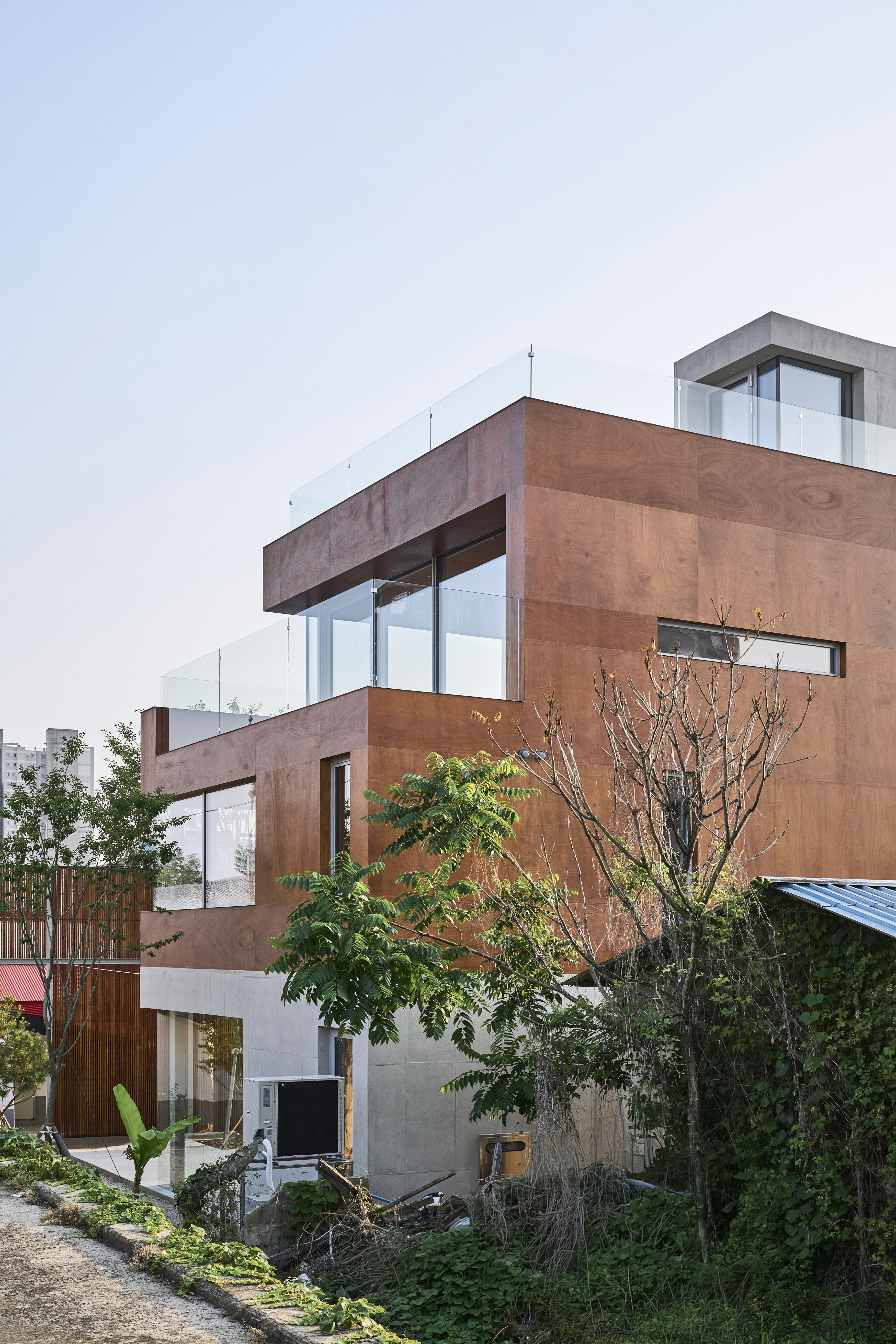
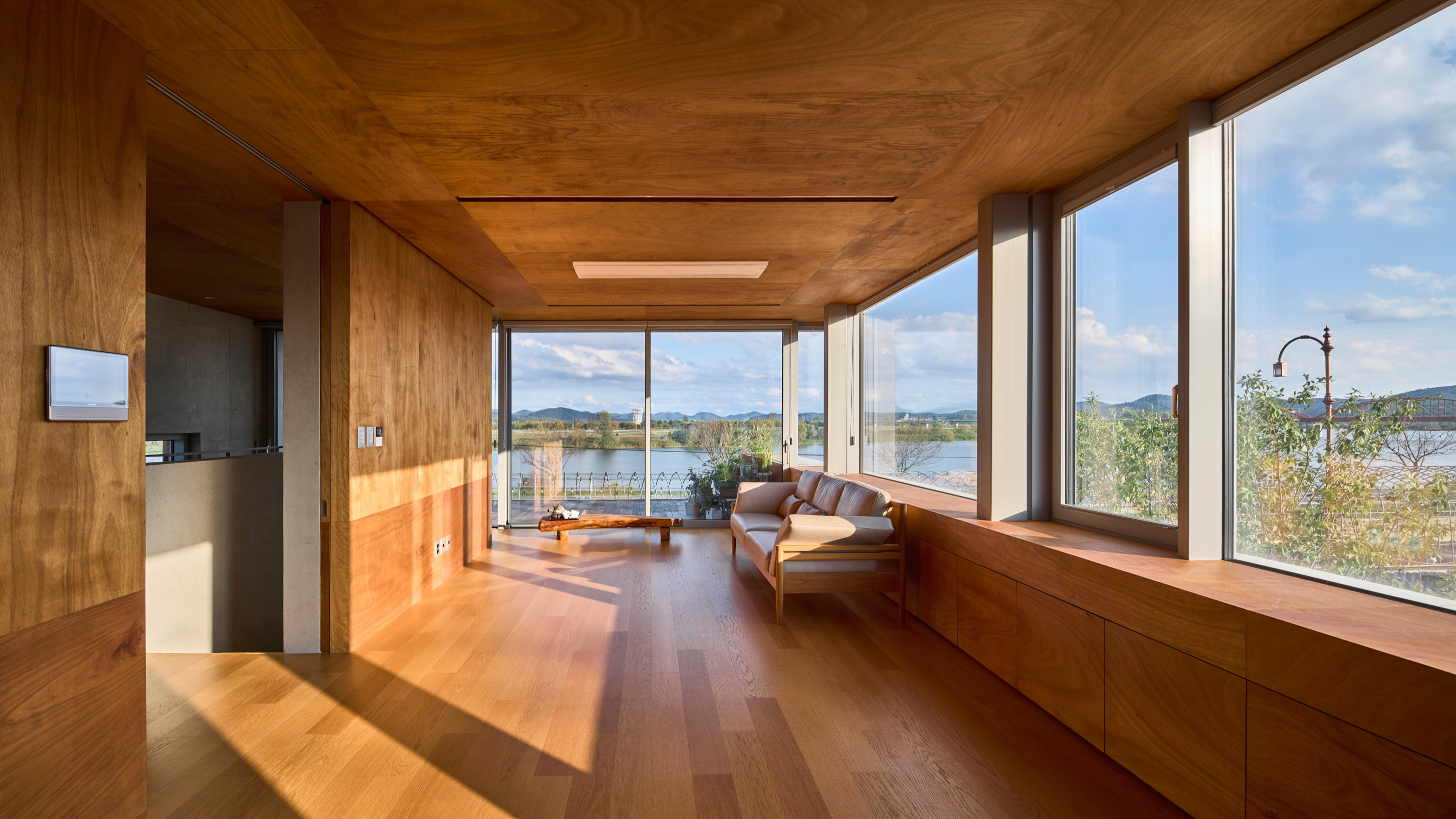
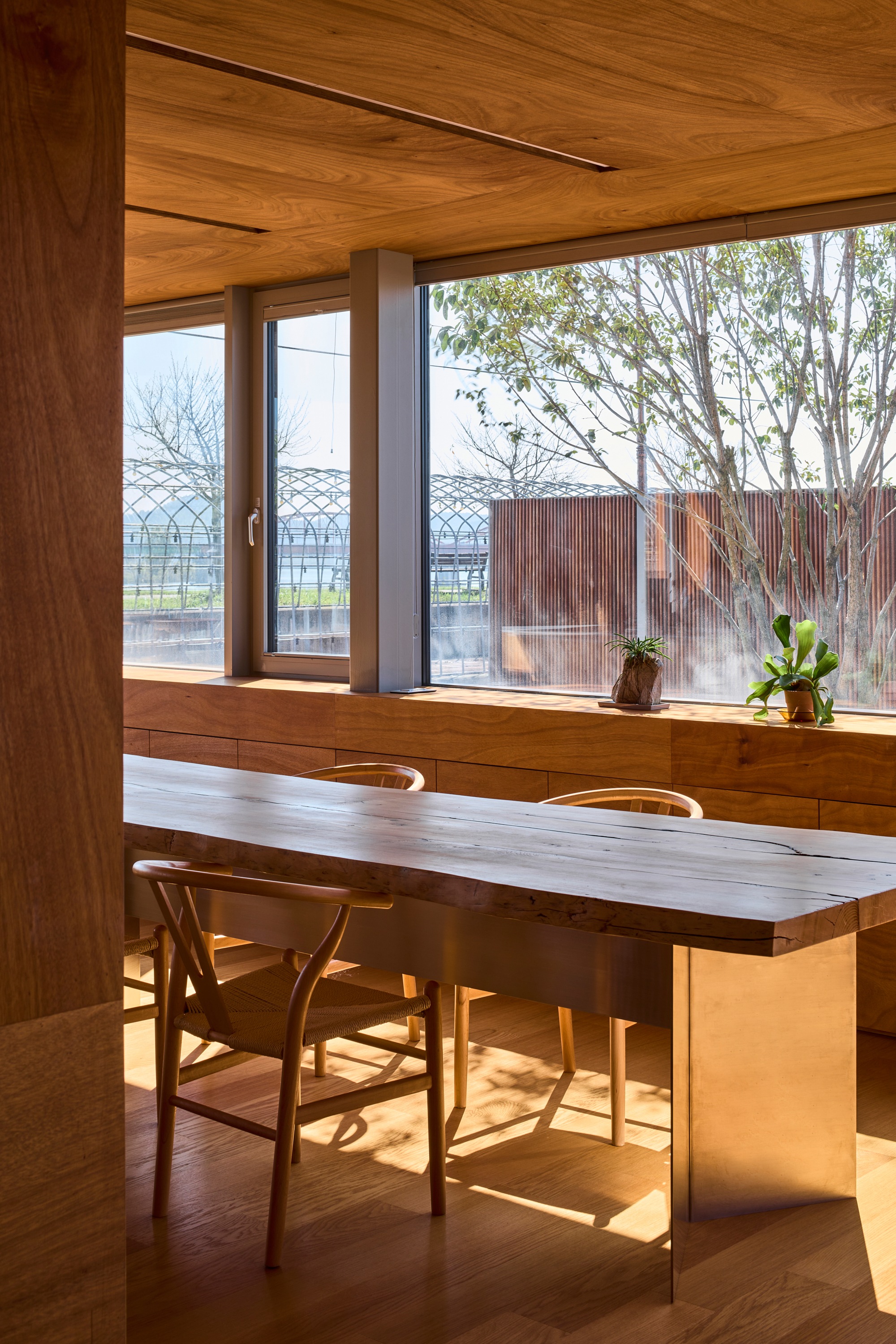
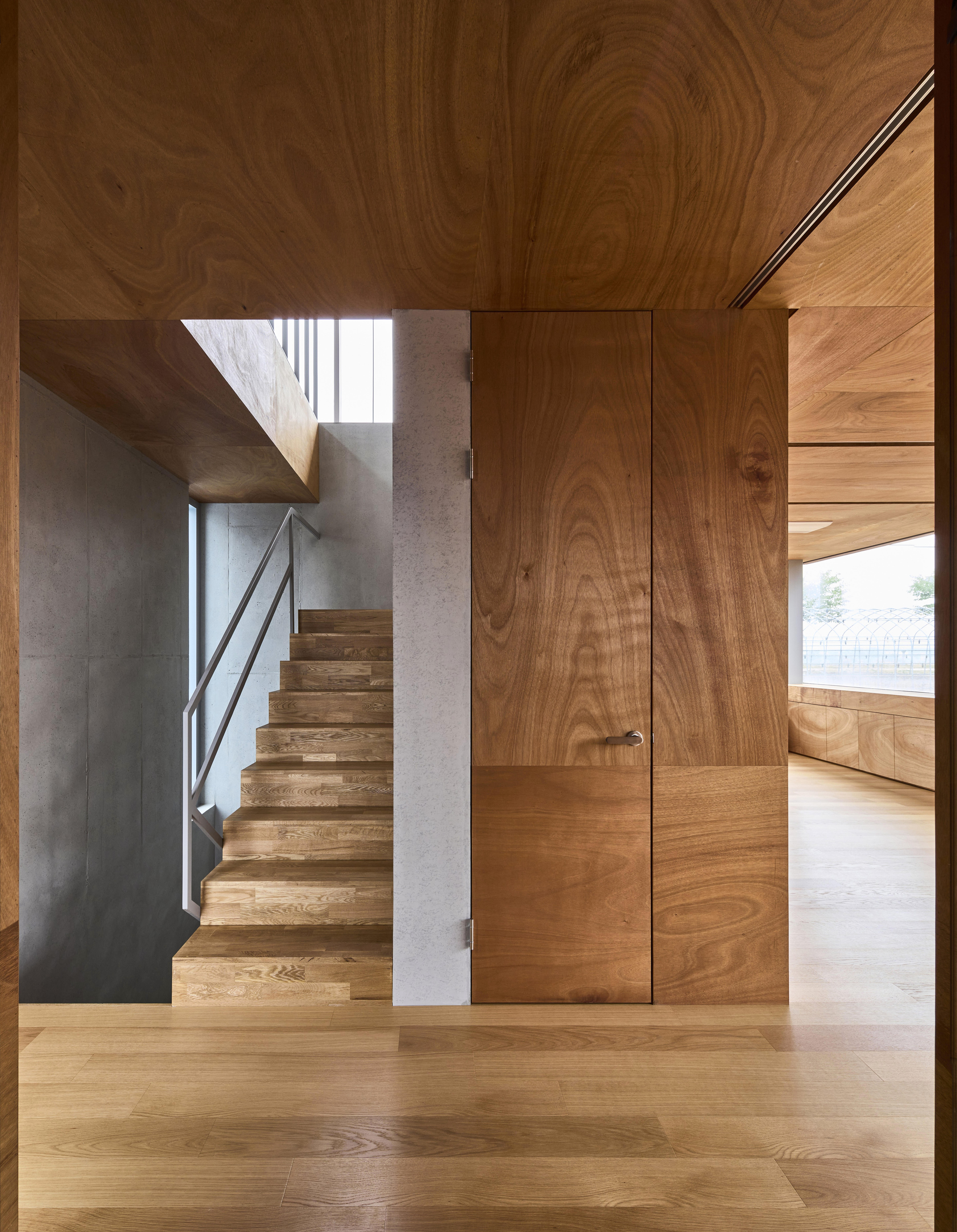
2~3층의 단독주택은 누각 개념의 공간이다. 큰 수평 창, 적절한 굵기의 강관 기둥, 그리고 오쿠메합판 마감을 한 주택은 콘크리트 덩어리(1층) 위에 가벼이 자리한다. 이러한 앉음새는 디테일로 이어진다. 상당 부분의 창호 프레임은 숨고, 문과 가구 역시 눈에 띄지 않는다. 문은 벽 안으로 사라지거나, 벽처럼 보인다. 붙박이 가구는 창턱이 되거나 벽면이 된다. 이 모든 것은, 누각의 골조미를 닮기 위해서다. 누각의 골조미를 탐낸 것은, 관조의 맛을 배가하기 위함이다(액자틀이 단순해야 그림에 집중할 수 있다).
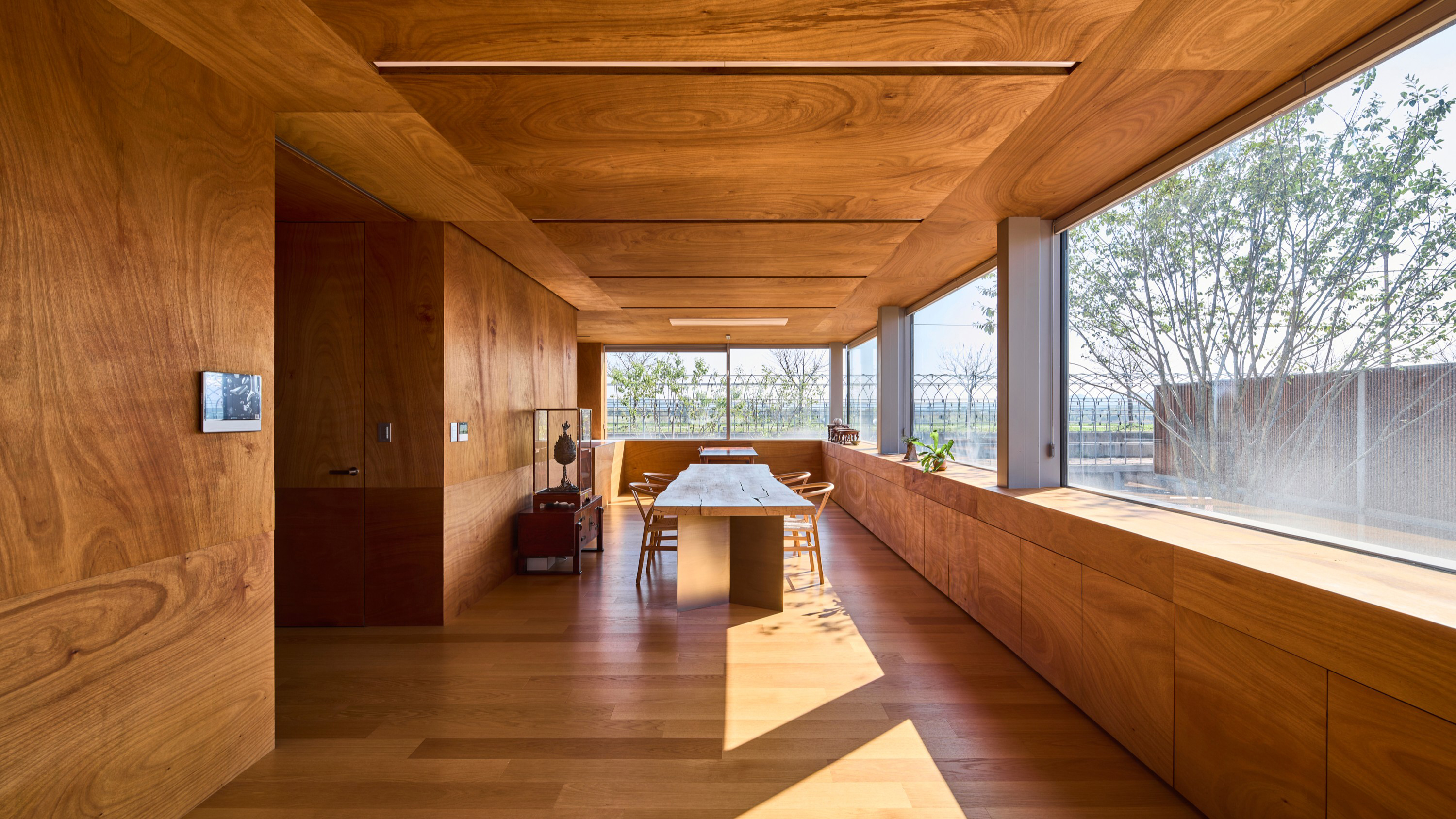
3층에서는 백마강 풍경이 시원하게 펼쳐진다. 창턱(=가구) 높이를 책상 높이(73센티미터)로 계획한 덕에 입식이나 좌식 생활 모두 부담 없이 풍경을 즐길 수 있다. 2층에서는 강변 산책길과 마당 너머의 마을풍경이 잔잔히 펼쳐진다. 이는 원목 루버 담장 덕이다. 마당 경계에 자리한 루버 담장은 2층 바닥마감에서 1.8미터 높이까지 올라온다. 덕분에 부담 없는 높이로 마당 너머의 마을풍경을 진정시킨다. 담장 안쪽으로는, 2층 높이를 훌쩍 넘긴 이팝나무 한 그루가 보인다. 이팝나무는 루버 담장과 조화를 이루며, 원경의 아파트를 정면에서 보는 일이 없도록 가린다.
자자헌의 건축 허가는 쉽지 않았다. 경관심의는 백마강 산책길(둑길)과 마을을 연결하는 제안을 그리 반기지 않았고, 건축허가는 평면도가 ‘단독주택스럽지 않다’는 의견을 줄 정도였다. 그래도 인허가 과정에 내성이 생긴 탓인지, 차근차근 다툰 덕에 잘 정리되었다. 시공 과정 역시 쉽지 않았다. 시공자는 목재의 변색과 변형을 우려하여, 원목 루버와 합판의 대체재를 찾자고 했다. 하지만 그러할 것을 예상하고 선택한 재료이기에, 또 건축주와 그러함이 마을에 어울릴 것이라고 의중을 모은 바, 그럴 수는 없었다. 대신, 시공자에게 건축주와 합의된 사안임을 몇 차례 확인시켜 주었다(설계자가 CM을 수행했기에, 준공 때까지 설계자가 건축주와 소통했다).
지면에 고스란히 담기 힘든 지난했던 과정은, 새로운 시도의 숙명이었을 것이다. 그래도 뜻한 바 성취에 이르렀다 믿기에, 지난했음은 흐뭇한 소회로 자리 잡을 것이다. 마지막으로 한 마디 더 보태자면, 건축적 의도가 머무는 이의 일상에 스며들길 바란다.
어느 날,
단순함 속에서 마주한,
콘크리트의 질감을,
빛으로 드러나는 목재의 표정을........
음미하기를,
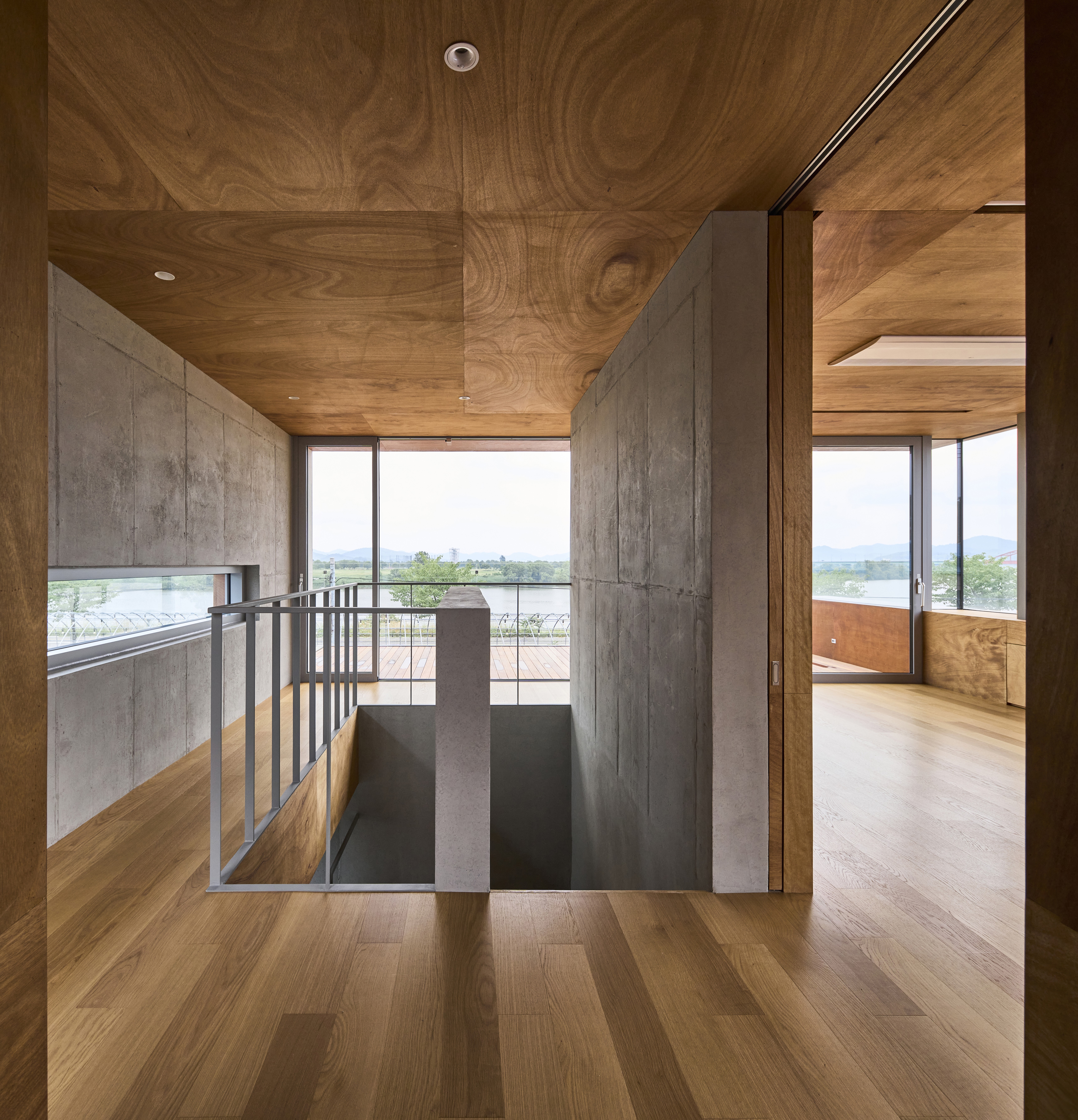
창밖 백마강을 보며 고요에 침잠하기를.

Several years ago, I was commissioned by a couple preparing for retirement to design a weekend house. The wife was a teacher approaching retirement, and the husband was a retired journalist and columnist. The couple had already purchased a site in Gyuam Village, Buyeo-gun, Chungcheongnam-do, where they hoped to build a mixed-use house. Although the site was vacant, the neighboring houses on both sides had encroached onto it. In addition, the local ordinance in effect at the time required a traditional Korean tiled roof. Fortunately, after several rounds of communication, the neighboring houses removed the encroaching portions, and the ordinance was later revised, eliminating the tiled-roof requirement as well.
The clients wanted two things above all. First, they hoped for a house of an appropriate scale that would suit the village and would not feel flashy or showy. Second, they wanted a house that could contribute to the regeneration of the village. My proposal was this: keep the building only as large as truly necessary, make it three stories high so that it would fit the village streetscape, and use natural-based materials—concrete, metal, and wood—that could age gracefully alongside the old village scenery. The clients readily agreed. It was exactly what they had hoped for.
Once a prosperous place, Gyuam Village is now a village that dreams of renewal. The site purchased by the clients is located along the Baengma River, one of the village’s main streets. If so, could a new building on this important street help bring fresh energy to the village? After much discussion with the clients, this was the proposal I made. Since the legal building coverage ratio was only 40 percent, we decided to leave the southern part of the site open. In doing so, we could create a sun-filled yard that would connect the Baengma River promenade, set along the embankment, to the village by a stairway. This would allow residents and visitors easier access to the beautiful river landscape, while also increasing the commercial value of the neighborhood facility on the first floor. Once again, the clients responded with enthusiasm, and this became the guiding principle for the building’s layout.
The first-floor neighborhood facility is conceived as an open space. Clear glass encourages visual communication, and the floor extends seamlessly from the interior into the yard. At the center of the glass wall facing the yard, a six-meter-wide opening can be fully opened without a frame. All of this was a strategy to increase the usability and commercial value of the first-floor space.
The detached house on the second and third floors was conceived as a pavilion-like dwelling. With its broad horizontal windows, steel pipe columns of appropriate thickness, and okoume plywood finish, the house sits lightly above the concrete mass of the first floor. This sense of lightness continues into the detailing. Much of the window framing is concealed, and the doors and furniture are designed not to stand out. Doors disappear into the wall or read as part of it. Built-in furniture becomes a windowsill or merges into the surface of the wall. All of this was intended to echo the structural beauty of a traditional pavilion. The reason for pursuing that structural clarity was to heighten the experience of contemplation. Just as a simple frame allows one to focus on the painting, a quiet architectural frame allows greater attention to the view and to stillness.
From the third floor, the landscape of the Baengma River opens up in a sweeping panorama. Because the sill height, which also functions as furniture, was planned at desk height—73 centimeters—the view can be comfortably enjoyed whether standing or sitting on the floor. From the second floor, the riverside promenade, the yard, and the village beyond unfold in a calmer and more intimate way. This is thanks to the solid wood louver fence. Set along the boundary of the yard, the louver fence rises to a height of 1.8 meters from the second-floor finish level. As a result, it gently settles the view of the village beyond the yard without feeling oppressive. Inside the fence, one sees a single Chinese fringe tree rising well above the second-floor level. In harmony with the louver fence, the tree also screens the distant apartment buildings from direct view.
Obtaining approval for ‘The River Pavilion’ was not easy. The landscape review committee was not especially welcoming of the proposal to connect the Baengma River promenade and the village, and during the building permit process there was even a comment that the floor plan did not feel much like that of a detached house. Still, perhaps because I had become somewhat seasoned in dealing with approvals, the issues were resolved step by step through careful discussion. The construction process was not easy either. The contractor, concerned about the discoloration and deformation of wood, suggested looking for substitutes for the solid wood louvers and plywood. But these materials had been chosen with exactly those characteristics in mind, and both the clients and I believed that such aging would suit the village well. So they could not be replaced. Instead, I repeatedly confirmed to the contractor that this was a matter fully agreed upon with the clients. Since I was also serving as construction manager, I remained in direct communication with the clients through to completion.
The long and difficult process cannot be fully contained on these pages. Perhaps that was simply the fate of any new attempt. Still, because I believe the intended goals were achieved, those difficulties will remain in memory as a satisfying reflection. If I may add one final wish, it is that the architectural intention of this house may quietly settle into the daily lives of those who stay within it.
One day,
may they encounter, within simplicity,
the texture of concrete,
the changing face of wood revealed by light,
and take time to savor them,
while gazing at the Baengma River beyond the window,
and sinking gently into silence.

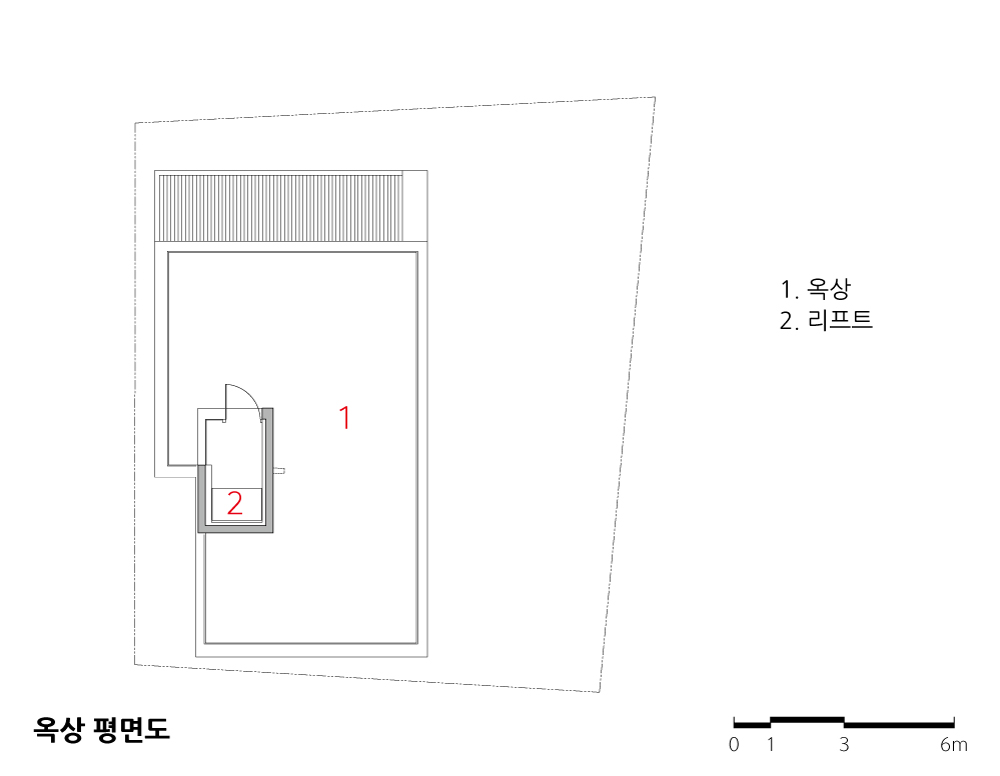
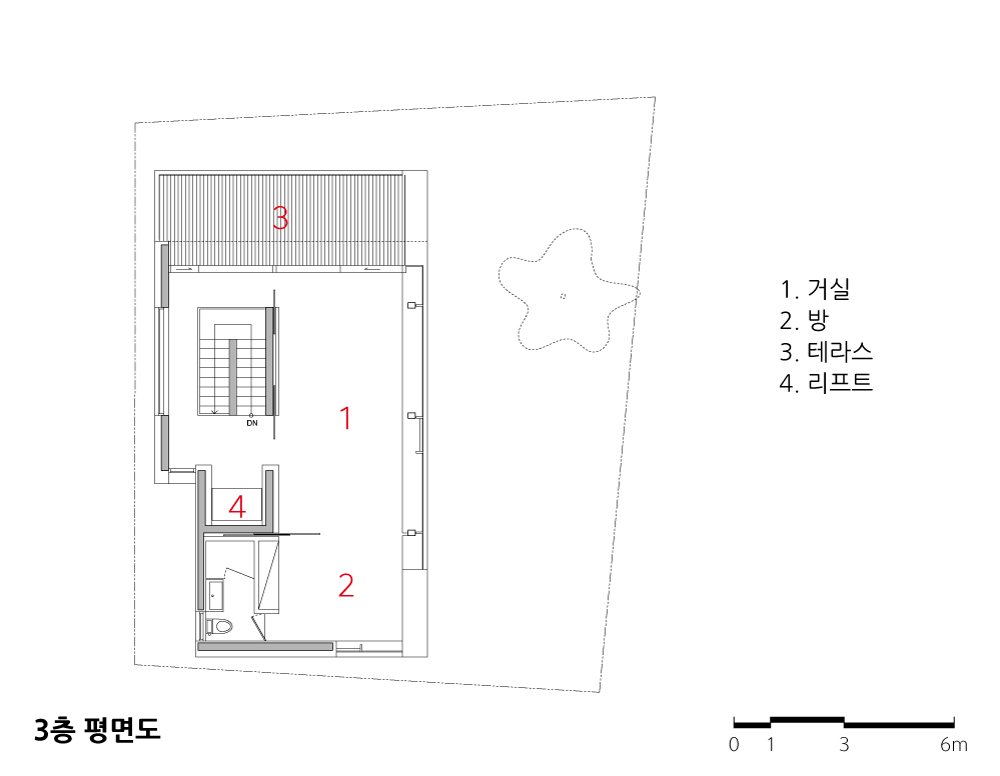
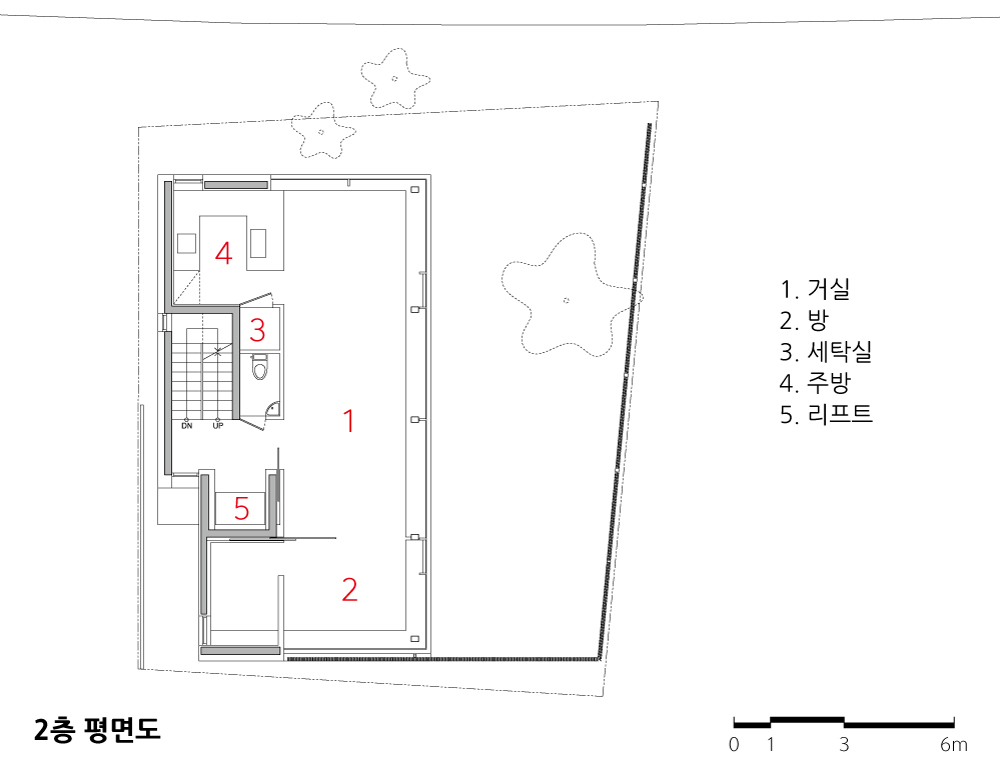
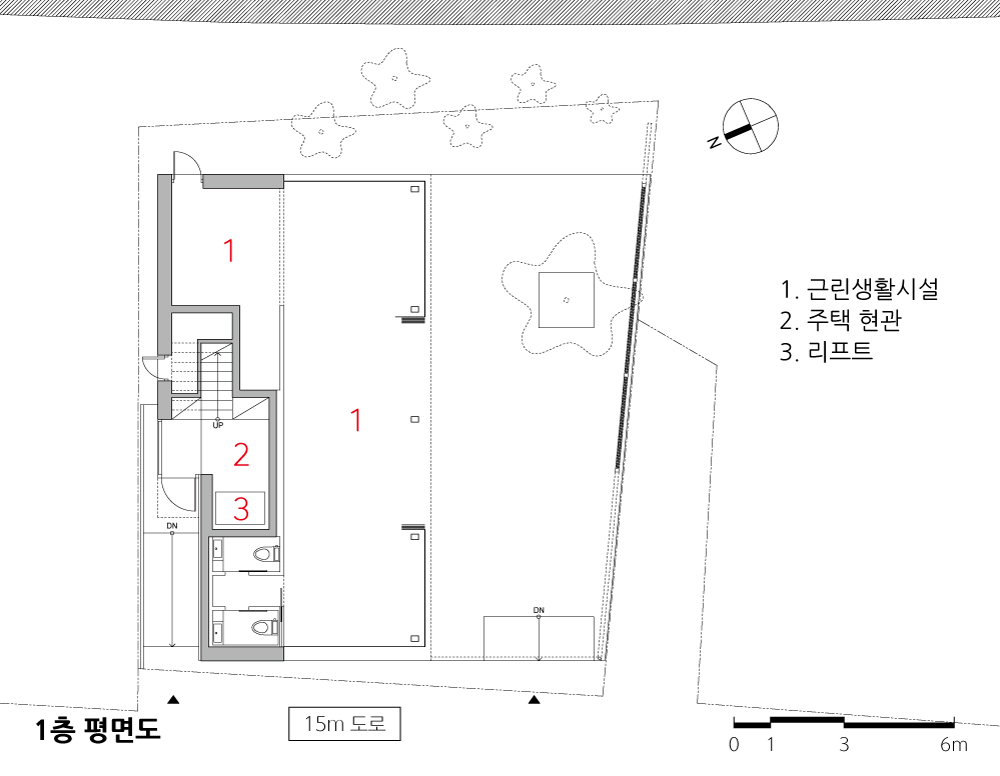
| 자자헌(自自軒) 설계자 | 전상현 건축사_ 스페이스매터 건축사사무소 건축주 | 이택희, 정연희 감리자 | 전상현 _ 스페이스매터 건축사사무소 시공사 | 델타구조 설계팀 | 서영화, 윤세희 대지위치 | 충청남도 부여군 규암면 규암리 주요용도 | 근린생활시설, 단독주택 대지면적 | 208.00㎡ 건축면적 | 83.04㎡ 연면적 | 229.31㎡ 건폐율 | 39.92% 용적률 | 110.24% 규모 | 3F 구조 | 철근콘크리트구조, 철골구조 외부마감재 | 오쿠메합판, 노출 콘크리트 내부마감재 | 오쿠메합판, 노출 콘크리트 설계기간 | 2022. 06 - 2024. 03 공사기간 | 2024. 06 - 2025. 06 사진 | 최진보 구조분야 | 델타구조 기계설비분야 | 세원엔지니어링(주) 전기분야 | (주)정연엔지니어링 |
The River Pavilion Architect | Jeon Sanghyun_Spacematter Architects Client | Taekhee Lee, Yeonhee Jung Supervisor | Jeon Sanghyun _ Spacematter Architects Construction | Reone construction Project team | Jeon Sanghyun / Suh Younghwa / Yun Sehui Location | Gyuam-ri, Gyuam-myeon, Buyeo-gun, Chungcheongnam-do Program | Neighbourhood living facility, Single house Site area | 208.00㎡ Building area | 83.04㎡ Gross floor area | 229.31㎡ Building to land ratio | 39.92% Floor area ratio | 110.24% Building scope | 3F Structure | RC, Steel frame Exterior finishing | Okoume plywood, Exposed concrete Interior finishing | Okoume plywood, Exposed concrete Design period | Jun. 2022 - Mar. 2024 Construction period | Jun. 2024 - Jun. 2025 Photograph | Choi Jin Bo Structural engineer | Delta group Mechanical engineer | SE WON Co., Ltd. Electrical engineer | JUNG YEON Co., Ltd. |
'회원작품 | Projects > House' 카테고리의 다른 글
| C104-9 반월집 2026.4 (0) | 2026.04.30 |
|---|---|
| 수능리 단독주택 ‘한 장 한 장’ 2026.4 (0) | 2026.04.30 |
| 화순리 주택 ‘이어서’ 2026.4 (0) | 2026.04.30 |
| 무언가(無言家) 2026.3 (0) | 2026.03.31 |
| 사동주택(隨緣自適) 2026.3 (0) | 2026.03.31 |