
2026. 3. 31. 11:20ㆍ회원작품 | Projects/House
House without words
대지
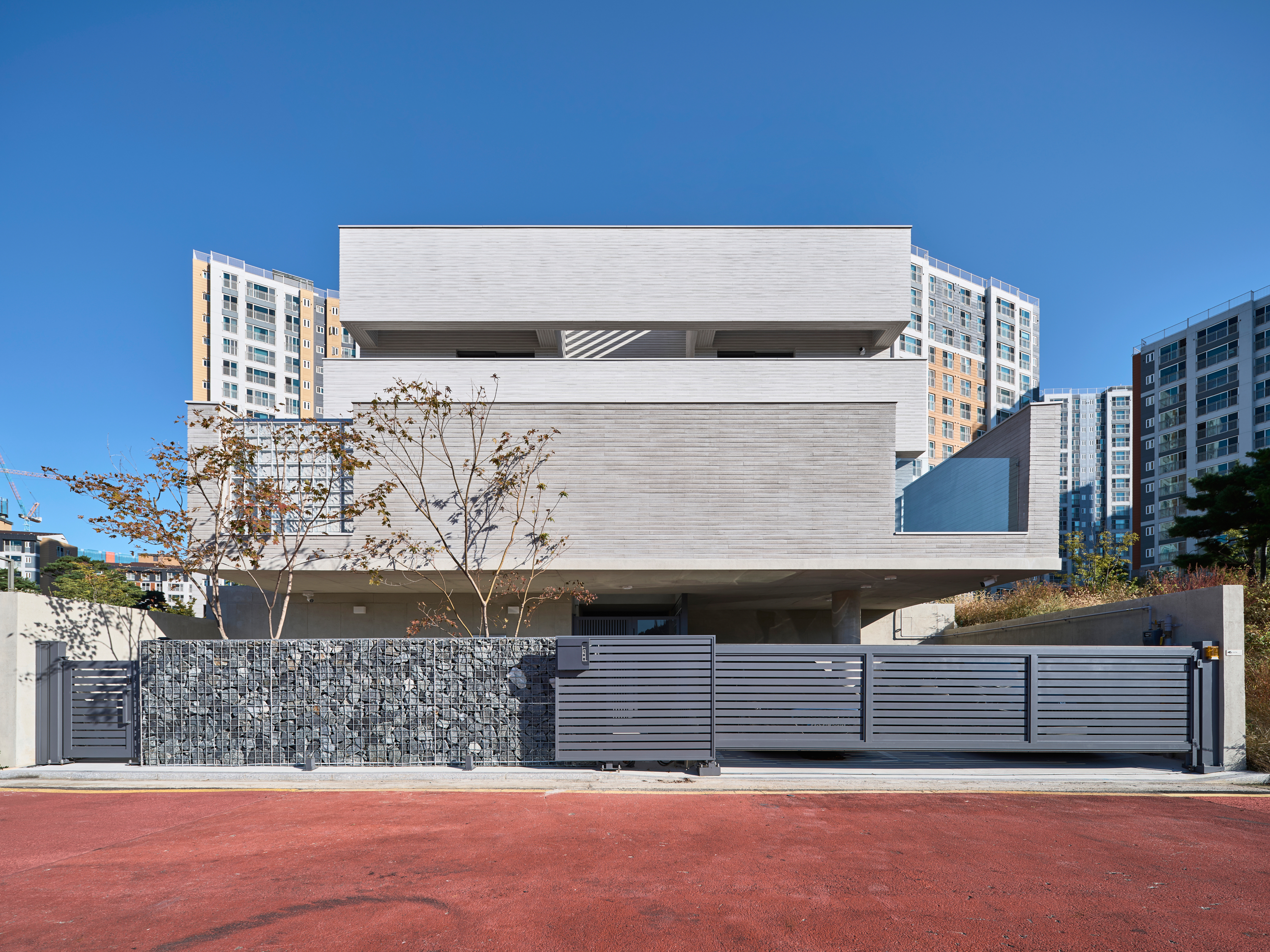
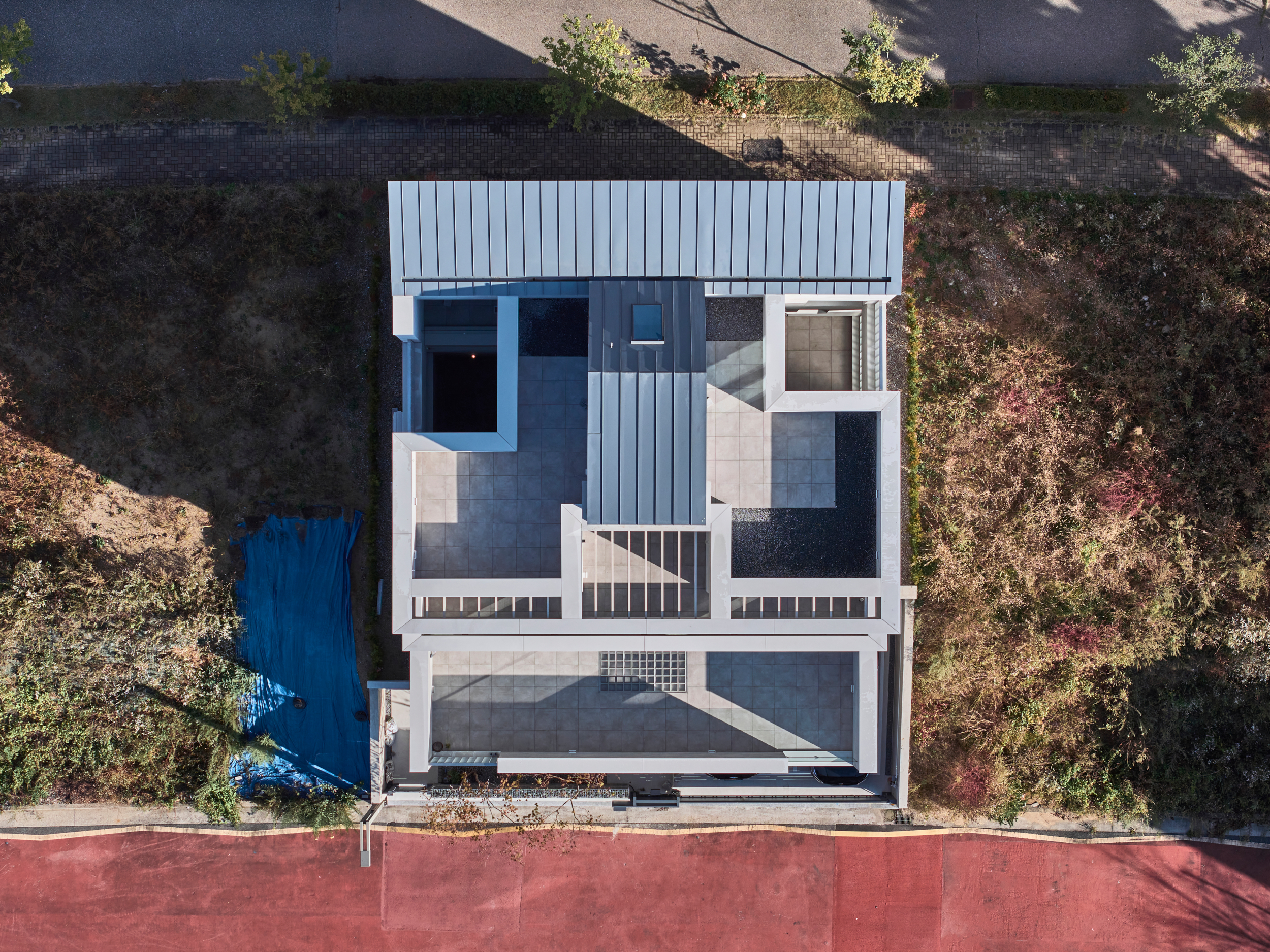
대규모 아파트 단지들이 군집한 신도시의 단독주택 전용지역 지구단위계획 구역, 이런 마을의 지침은 지역에 상관없이 대체로 유사하다. 필지들은 반듯한 형태에 면적은 70~80평 내외, 인접한 도로 폭 6~8미터 내외로 기본적인 구획 체계가 균일하다. 그런 이유로 작은 필지들이 이웃하여 지침을 수세적으로 극복한 유사한 형상의 집들이 지어진다. 주차장 2면 확보, 인접경계선 이격거리, 일조권 사선을 적용하다 보면 필지 대부분은 작은 마당이 조금 남고, 집 본채는 마당을 면해 ㄱ자나 일자형으로 배치된다. 지붕 경사도, 주요 재료, 건물 색감까지 지침에 명시된 현실이니 고민 없이 지침을 따라가다 보면, 처음에 원했던 집과 다른 결과물로 마무리될 수도 있음을 주의하면서 설계를 풀어갔다.
집에 대한 생각
건축주의 생각은 설계 방향을 잡는 가장 중요한 기준이다. 개인을 위한 주택이니 건축주의 생각만 잘 반영할 수 있다면 일단 만족이다. 핵심 사항이 해결되고 나면 나머지 조건들은 얼마든지 절충 가능하다. 무언가도 그러했다. 층별, 실별 요구사항들이 꽤 있긴 했지만 하다 보면 자연스레 해결되는 내용들이었고 정작 중요한 건 크게 네 가지였다.
첫째, 추위를 많이 탑니다. 단열에 강하고 하자 없는 튼튼한 집을 원합니다.
둘째, 토지를 최대한 활용해 외관이 웅장해 보였으면 합니다. 성처럼 막힌 집도 좋습니다.
셋째, 중정이 필요합니다. 외부로부터 프라이빗한 집을 원합니다.
넷째, 거실, 주방은 하나의 큰 공간이 좋습니다. 큰 창문과 조망이 확 트이면 좋겠습니다.
첫째 조건을 제하면 나머지 셋은 하나로 묶일 수 있는 사항이었다. ‘튼튼하고 당당한 외관의 집이지만 외부의 시선은 최대한 막고 내부의 시선은 시원하게 연다.’ 개인 주택의 목표는 늘 비슷하다. 외부에 노출되는 프라이버시는 보수적으로 접근하고, 외부로 열리는 개방성은 극대화할 수 있는 집. 감추고 싶은 욕망과 드러내고 싶은 상반된 마음의 충돌, 그 모순을 잘 풀어간다면 이 집만의 특별한 정체성이 만들어질 것으로 생각했다.
벽과 담, 그리고 공간들
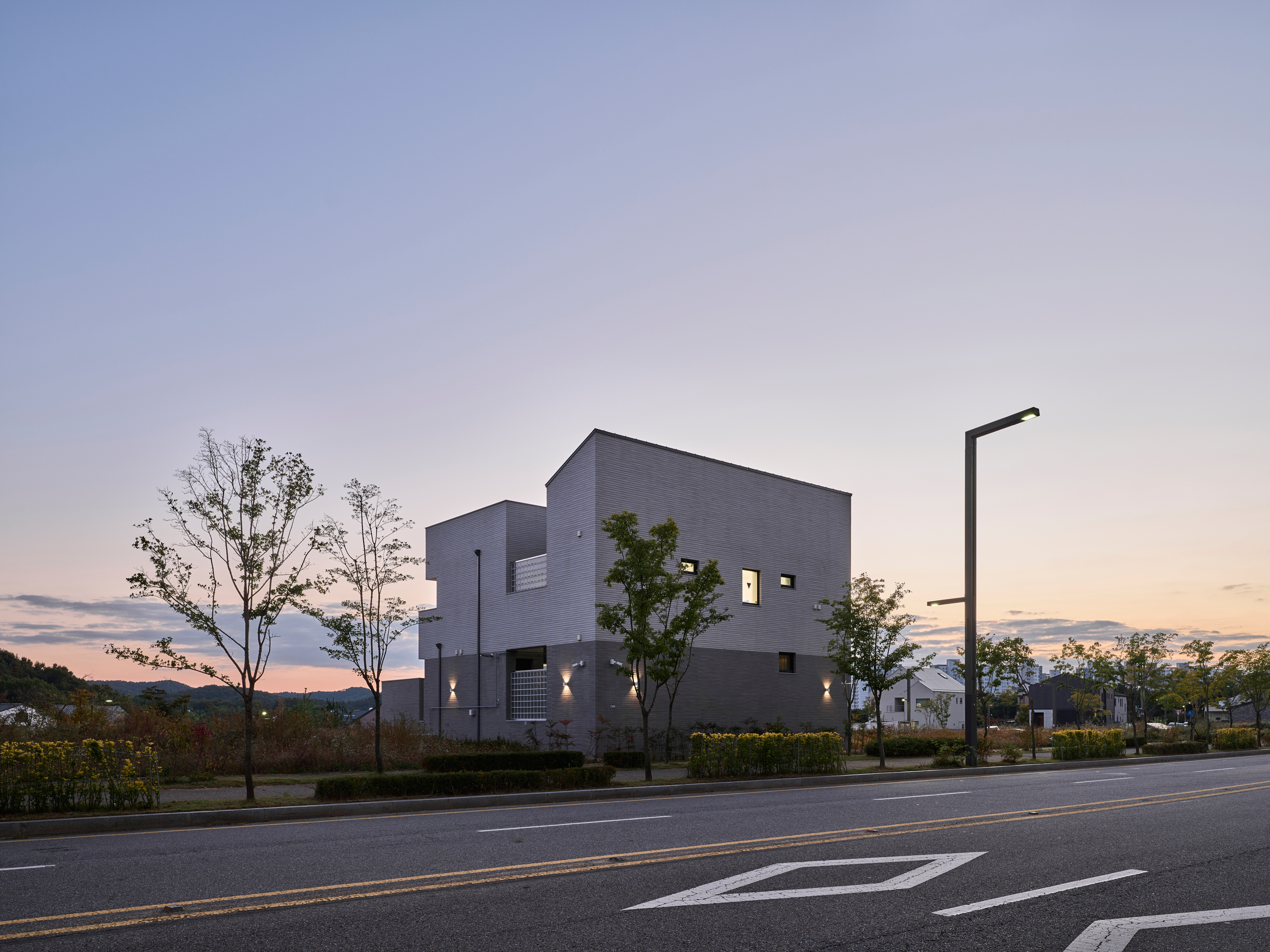
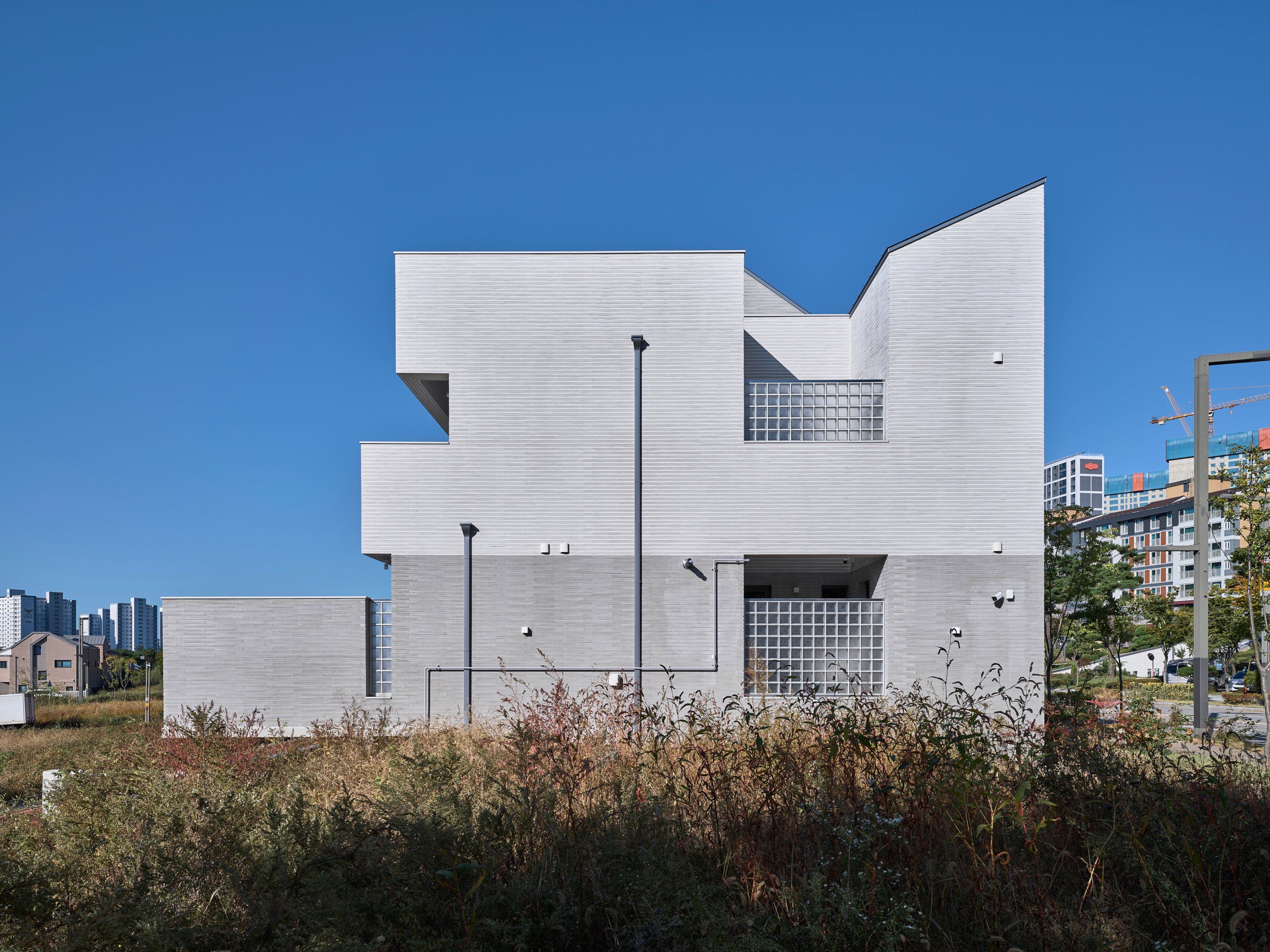
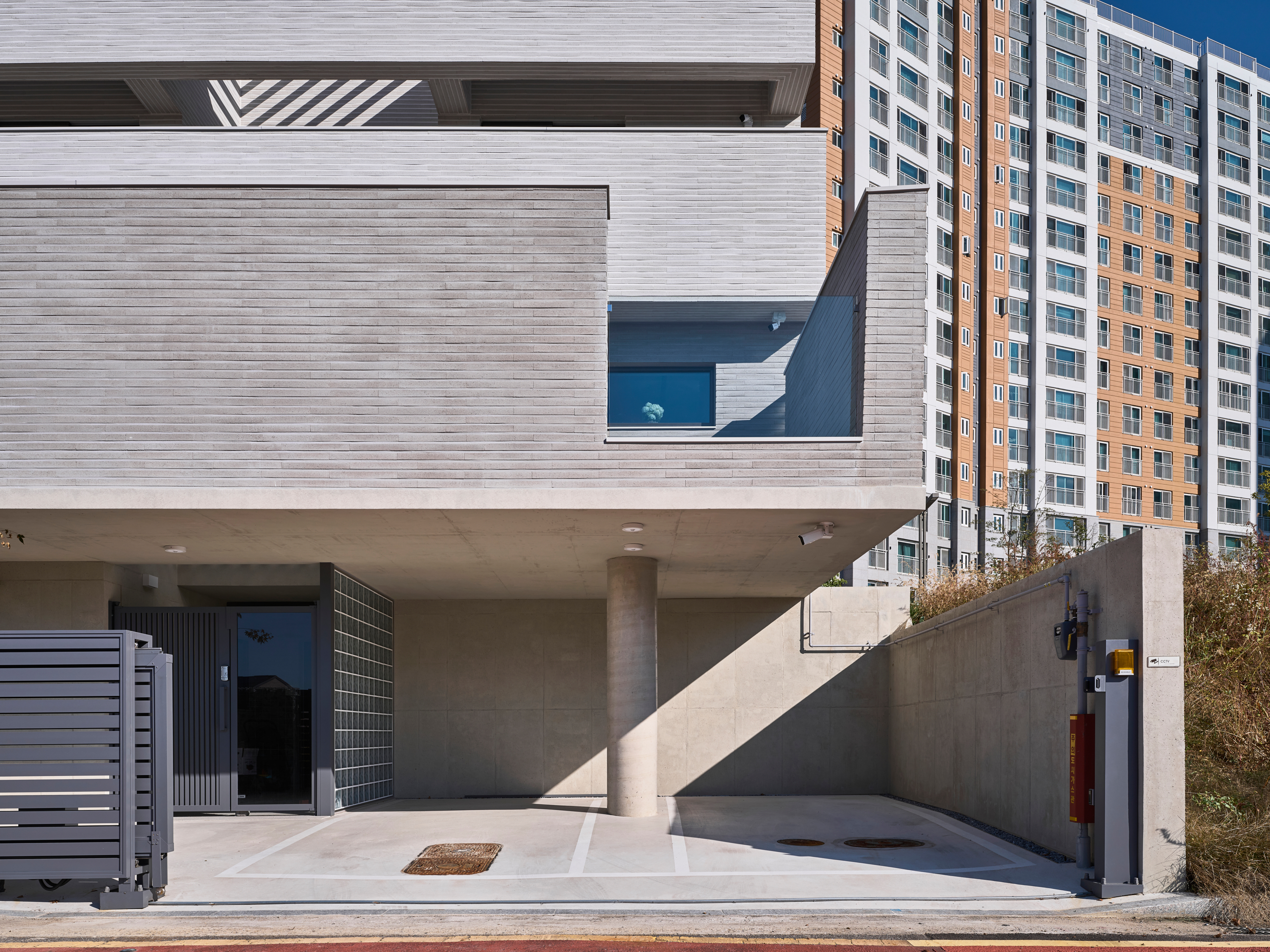
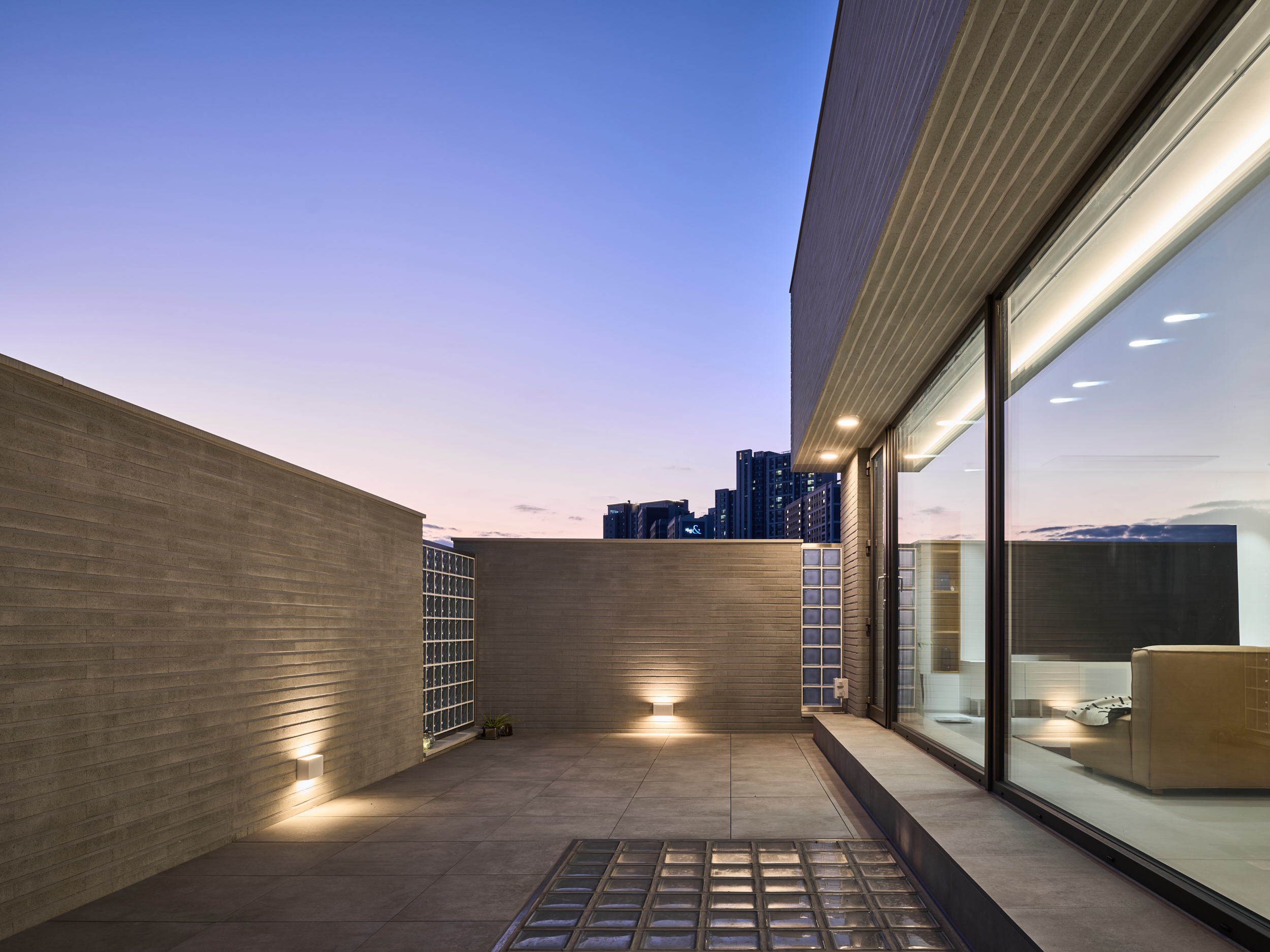
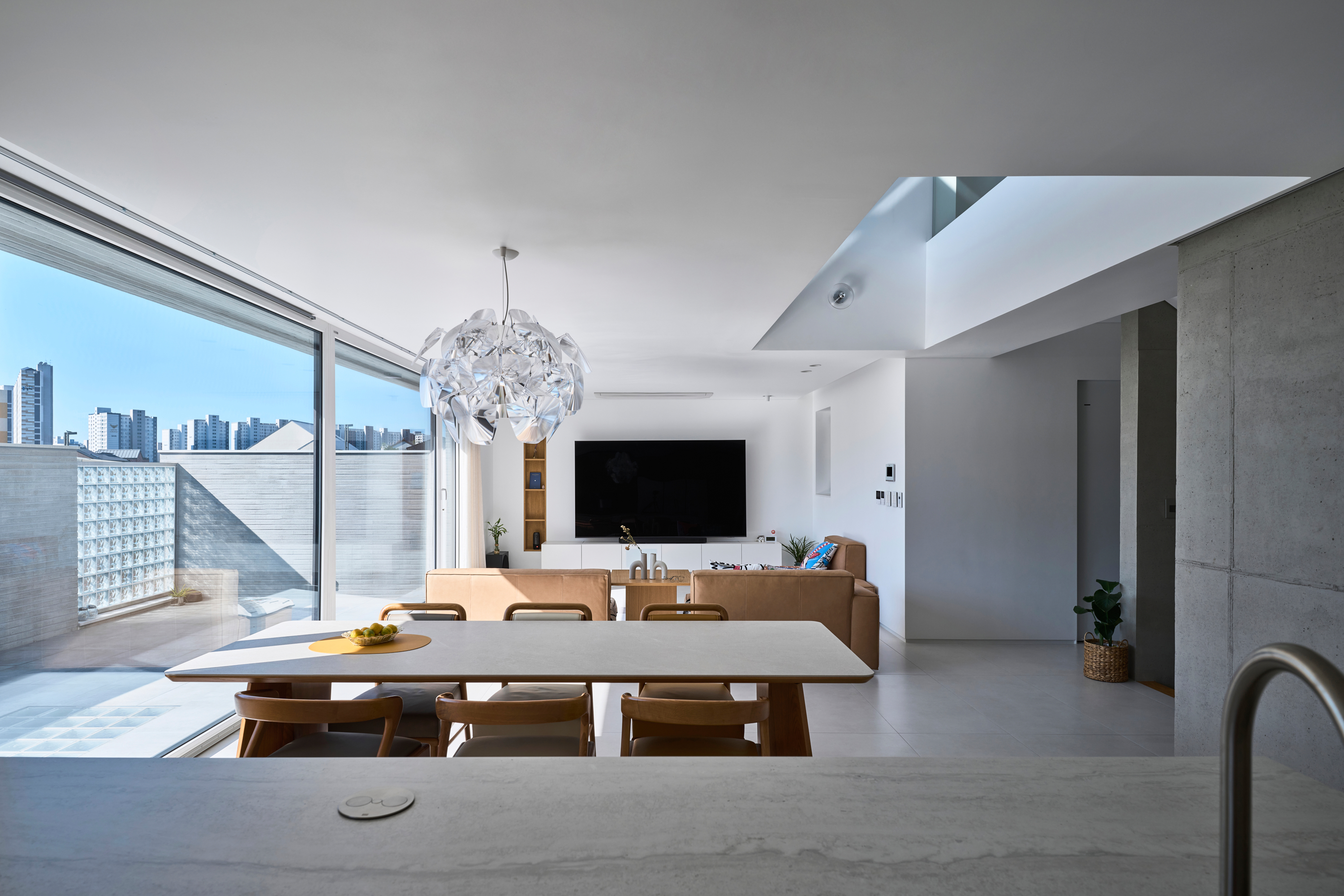
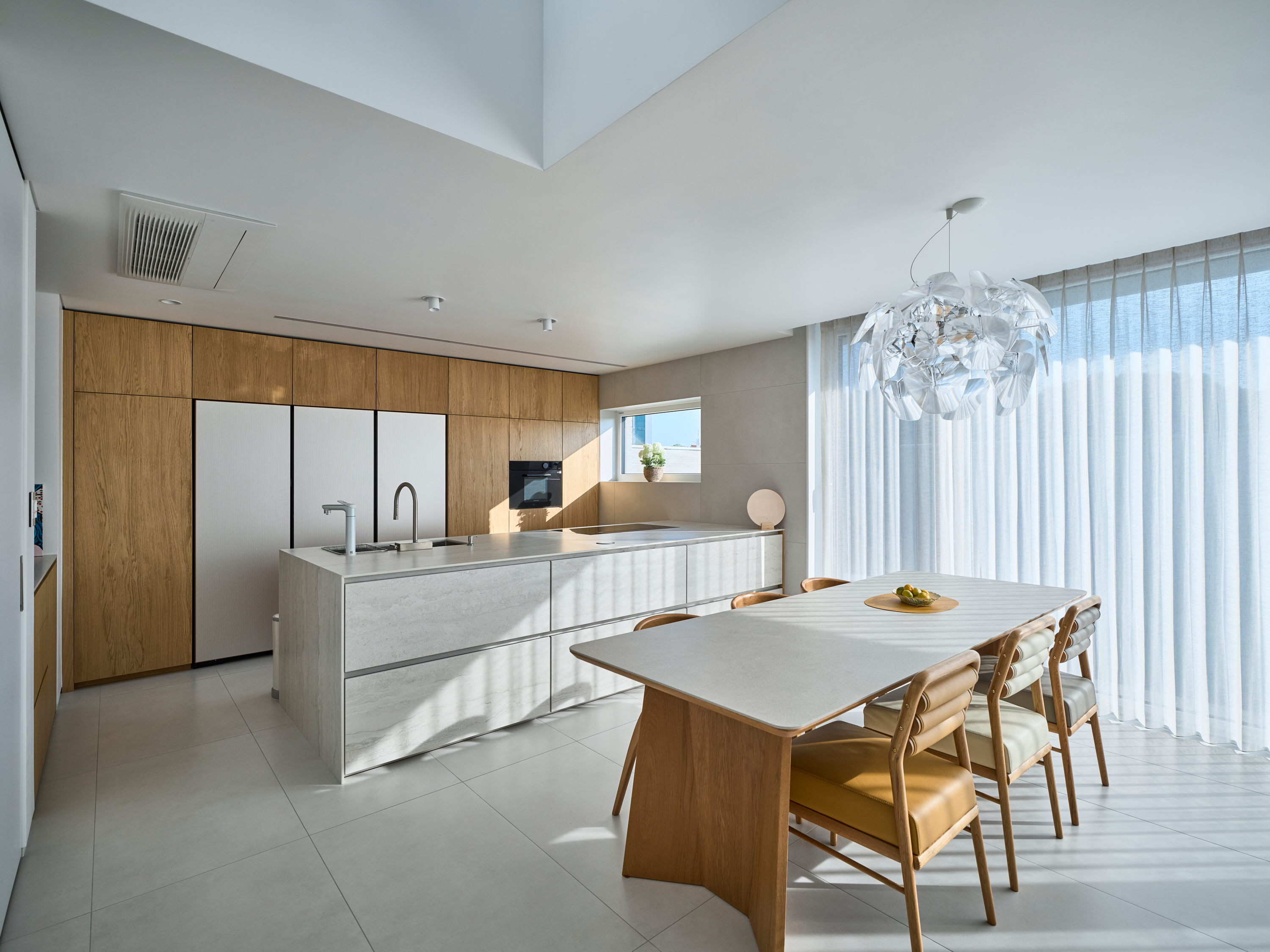
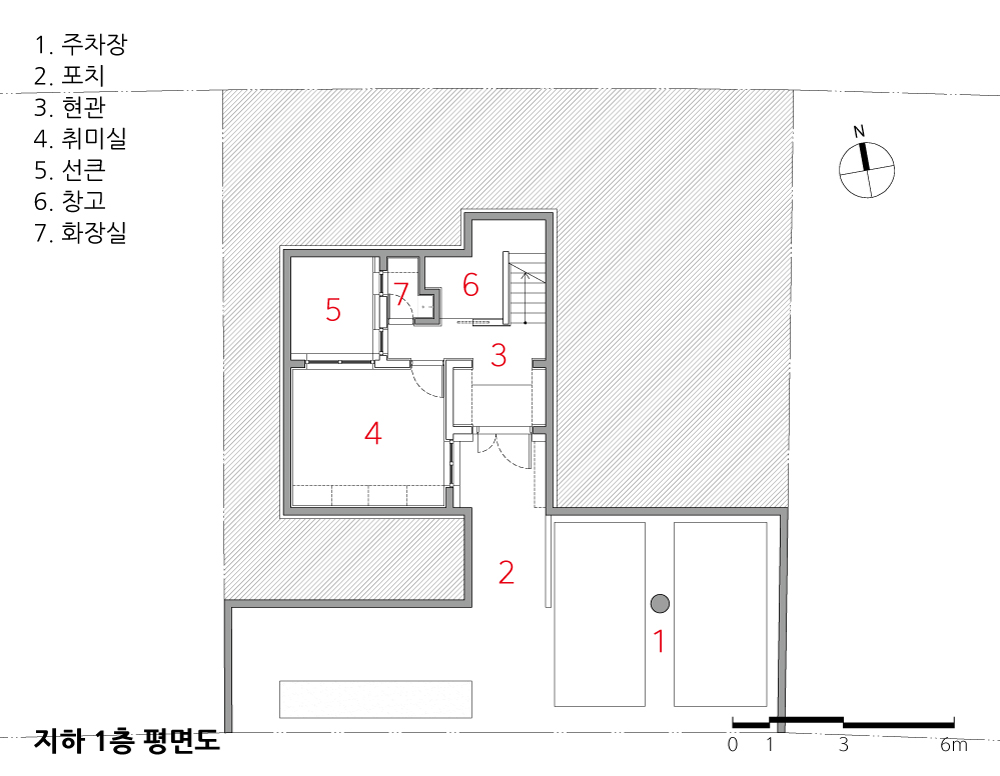
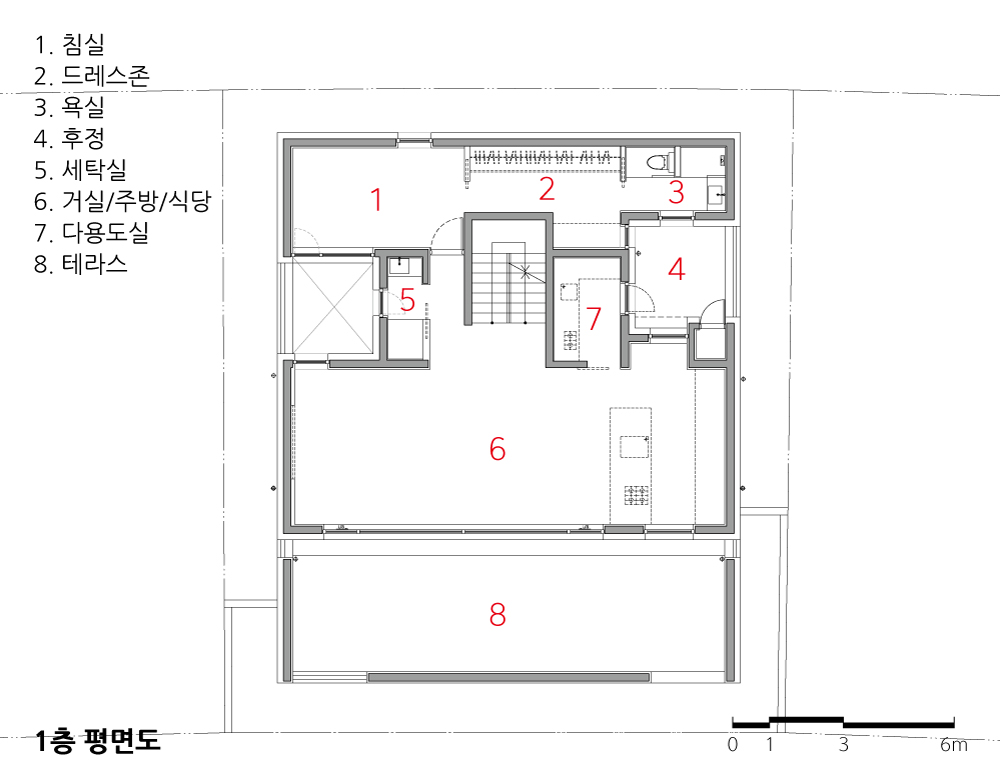
높은 벽은 수직이고 낮은 담은 수평이다. 대지 주변의 지배적 풍경인 대단지 아파트의 이미지는 수직적이다. 이에 대조되는 수평적 요소를 형태, 공간으로 강조하는 집이 된다면 아파트와 주택들이 겹쳐지는 동네 풍경에서 적절한 대비의 긴장감이 집의 윤곽을 확고히 만들어줄 수 있다고 판단했다. 대지는 한층 높이 이상 들어 올려진 성토 부지였다. 남쪽은 낮은 지대로 단지 내 도로와 접하며 집의 자연스러운 지하층 출입구가 형성된다. 지하층은 취미실과 창고, 선큰, 현관이 있다. 계단을 통해 한층 오르면 갑자기 확 트인 거실과 주방, 테라스와 그 너머의 열린 조망이 펼쳐진다. 대지 단차로 자연스럽게 만들어진 1층 테라스는 거실, 주방 공간과 면적이 동일하다. 큰 창을 통한 시각적 확장은 테라스를 실내공간의 연장처럼 느껴지게 한다. 테라스의 담과 벽은 외부 시선은 가리고, 불필요한 풍경은 트림해 주는 역할이다. 거실, 주방의 넓은 실내와 테라스 그 너머의 하늘과 먼 산 능선의 풍경으로 시선이 크게 개방되도록 의도했다. 2층은 1층과 달리 오밀조밀한 벽체로 자녀 각각의 프라이버시를 최대한 보장하는 공간으로 설계했다. 각자의 침실이 좌우에 배치되는데 침실과 드레스룸, 별도의 욕실이 패키지로 묶이는 호텔 세미 스위트룸 형식을 적용했다. 성장한 자녀들이 각자의 넉넉한 개인 공간을 온전히 소유하길 바라는 부모의 의견이 반영되었다. 건물은 전체적으로 계단식이다. 2층은 1층보다 뒤로 물러서 테라스를 만들고, 그 위 옥상테라스도 셋백 되어 넉넉한 옥상을 만들었다. 층이 오르면서 집이 뒤로 물러나면 내부 공간의 시선은 더 열리고 외부시선 차단엔 용이해진다. 남쪽으로 충분한 일조와 조망을 확보하고 프라이버시는 효율적으로 해결해 준다. 대부분 건축주들이 그러하듯 프라이버시를 중요하게 생각하고 외부 시선은 막고 싶다는 가장 기본적 요구사항에서 출발한 집이다. 프라이버시를 해결하자고 좁고 깊은 중정을 만들고 외부로는 성곽을 둘러치듯 집을 감싸는 답답한 ㅁ자 배치는 벗어나고 싶었다. 막을 곳은 확실히 막고 열 곳은 확실히 여는 집, 풍부한 일조량과 시원한 조망을 갖춘 집을 상상하며 설계했다. 감추고 싶은 마음과 드러내고 싶은 마음의 조화랄까... 늘 그렇지만 한 가족의 워너비 주택을 설계한다는 건 그들 마음속에 있는 다양한 모순을 이해하고 풀어내는 과정이다.
Site
The project sits within a district-unit planning zone for detached houses in a new town surrounded by large apartment complexes. Guidelines in these neighborhoods tend to be similar regardless of location: neat, rectangular lots of roughly 230–260㎡ (about 70–80 pyeong), with adjacent roads typically 6–8 meters wide. Because the lots are small and the rules are uniform, many houses end up looking alike—each one cautiously “working around” the same setbacks, two parking spaces, and daylight-angle controls. After applying these requirements, most sites are left with only a small yard, and the main house is usually arranged in an L-shape or a straight bar facing it. Even roof pitch, primary materials, and exterior colors are often specified. From the start, we designed with a clear awareness that simply following the guidelines without question could easily lead to a house different from what the client originally wanted.
Thoughts on the House
A private home begins with the client’s priorities. If those are met, most other conditions can be negotiated. This project also had various requests by floor and room, but the truly important points were four:
1. “I get cold easily. I want a solid house with strong insulation and no defects.”
2. “I want the exterior to feel grand by using the site as much as possible. A fortress-like house is fine.”
3. “I need a courtyard. I want a private home protected from outside views.”
4. “The living room and kitchen should be one large space. I want big windows and an open view.”
Except for the first, the remaining three could be tied into one clear direction: a strong, confident house that blocks outside eyes, while opening wide from within. That is the classic ambition of a private home—be conservative about privacy, and maximize openness where it matters. Between the desire to hide and the desire to reveal, we believed a distinct identity could emerge if we resolved that contradiction well.
Walls, Fences, and Spaces
A tall wall reads as vertical; a low fence reads as horizontal. The dominant image around the site—high-rise apartment blocks—is strongly vertical. We felt that emphasizing horizontal elements through form and space could create a productive tension, giving the house a clearer outline within this mixed landscape of apartments and detached homes.
The site itself was a filled lot, raised by more than one story. To the south, it meets the lower neighborhood road, naturally forming an entrance level for the basement. The basement contains a hobby room, storage, a sunken court, and the entry. Climbing one level up by stair, the space suddenly opens: a wide living room and kitchen, a terrace, and beyond it an expansive view.
Because of the site’s level difference, the first-floor terrace is naturally formed—and it matches the living/kitchen area in size. Large windows extend the space visually, making the terrace feel like an outdoor continuation of the interior. The terrace walls and fences block unwanted views and trim the visual noise, while intentionally opening the sightline toward the sky and distant mountain ridge beyond.
The second floor is the opposite of the first: more compact, with finer partitions to secure each child’s privacy. Bedrooms are placed on both sides, each paired with a dressing room and a separate bathroom—like a hotel “semi-suite” package. This reflects the parents’ wish that their grown children fully own generous personal space.
Overall, the building steps back as it rises. The second floor is set back from the first to create a terrace, and the rooftop terrace is further set back to form a generous roof deck. As each level retreats, interior views open wider, while it becomes easier to block outside sightlines. The strategy also secures ample southern sunlight and views, resolving privacy efficiently.
Like many clients, the starting point was simple: protect privacy and block outside eyes. We wanted to avoid the common solution of a narrow, deep courtyard and an enclosed “ㅁ-shaped” fortress plan that can feel heavy and inward. Instead, we pursued a house that blocks where it must, and opens where it should—imagining abundant daylight and a clear, expansive view. In the end, designing a family’s “dream home” is always a process of understanding—and carefully resolving—the contradictions living inside their wishes.




| 무언가(無言家) 설계자 | 최준석 건축사_ 건축사사무소 나우 감리자 | 건축사사무소 나우랩 시공사 | 리원건축 설계팀 | 최준석, 차현호 대지위치 | 경기도 화성시 장지동 주요용도 | 단독주택 대지면적 | 267.70㎡ 건축면적 | 116.85㎡ 연면적 | 226.66㎡ 건폐율 | 43.65% 용적률 | 63.86% 규모 | B1F - 2F 구조 | 철근콘크리트구조 외부마감재 | 시멘트타일, 노출콘크리트 내부마감재 | 시스템창호, 삼중로이유리 설계기간 | 2023. 08 - 2024. 03 공사기간 | 2024. 08 - 2025. 04 사진 | 최진보 구조분야 | 델타구조 기계설비·전기분야 | 정연엔지니어링 |
House without words Architect | Choi Jun Seok_NAAU LAB ARCHITECTS Supervisor | NAAU ARCHITECTS Construction | Leewon Architecture Project team | Choi Jun Seok / Cha Hyun Ho Location | Jangji-dong, Hwaseong-si, Gyeonggi-do Program | House Site area | 267.70㎡ Building area | 116.85㎡ Gross floor area | 226.66㎡ Building to land ratio | 43.65% Floor area ratio | 63.86% Building scope | B1F - 2F Structure | RC Exterior finishing | Cement tile, Exposed Concrete Interior finishing | Engineered window system, Low-e triple glazing Design period | Aug. 2023 - Mar. 2024 Construction period | Aug. 2024 - Apr. 2025 Photograph | Choi Jin Bo Structural engineer | Delta Construction Mechanical·Electrical engineer | Jeongyeon ENG. |

'회원작품 | Projects > House' 카테고리의 다른 글
| 자자헌(自自軒) 2026.4 (0) | 2026.04.30 |
|---|---|
| 화순리 주택 ‘이어서’ 2026.4 (0) | 2026.04.30 |
| 사동주택(隨緣自適) 2026.3 (0) | 2026.03.31 |
| 효우당 사랑채 2026.3 (0) | 2026.03.31 |
| 화록당(和綠堂) 2026.2 (0) | 2026.02.27 |