
2026. 4. 30. 11:35ㆍ회원작품 | Projects/Neighborhood Facility
Remodeling of neighborhood facilities in Seongsu-dong 2-ga
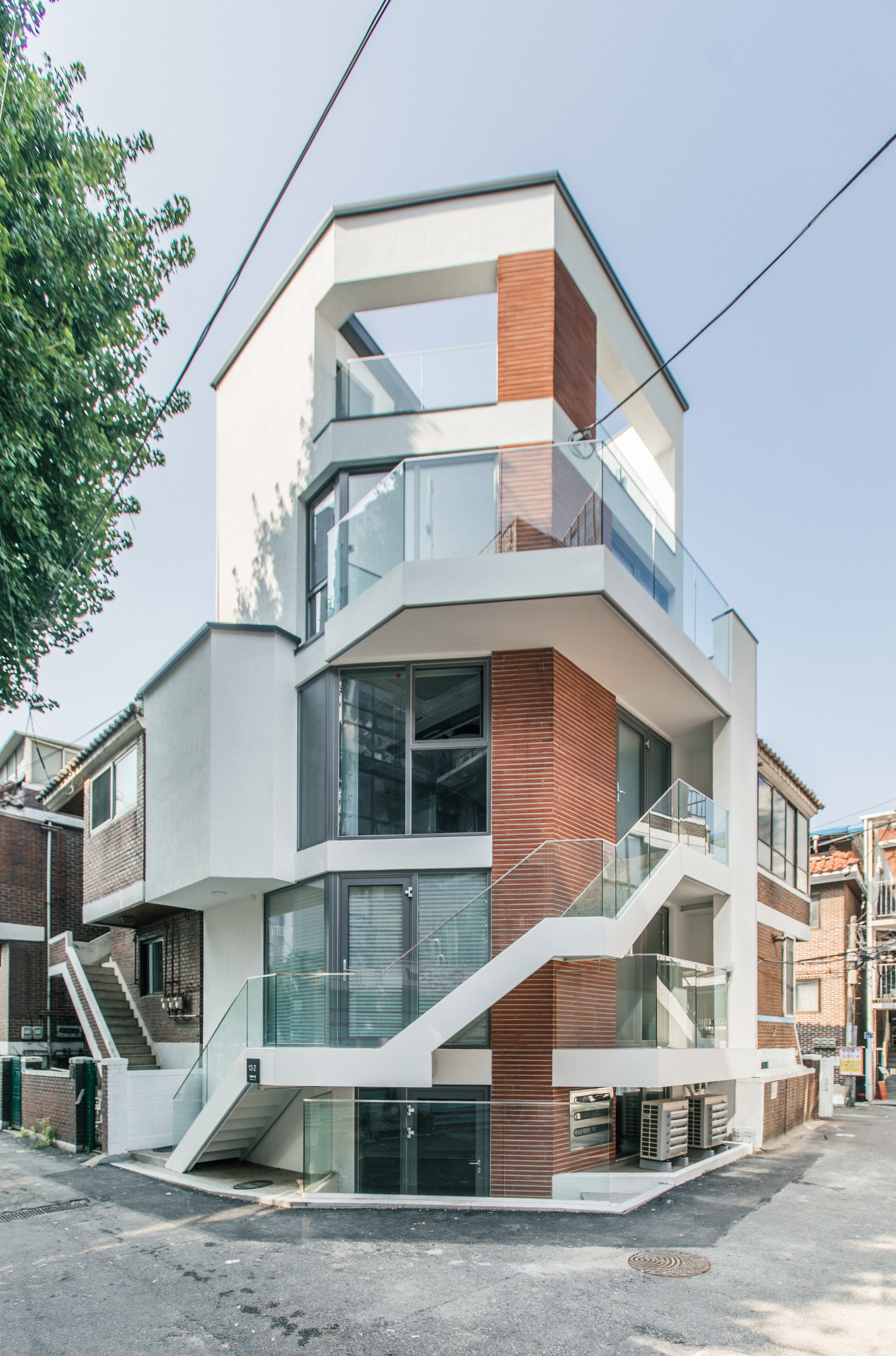
최근 건축계에서 주류가 되고 있는 방식 중 하나가 ‘리모델링’이다. 리모델링의 장점은 여러 가지가 있는데, 주차대수 등 법 적용에 있어 기존 부분에 대해 지어진 시점의 법을 인정받는다는 점(증축이 되는 부분은 현재 법규 적용), 신축에 비해서 비교적 공사비가 저렴하다는 점, 해체와 동시에 본 공사가 시작되고 골조 공사가 생략되기 때문에 공사 기간이 짧다는 점 등이 대표적이다. 특히 도심지의 아주 작은 필지의 경우에는, 신축을 생각하고 최근 강화된 법규를 적용할 경우 계획안이 아예 나오지 않는 경우도 있다. 그럴 경우 리모델링은 가장 합리적이고 설득력 있는 대안이 될 수 있다.
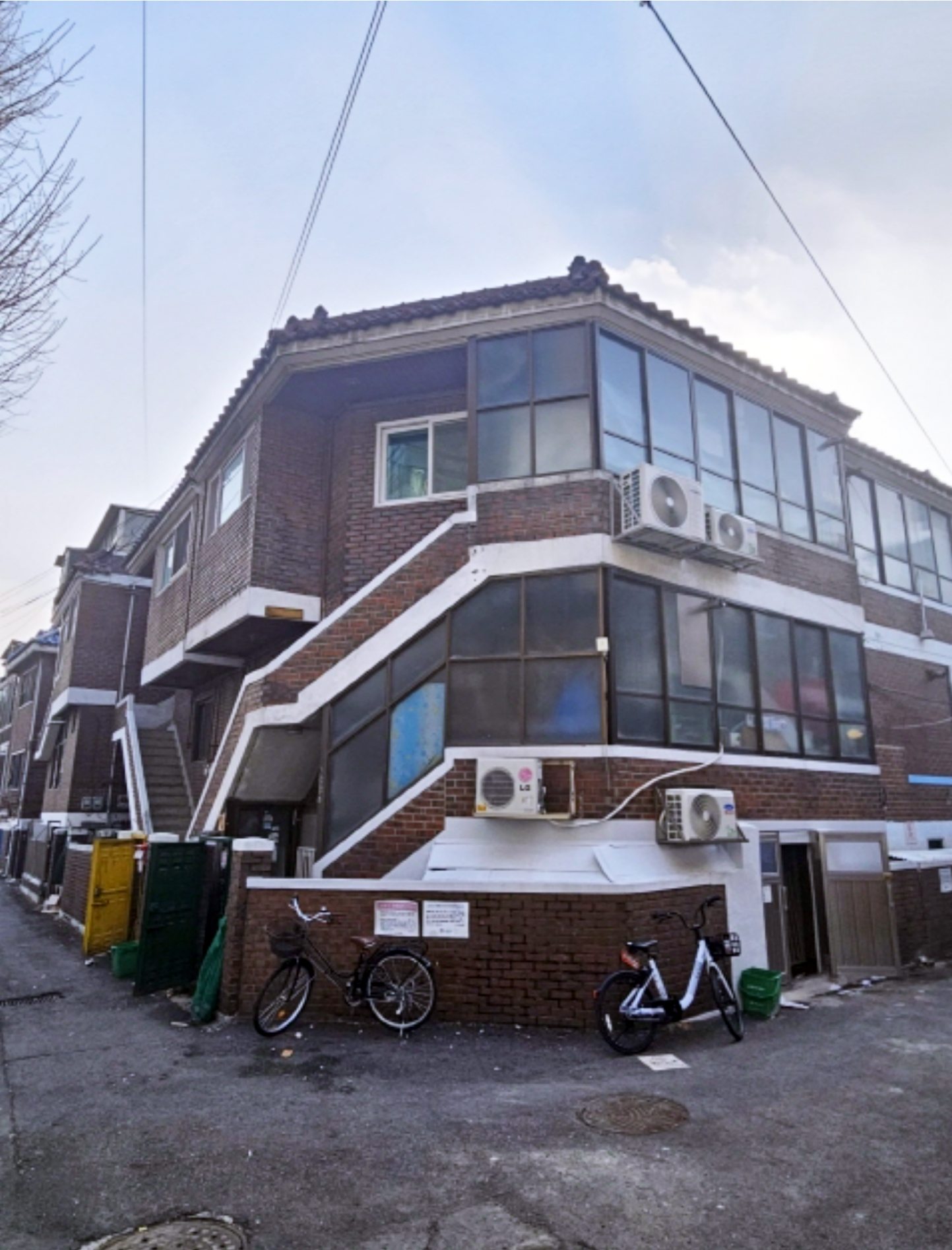
이 건축물의 원래 모습은 서울 도심지 어디서나 볼 수 있는 붉은 벽돌의 2층 집이었다. 돌출된 부분이나 계단 하부를 미장 위 흰색 도장으로 처리하고, 최상부 지붕에는 기와를 얹은 전형적인 80~90년대 주택이다. 과거 법규가 주택의 경우 외부 계단을 면적산정에서 제외하는 예외 규정을 두고 있어서, 이 건축물 역시 다수의 외부 계단과 발코니가 적용된 상태였다.
건축주는 해당 건축물이 주변에서 가장 돋보이는 외관으로 리모델링해 부동산 가치를 극대화하는 것을 목표로 했다. 즉, 원래의 모습을 어느 정도 보존하여 과거의 흔적을 남기는 방식보다는, 신축과 같이 완전히 새로운 건축물로 만들어서 비포 애프터의 극명한 대비를 만드는 드라마틱한 효과를 노리고 있었다. 설계과정에서 이러한 건축주의 의도를 충분히 반영하면서도, 차분하고 정돈된 입면을 만들어 주변 환경에 녹아들 수 있도록 계획을 진행하였다.
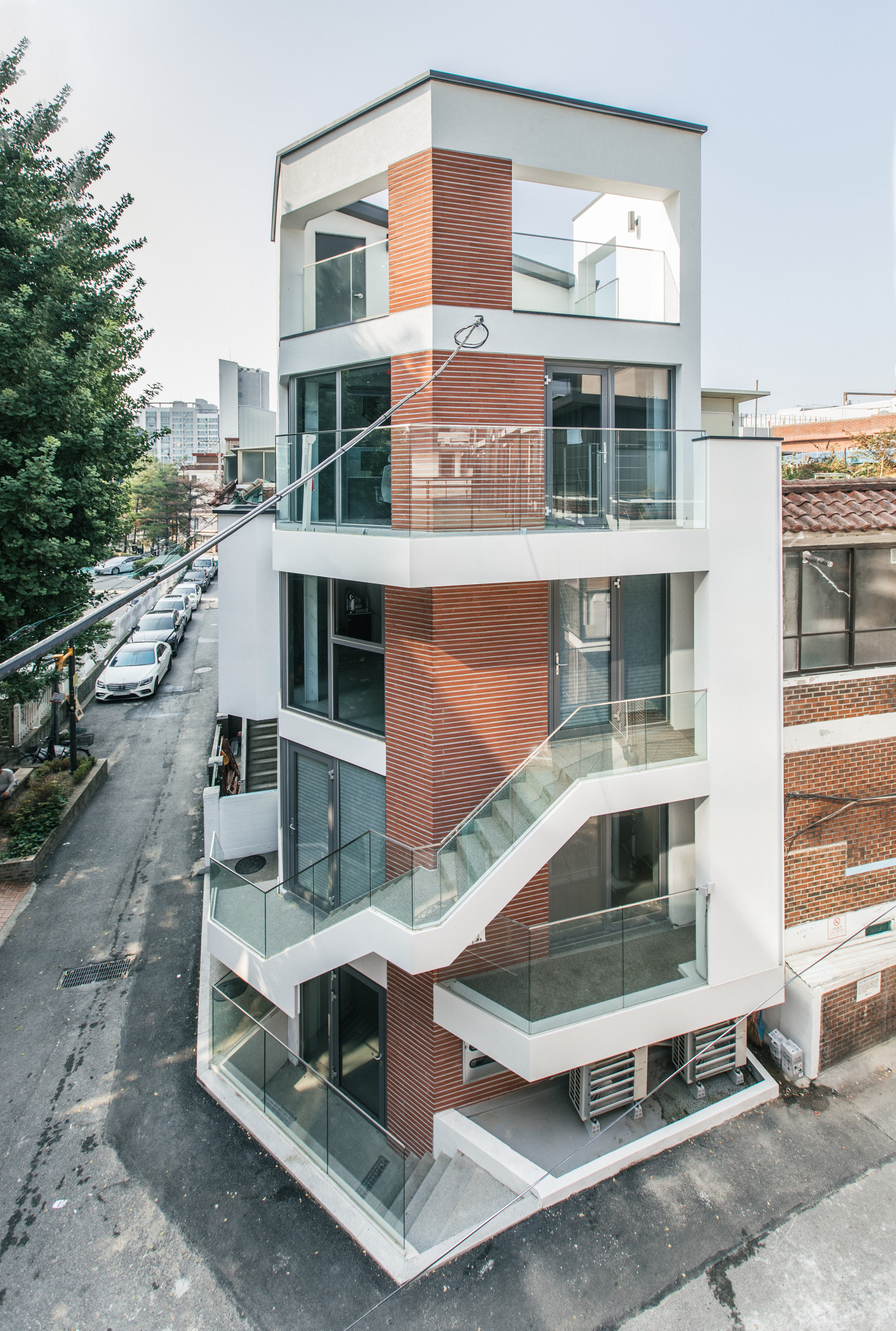
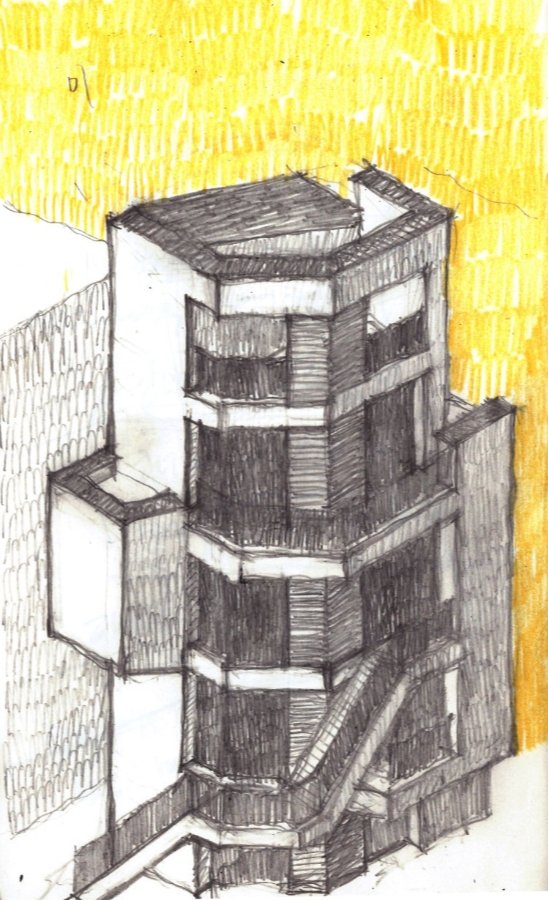
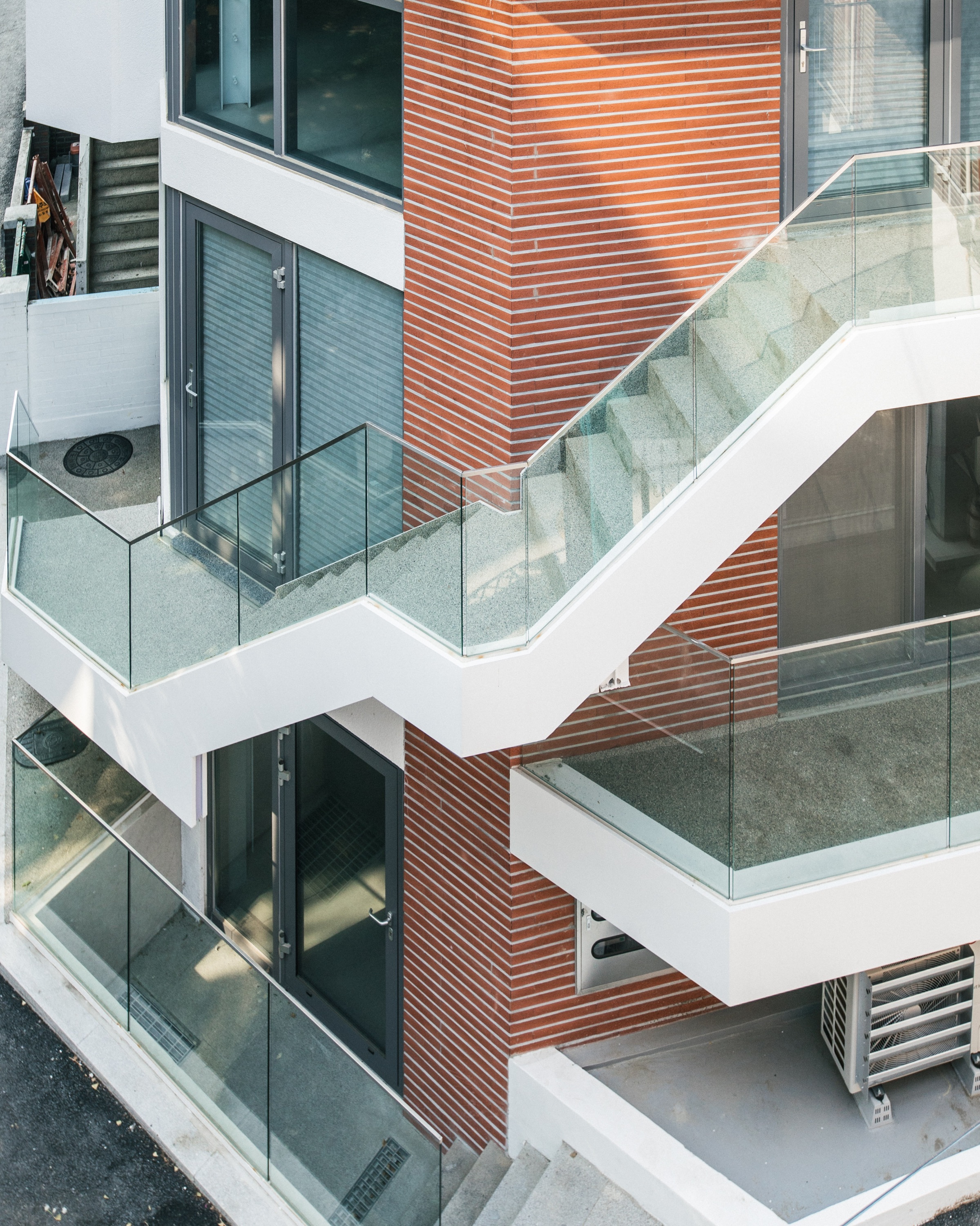
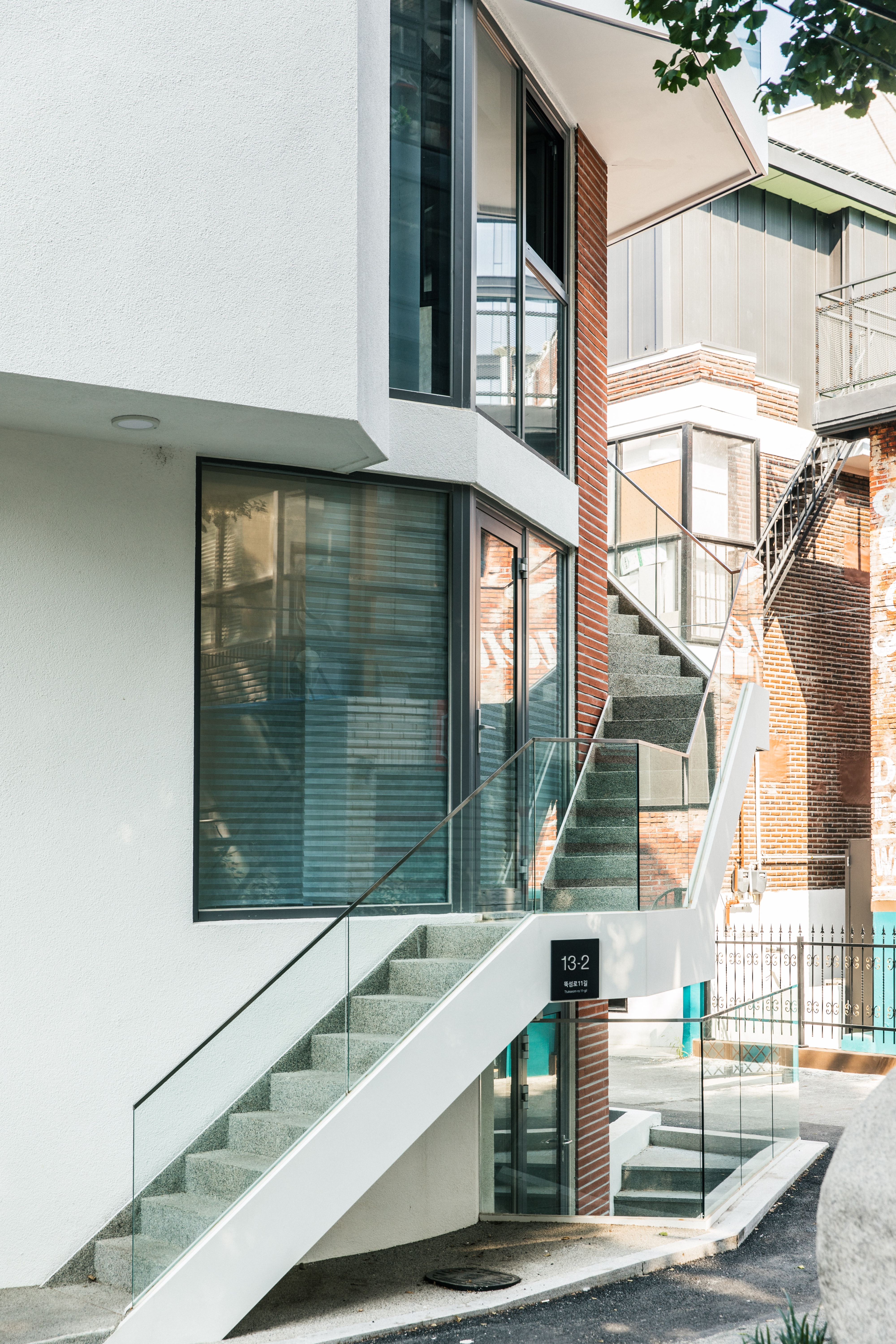
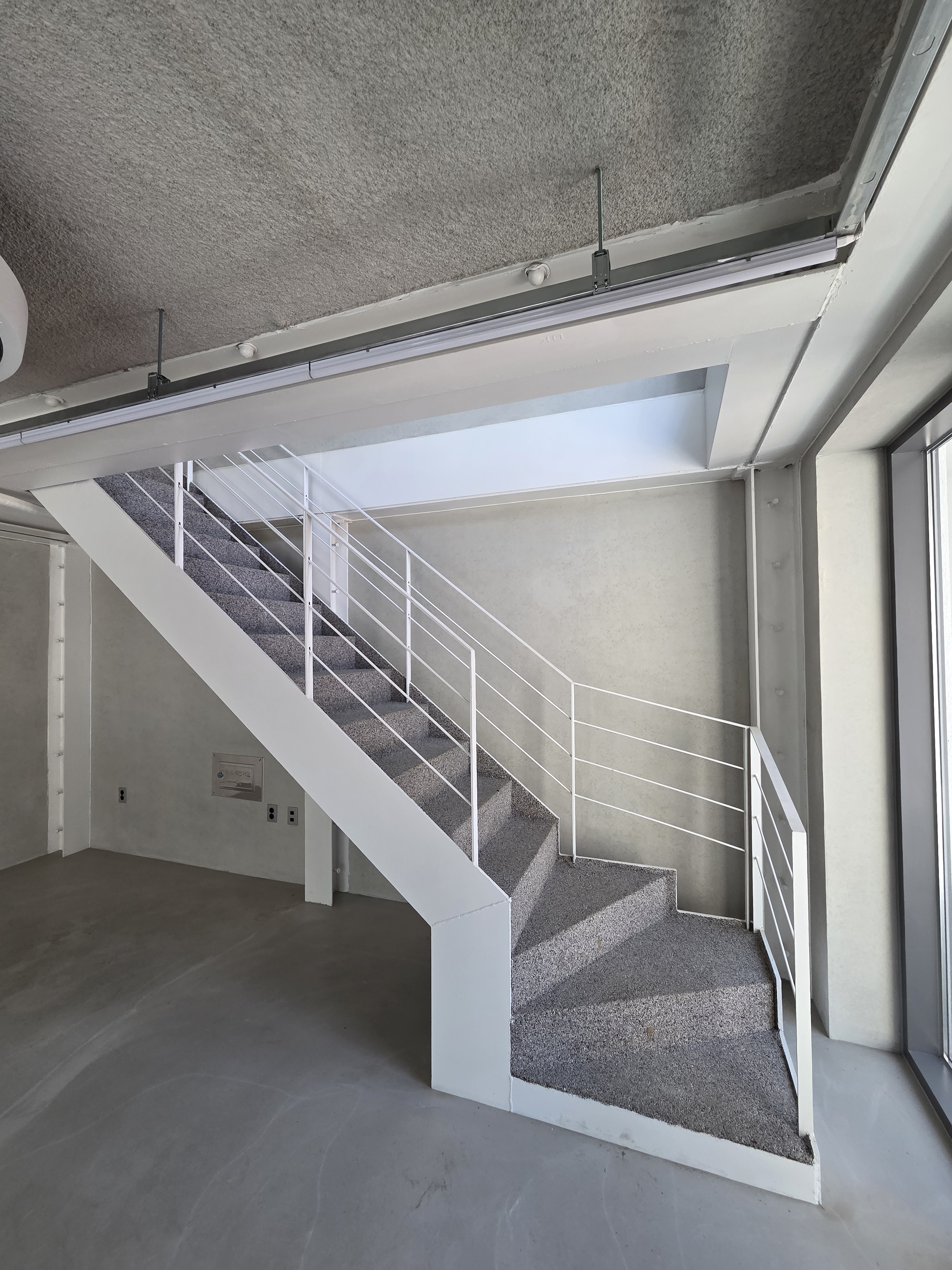
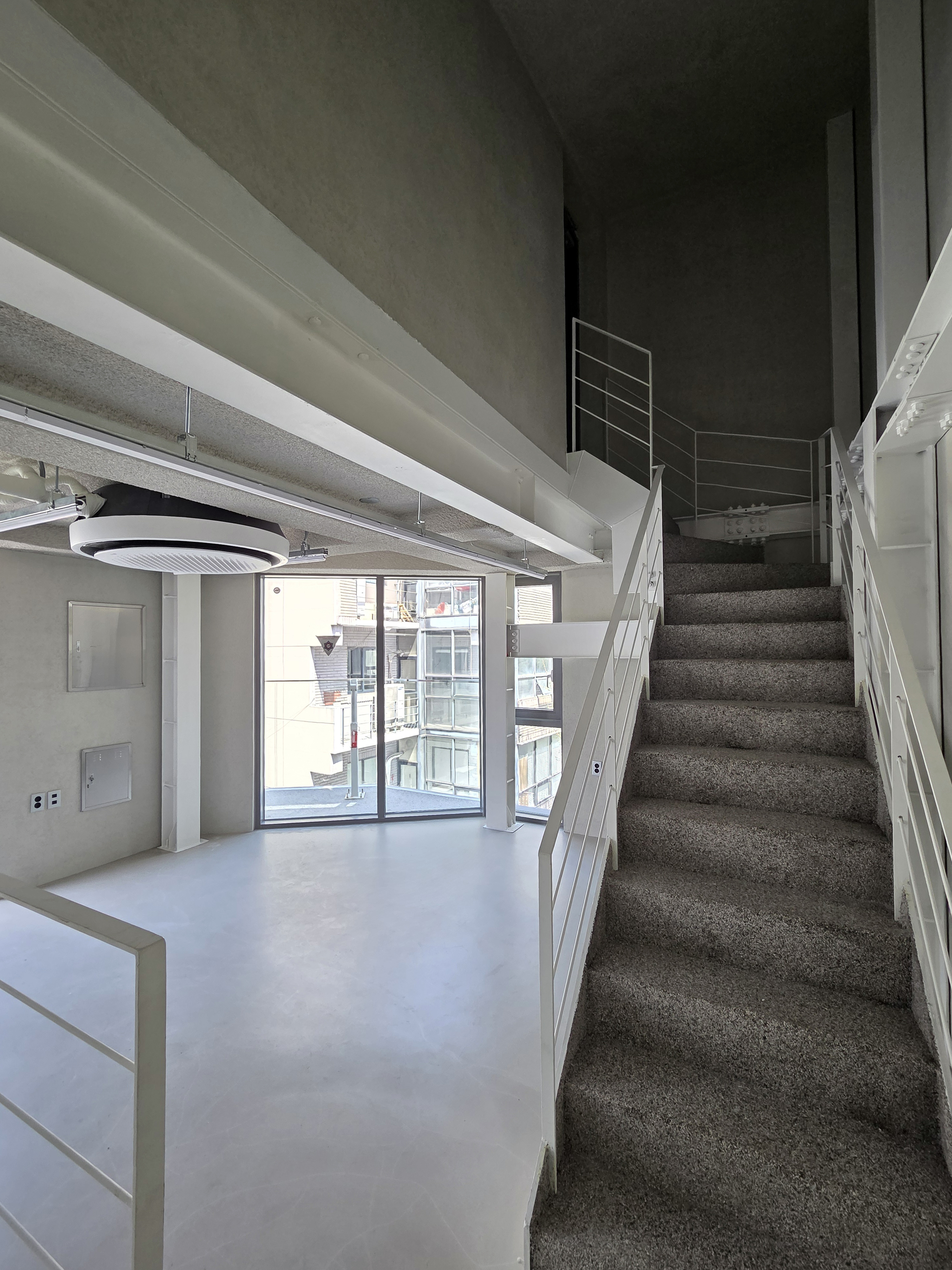
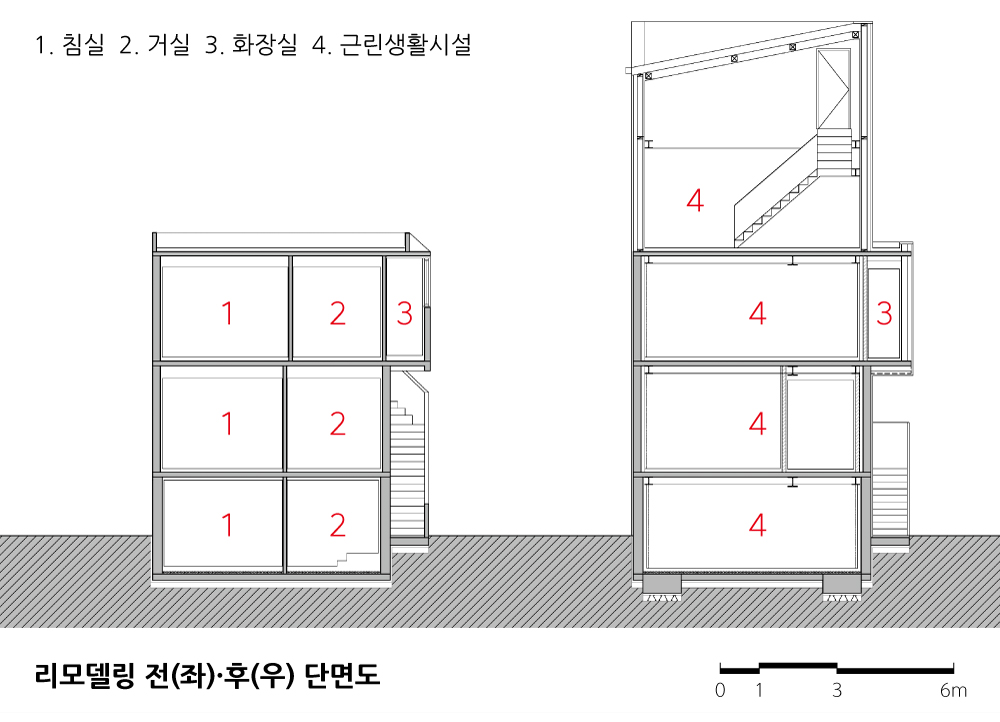
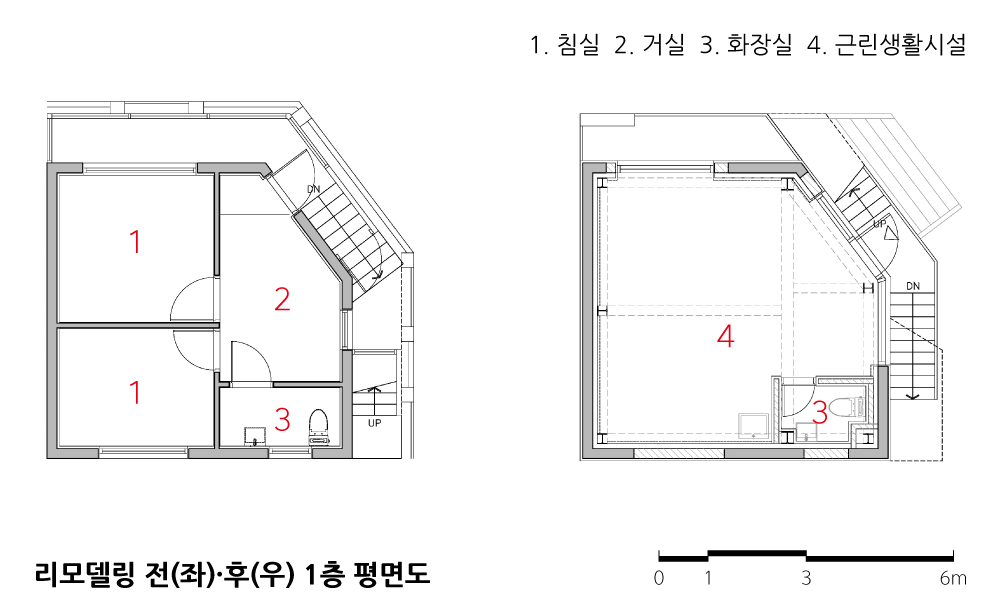
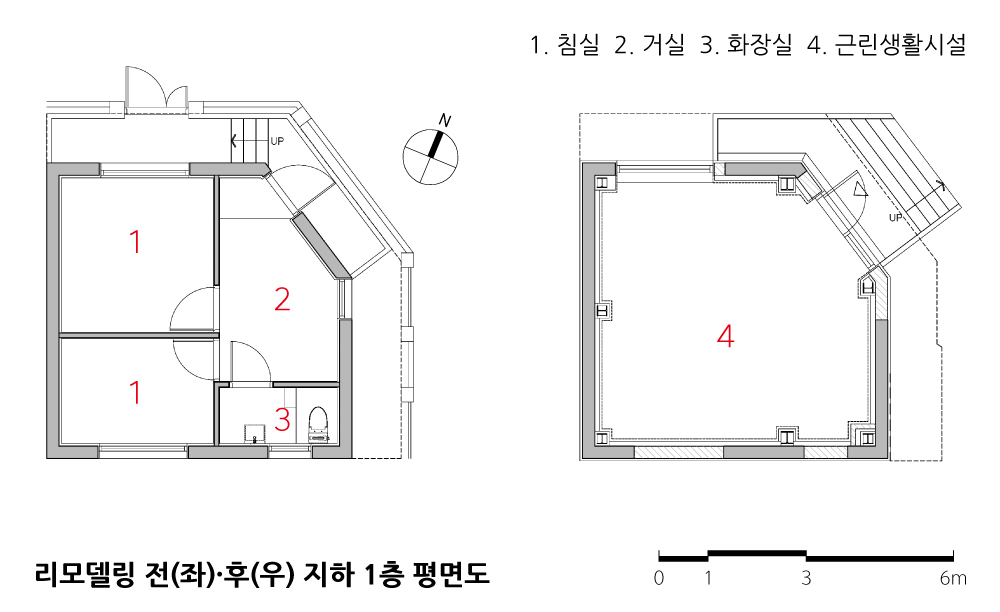
몇 차례의 미팅을 통해 지하 1층 지상 2층의 건물을 지상 3층까지 증축하고 루프탑 공간까지 활용하는 것으로 증축 계획을 정리하였다. 90년대에 완공된 노후 건물이라 2개 층 증축은 사실상 불가능하였고, 대신에 루프 탑 주변으로 장식 벽체를 조성하여 주변에서 부각되도록 계획했다. 기존 건물은 동선 처리가 상당히 복잡하게 되어 있었다. 1층과 2층, 지하에 세대가 있어서 각각의 외부 계단을 통해 접근하도록 되어 있었는데, 근생으로 용도를 바꾼다면 계단이 지나치게 많아 단점이 되는 부분이었다. 이것을 2층까지 하나의 외부 계단을 통해 올라가도록 정리하고, 증축되는 3층은 2층에서 내부 계단을 통해 올라가도록 하였다. 지하는 전면부의 별도 계단을 통해 내려가도록 하여 접근성을 향상했다.
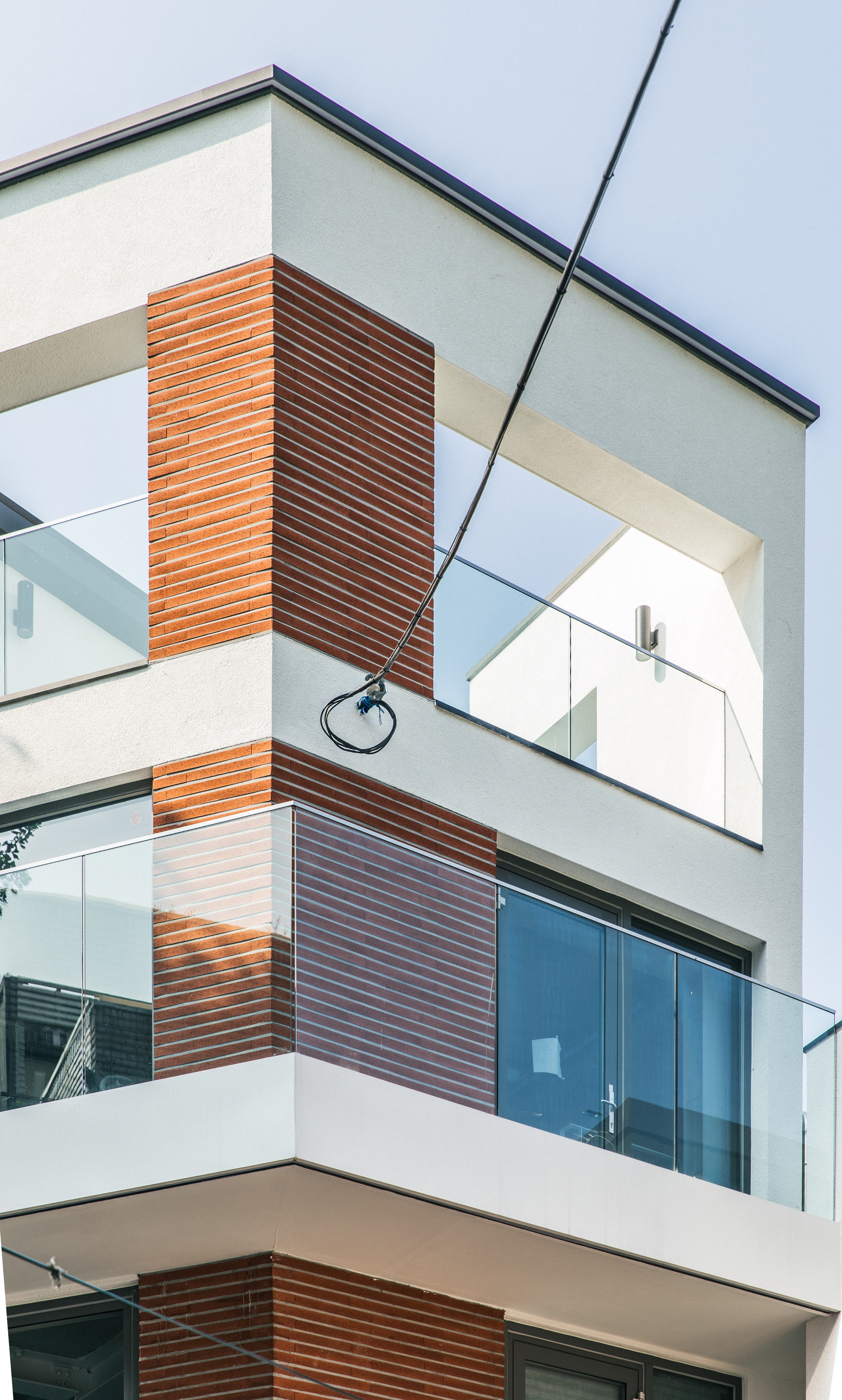
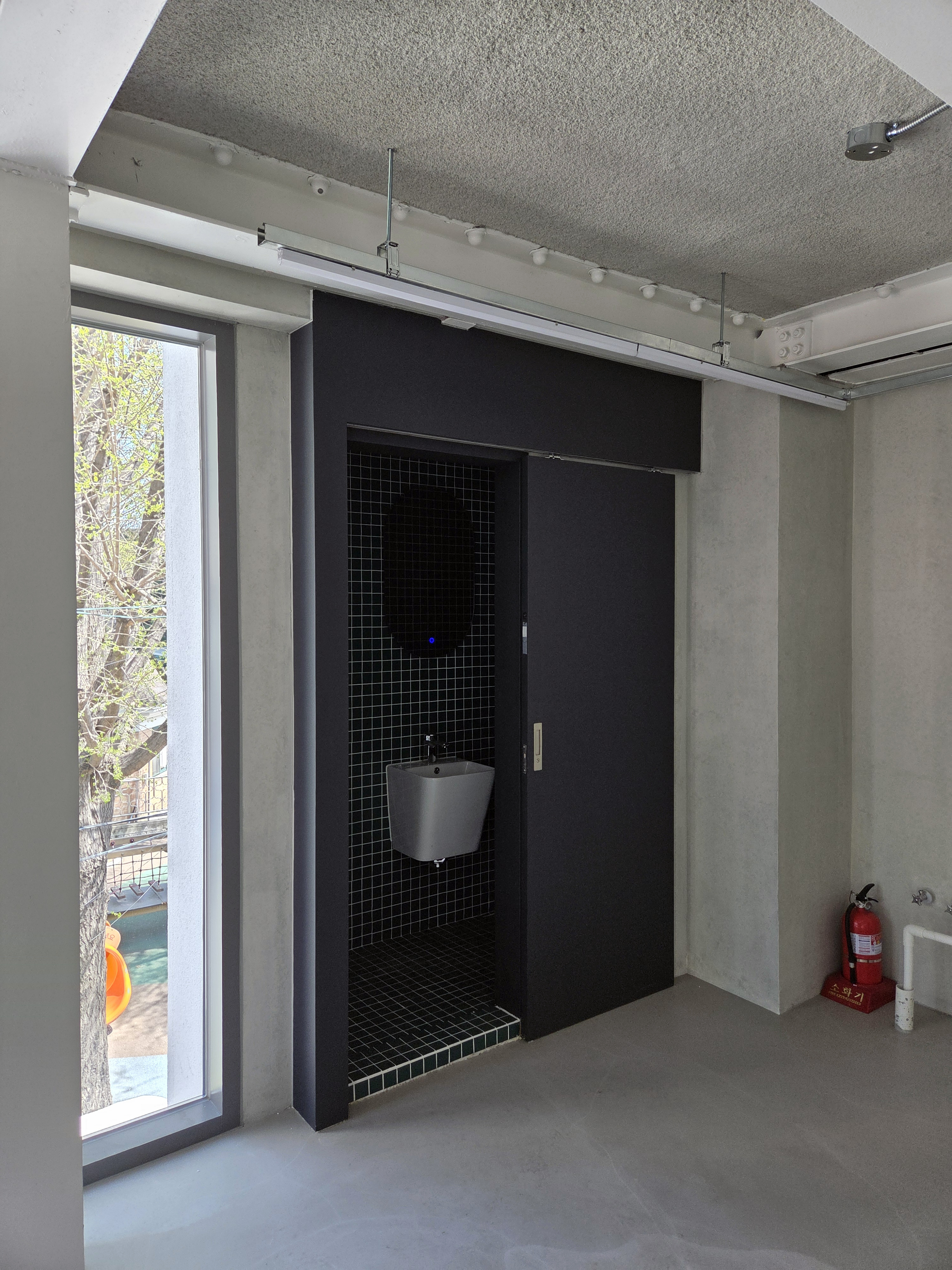
기존 건축물의 장점 중 하나가 코너부에 위치하고 있어서 대지의 모양을 따라 다각형의 형태로 건축되었다는 점이다. 이에 따라 단순한 사각형 건물보다 입체감이 있었고, 특히 2층의 화장실 부분은 켄틸레버 형식으로 돌출되어 있어 다른 건물에 비해 입체감과 긴장감이 있었다. 이러한 코너부의 사선 형태를 최대한 부각하면서, 그 부분에 많은 창호를 설치해 개방감을 높이고자 하였다. 화장실의 돌출 부분은 사선으로 처리해서 조형적으로 일관성을 주었다. 또한 신설되는 외부 계단이 코너의 사선 부분을 감아 올라가도록 계획하여 건물의 상징이자 조형 요소로 부각되도록 하였다. 외부 계단은 철판과 유리 난간으로 제작하여 날렵하고 세련된 느낌과 함께 정교한 만듦새를 보여주고자 노력했다.
건축물의 주 외장재로는 외단열미장마감(STO)을 사용하였다. 단열이 부실했던 90년대 건물에 외단열재를 덧대 보강하는 한편, 깨끗하고 밝은 색의 마감을 적용하여 기존 건물의 여러 가지 마감재들을 통일되게 정리하였고, 다소 칙칙한 주변 환경 속에서 돋보이는 건물이 되도록 하였다. 코너부의 일부 벽에는 붉은색의 와이드벽돌을 적용하여 다소 밋밋할 수 있는 건물 입면에 변화를 주는 한편, 붉은 벽돌로 만들어진 기존의 흔적을 보여주고 주변 건축물들과 자연스럽게 어우러지도록 하였다.
공사비의 급격한 상승으로 인해 많은 건축 현장에서 리모델링이 현실성 있는 대안으로 떠오르고 있다. 사업성 측면에서 리모델링은 확실히 여러 장점들이 있겠지만, 설계와 시공 측면에서 그에 못지않은 많은 어려운 점들이 많은 것도 사실이다. 본격적인 설계에 앞서 정밀한 실측이 필요하다는 점, 기존 건물의 불법적인 사항들을 인허가 과정에서 풀어가야 한다는 점, 마감을 뜯고 난 후에야 비로소 보이는 여러 가지 돌발 변수가 많다는 점, 해체와 보강 과정에서 공사의 난이도가 신축보다 높다는 점 등 일하는 사람 입장에서는 풀어가야 할 어려운 문제들이 한두 가지가 아니다.
이러한 어려운 점들에도 불구하고, 헌 건물을 한 땀 한 땀 바느질로 기워가듯이 손질해 완전히 새로운 모습으로 만들어가는 마법 같은 매력을 보여주는 것이 바로 리모델링 작업이다. 극심한 불경기 속에서 리모델링이 건축분야에 활기를 불어넣는 새로운 대안이 되기를 기원한다.
One of the approaches that has recently become mainstream in architecture is remodeling. Remodeling has several advantages. In terms of legal application, existing parts of a building are generally allowed to follow the regulations in force at the time they were originally built, while newly added portions must comply with current codes. Construction costs are usually lower than for new construction, and the overall schedule is shorter because demolition and construction can proceed in close succession, with structural frame work often reduced or omitted. This is especially important on very small urban sites, where a new building designed under recently tightened regulations may not even produce a feasible scheme. In such cases, remodeling can be the most reasonable and persuasive alternative.
The original building was a two-story red brick house, the kind that can still be found anywhere in central Seoul. Projecting elements and the undersides of the stairs were finished in white paint over plaster, and the roof was topped with traditional roof tiles, making it a typical house from the 1980s and 1990s. At the time, housing regulations included an exception that excluded exterior stairs from floor area calculations, and this building, too, had several exterior staircases and balconies.
The client’s goal was to remodel the building into the most eye-catching facade in the neighborhood and thereby maximize its real estate value. In other words, rather than preserving much of the original appearance and leaving traces of the past, the client wanted a dramatic transformation that would make the building feel entirely new, almost like a new build, and create a striking before-and-after contrast. During the design process, we worked to fully reflect this intention while also creating a calm and orderly elevation that could blend naturally into its surroundings.
After several meetings, the plan was finalized to extend the basement-and-two-story building up to a third floor and to make use of the rooftop space as well. Because the building was an aging structure completed in the 1990s, adding two additional floors was practically impossible. Instead, a decorative wall was planned around the rooftop so that the building would stand out in the neighborhood. The circulation of the existing building was also quite complicated. Separate units were located on the first floor, second floor, and basement, each accessed by its own exterior stair. If the building was to be converted to neighborhood commercial use, this excessive number of stairs would become a clear disadvantage. We therefore reorganized the circulation so that the first and second floors could be reached by a single exterior stair, while the new third floor would be accessed by an interior stair rising from the second floor. The basement was given its own separate stair at the front, improving accessibility.
One of the strengths of the existing building was its corner location, which had led it to be built in a polygonal form that followed the shape of the site. As a result, it had more spatial depth than a simple rectangular building. In particular, the second-floor restroom projected outward in a cantilevered form, giving the building a stronger sense of volume and tension than the neighboring structures. We sought to emphasize this diagonal corner geometry as much as possible, while increasing openness by installing generous windows in that area. The projecting restroom volume was also treated with angled surfaces to create formal consistency. In addition, the new exterior stair was designed to wrap around the diagonal corner, allowing it to emerge as both a symbolic feature and a sculptural element of the building. The stair was made of steel plate and glass railings, with the intention of expressing a sharp, refined image and a high level of craftsmanship.
For the main exterior finish, we used an exterior insulation and stucco system (STO). This allowed us to reinforce the poorly insulated 1990s structure by adding external insulation, while at the same time applying a clean, bright finish that unified the many different materials of the existing building. It also helped the building stand out within its rather dull surroundings. On part of the corner wall, red wide-format brick was used to bring variation to an elevation that might otherwise have felt too plain, while also preserving a trace of the original red brick building and helping it harmonize naturally with the surrounding structures.
With the sharp rise in construction costs, remodeling is emerging as a realistic alternative on many building projects. From a business perspective, remodeling certainly offers many advantages, but from the standpoint of design and construction, it also presents just as many challenges. Precise measurement is required before the design can properly begin. Illegal or non-compliant conditions in the existing building must be resolved during the permitting process. Many unexpected variables only reveal themselves after finishes are removed. And during demolition and reinforcement, the construction process is often more difficult than that of a new building. For those actually carrying out the work, there are countless difficult issues to solve.
Despite all of these challenges, the true charm of remodeling lies in its almost magical ability to transform an old building into something completely new, as if carefully mending it stitch by stitch. In today’s severe economic downturn, I hope remodeling can become a new alternative that brings renewed energy to the field of architecture.

| 성수동2가 근린생활시설 리모델링 설계자 | 김선동 건축사_오픈스튜디오 건축사사무소 건축주 | (주)알렉스앤파샤 감리자 | 피엠아이 건축사사무소 시공사 | 일로종합건설 설계팀 | 김선동, 김현진 설계의도 구현 | 오픈스튜디오 건축사사무소 대지위치 | 서울특별시 성동구 성수동2가 주요용도 | 근린생활시설 대지면적 | 53.33㎡ 건축면적 | 30.31㎡ 연면적 | 114.31㎡ 건폐율 | 56.83% 용적률 | 161.83% 규모 | B1F - 3F 구조 | 철골조(기존부분 철골조 보강 및 증축부분 철골조 신설) 외부마감재 | 외단열미장마감, 콘크리트 벽돌 타일 내부마감재 | 에폭시 마감(바닥), 석고보드 위 페인트(벽체), 몰탈 뿜칠(천장) 설계기간 | 2024. 02 - 2024. 05 공사기간 | 2024. 07 - 2025. 03 사진 | 박충호 구조분야 | 서전구조 기계설비·전기·소방분야 | 잇츠미 E&C |
Studio Paranoid Office Architect | Kim Seon Dong_Open studio architecture Client | Alex & Pasha Co., Ltd. Supervisor | PMI architecture Construction | Illo construction Co., Ltd. Project team | Kim Seon Dong / Kim Hyunjin Design intention realization | Open studio architecture Location | Seongsu-dong 2-ga, Seongdong-gu, Seoul Program | Neighborhood facilities Site area | 53.33㎡ Building area | 30.31㎡ Gross floor area | 114.31㎡ Building to land ratio | 56.83% Floor area ratio | 161.83% Building scope | B1F - 3F Structure | Steel frame (New steel frame reinforcement and extension of existing steel frame) Exterior finishing | External insulation masonry finish, concrete brick tiles Interior finishing | Epoxy finish(floor) / Paint on plasterboard(wall) / Mortar blast(ceiling) Design period | Feb. 2024 - May 2024 Construction period | Jul. 2024 - Mar. 2025 Photograph | Park Choong Ho Structural engineer | Seojeon Structural engineering Mechanical·Electrical·Fire engineer | It’s me E&C |
'회원작품 | Projects > Neighborhood Facility' 카테고리의 다른 글
| 서대문 뇌병변장애인 비전센터 리모델링 2026.6 (0) | 2026.06.30 |
|---|---|
| 도서민복지문화센터 장고도 2026.5 (0) | 2026.05.31 |
| SCAPE 논현 18315 2026.4 (0) | 2026.04.30 |
| 속초시 보훈회관 2026.4 (0) | 2026.04.30 |
| 파빌리온 하얀그늘 2026.3 (0) | 2026.03.31 |